Endometriosis Symptoms: Signs, Causes and When to See a GP
Painful periods, pelvic pain and heavy bleeding can all be signs of endometriosis, a common condition that affects 1 in 10 women. Here is how to recognise the symptoms and when to see a GP.
- Written by
- Health Daily Advice
- Published
- Reading time
- 9 minutes
- Sources
- 11 cited
In this guide
Endometriosis is a long-term condition where tissue similar to the lining of the womb grows outside the womb, most often in the pelvis. Its main symptoms are painful periods, pelvic pain, pain during or after sex, heavy bleeding, bowel or bladder pain, fatigue and difficulty getting pregnant. Pain that stops everyday activities is not normal — see a GP.
What is endometriosis?
Endometriosis happens when cells similar to those in the lining of the womb (the endometrium) are found elsewhere in the body. These patches respond to hormones in the menstrual cycle in a similar way to the womb lining: they thicken, break down and bleed. Because this blood and tissue cannot leave the body, it can cause inflammation, pain and scar tissue. The tissue is most often found on the lining of the pelvis, the ovaries and the fallopian tubes, but it can also affect the bowel or bladder, and less commonly the chest. Symptoms vary a great deal: some people have severe, life-limiting symptoms, while others have none at all and only discover they have endometriosis during investigations for difficulty getting pregnant or surgery for another reason.
Endometriosis is common. The World Health Organization estimates that it affects about 10% of women of reproductive age worldwide — around 190 million people. In the UK, Endometriosis UK puts the figure at 1 in 10 women and people assigned female at birth, which is over 1.5 million people. It can affect anyone who menstruates, from the first period (puberty) through to the menopause. There is currently no cure, but treatments can help ease symptoms and improve quality of life — which is why recognising the signs early matters.
Common symptoms of endometriosis
Symptoms vary widely, and they do not always match how much endometriosis is present. As Mayo Clinic explains, you can have a small amount of tissue with severe pain, or a lot of tissue with little or no pain. The symptoms below are the ones most often reported, and they often get worse around the time of a period.
Painful periods
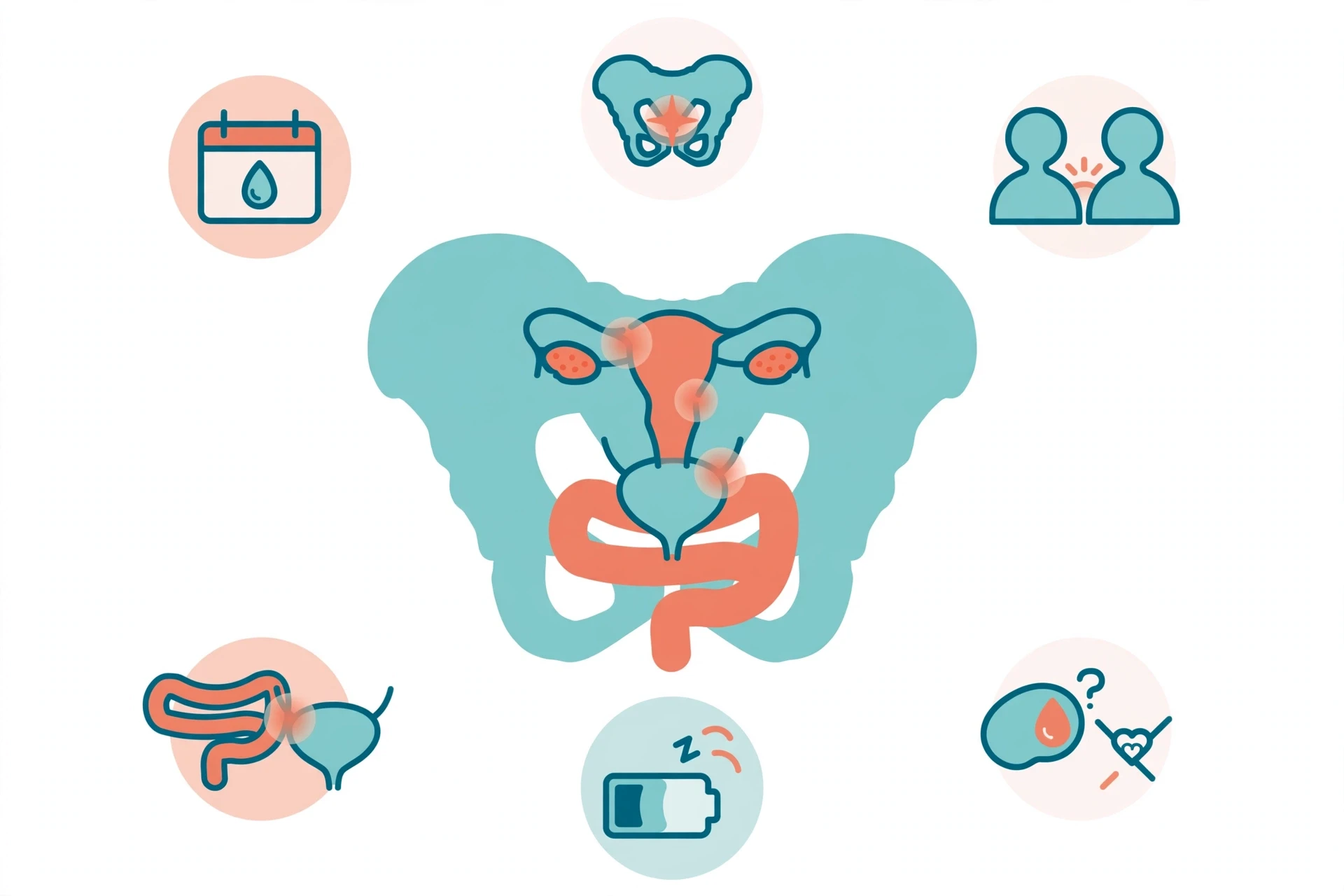
Painful periods (dysmenorrhoea) are the most common symptom. With endometriosis, period pain is often far worse than usual cramping: it may start before the period, last for days into it, and not respond well to ordinary painkillers. The NHS describes the key warning sign as period pain that stops you doing your normal activities — pain that regularly keeps you off work or school is not just a “bad period”.
Pelvic pain
Pain in the lower tummy, pelvis or lower back is the main symptom for many people. It is often linked with the menstrual cycle and feels worse just before and during a period, but it can also be present between periods or become constant, and some people feel pain around ovulation. Cleveland Clinic notes that this pain can be intense or mild, and that symptoms often feel worse around periods because of inflammation brought on by hormonal changes.
Pain during or after sex
Deep pain during or after sex (dyspareunia) is a common symptom, linked to endometriosis affecting the tissues behind the womb or between the vagina and the bowel. It can have a real impact on relationships and sexual health, and the WHO notes that it can lead to people avoiding sex altogether. It is a symptom worth mentioning to a GP, even if it feels awkward to raise.
Heavy or irregular bleeding
Heavy periods are another common sign. You might need to change pads or tampons very often, bleed through your clothes, or pass large clots. Some people also have bleeding between periods, bleeding after sex, or periods that last longer than usual. Heavy bleeding over time can contribute to low iron levels and fatigue.
Bowel and bladder symptoms
When endometriosis affects the bowel or bladder, it can cause pain when you poo or pee, especially during a period. Other symptoms include needing to pee more often, constipation, diarrhoea, nausea and bloating, and some people notice blood in their pee or poo during their period. Because these symptoms overlap with irritable bowel syndrome (IBS), endometriosis is sometimes mistaken for a bowel problem, and the two conditions can occur together.
Fatigue
Extreme tiredness is a common but often overlooked symptom. Fatigue can be linked to the pain itself, to heavy bleeding, to disturbed sleep, or to the inflammation the condition causes. Many people describe feeling exhausted in a way that rest does not fix, particularly around their period.
Difficulty getting pregnant
Endometriosis can make it harder to get pregnant, and for some people it is first found during tests for infertility. The WHO reports that among women with infertility, as many as 25–50% have endometriosis. The reasons are not fully understood, but endometriosis can damage the fallopian tubes or ovaries and affect how an egg and sperm meet. Many people with endometriosis do conceive: Endometriosis UK notes that up to 70% of those with the condition will be able to get pregnant naturally. If you have been trying to get pregnant without success, talk to your GP.
Other symptoms
Less common symptoms include lower back or leg pain, pain on internal examination (such as a smear test), feeling faint or fainting during a period, and low mood or anxiety. Living with long-term pain can affect mental health, and the NHS notes that severe endometriosis symptoms can sometimes lead to feelings of depression or anxiety. In rare cases, endometriosis affecting the chest can cause shortness of breath, chest pain or shoulder-tip pain during a period. Keeping a short diary of your symptoms and how they affect daily life for a few months can help a GP see the pattern.
Causes and risk factors
The exact cause of endometriosis is not known. Several theories have been suggested, and it is likely that a combination of factors is involved:
- Retrograde menstruation: menstrual blood flows back through the fallopian tubes into the pelvis instead of leaving the body, and the cells it carries may implant and grow there.
- Immune system differences: the body’s natural defences may not clear stray endometrial-like cells as they should. The WHO notes that people with endometriosis have higher rates of other immune-related conditions, such as lupus and inflammatory bowel disease.
- Genetics: endometriosis tends to run in families. Cleveland Clinic advises that if a close biological relative such as your mother or sister has endometriosis, you should mention this to your doctor.
- Cells spreading through the blood or lymphatic system to other parts of the body.
Some factors are linked with a higher risk, including a family history of the condition, short menstrual cycles (fewer than 27 days between periods), long and heavy periods lasting more than eight days, and never having given birth. Starting periods at an early age and starting the menopause at a later age are also linked with a higher risk. None of these factors causes endometriosis on its own. Endometriosis is not an infection, it is not contagious, and it is not caused by anything you did.
How is endometriosis diagnosed?
Endometriosis can be difficult to diagnose, because its symptoms vary so much and overlap with other conditions such as IBS, pelvic inflammatory disease and fibroids. Diagnosis often takes a long time: the WHO reports that the average time to diagnosis is currently between 4 and 12 years. Keeping a symptom diary and being persistent with your GP matters.
Diagnosis usually starts with a detailed history. Your GP will ask about your symptoms, your periods, your pain and how it affects your daily life. It can help to write down your symptoms before the appointment, including when they happen in your cycle and how much they interfere with work, school or sleep. Your GP may also examine your tummy and, with your consent, carry out an internal pelvic examination, which can sometimes reveal cysts, nodules or tenderness. Your GP may also arrange tests to rule out other conditions that cause similar symptoms, such as polycystic ovary syndrome (PCOS), fibroids or thyroid problems.
Further tests may include:
- Ultrasound scan: a scan of the pelvis, sometimes done through the vagina, which can show cysts on the ovaries (endometriomas) and some areas of endometriosis.
- MRI scan: this can help assess how much endometriosis there is and whether the bowel, bladder or other organs are affected.
- Laparoscopy: keyhole surgery under general anaesthetic, where a surgeon passes a thin tube with a camera through a small cut in the tummy to look directly at the pelvis. The NHS states that laparoscopy is the only way to be certain you have endometriosis, and tissue samples (biopsies) may be taken to confirm it. The WHO notes, though, that a clinical diagnosis can also be made from symptoms and imaging, and surgery is not always needed before treatment starts.
NICE guideline NG73 sets out how endometriosis should be diagnosed and managed in the UK, including when a GP should refer someone to a gynaecologist or a specialist endometriosis centre.
Managing symptoms day to day
There is no cure for endometriosis, so treatment aims to ease symptoms and stop the condition interfering with daily life. What works varies from person to person, and your GP or gynaecologist will discuss options with you. General approaches include:
- Tracking your cycle and symptoms: a diary of pain, bleeding, bowel and bladder symptoms and mood can help you spot patterns, plan around difficult days, and give your doctor clear information.
- Heat and rest: many people find a hot water bottle or heat pad on the lower tummy or back soothing during painful days, and pacing activities around the worst days can help.
- Gentle movement: light activity such as walking, stretching or gentle yoga may help some people, though what feels possible varies from day to day. Rest when you need to, and do not push through severe pain.
- Sleep and stress: chronic pain can disrupt sleep and raise stress, which in turn can make pain feel worse. A regular sleep routine and stress-relief habits such as slow breathing or relaxation can help. The WHO notes that physiotherapy and cognitive behavioural therapy (CBT) can help reduce endometriosis-related pain and improve quality of life.
- Support: patient charities such as Endometriosis UK offer support groups, a helpline and online forums. Talking to others who understand the condition can make a real difference.
Medical treatment is decided with your doctor and may include pain relief and hormone medicines that reduce oestrogen and slow the growth of endometriosis tissue, or surgery to remove patches of tissue. If you are prescribed any medicine, follow your doctor’s or pharmacist’s instructions and ask them about side effects. Do not start hormone treatments or any new medicine without medical advice, especially if you are trying to get pregnant, as some treatments affect fertility while you take them.
When to see a doctor
See a GP if you have symptoms of endometriosis, especially if they are having a big impact on your life — for example, if period pain regularly stops you working, studying or doing everyday activities, if your periods are very heavy, if sex is painful, or if you are having difficulty getting pregnant. Write down your symptoms before the appointment, and if you feel you are not being heard, it is reasonable to ask for a second opinion or a referral to a gynaecologist. If symptoms are affecting your mood, tell your GP — support is available, and you do not have to cope with the pain alone.
Get urgent medical help if you have sudden severe abdominal pain, heavy bleeding that soaks through a pad or tampon every hour, fainting, vomiting, a high temperature with pelvic pain, or chest pain or shortness of breath during your period.
In an emergency call 911 (US), 999 (UK) or 112 (EU)
Frequently asked questions
What are the first signs of endometriosis?
The earliest signs are usually painful periods that stop you doing normal activities, pelvic pain that is worse before or during a period, pain during or after sex, and heavy periods. Bowel or bladder pain, fatigue and difficulty getting pregnant can also be early signs. Because symptoms vary so much and overlap with other conditions, see a GP if pain or heavy bleeding is interfering with your daily life.
Can you have endometriosis without symptoms?
Yes. Some people have endometriosis and no symptoms at all. Mayo Clinic explains that they often only find out they have the condition when they cannot get pregnant or after surgery for another reason. This is one reason endometriosis is underdiagnosed: the absence of pain does not rule it out, and the severity of pain does not match how much tissue is present.
How long does it take to get an endometriosis diagnosis?
Diagnosis often takes a long time. The World Health Organization reports that the average time to diagnosis is currently between 4 and 12 years. The delay happens because symptoms vary, overlap with conditions such as IBS, and are sometimes dismissed as normal period pain. Keeping a diary of symptoms and how they affect daily life can help your GP see the pattern and refer you sooner.
Does endometriosis mean I cannot get pregnant?
No. Endometriosis can make it harder to get pregnant, and the WHO reports that among women with infertility, as many as 25–50% have endometriosis. But many people with the condition do conceive: Endometriosis UK notes that up to 70% of those with endometriosis will be able to get pregnant naturally. If you have been trying to get pregnant without success, talk to your GP about fertility options.
Is endometriosis pain the same as normal period pain?
No. Normal period cramps are usually manageable and do not stop you doing everyday activities. Endometriosis pain is often far worse than usual cramping, may start before the period and last for days into it, and often does not respond well to ordinary painkillers. The NHS describes the key warning sign as period pain that stops you doing your normal activities. Pain that regularly keeps you off work or school is worth discussing with a GP.
Sources
- WHO: Endometriosis fact sheet www.who.int
- NHS 111 Wales: Endometriosis 111.wales.nhs.uk
- Mayo Clinic: Endometriosis — Symptoms and causes www.mayoclinic.org
- Cleveland Clinic: Endometriosis — Causes, Symptoms, Diagnosis & Treatment my.clevelandclinic.org
- Endometriosis UK: Understanding endometriosis (factsheet, reviewed Jan 2025) www.endometriosis-uk.org
- NICE: Endometriosis — diagnosis and management (NG73) www.nice.org.uk

Try the tool
When is your next period and fertile window?
Six cycles ahead from your last period date.
Open the calculator

