Painful Periods: Causes, Relief and When to See a Doctor
Painful periods, or dysmenorrhoea, are usually caused by the womb contracting, but severe or worsening pain can signal an underlying condition. Learn what helps and when to see a doctor.
- Written by
- Health Daily Advice
- Published
- Reading time
- 5 minutes
- Sources
- 7 cited

In this guide
Painful periods, medically called dysmenorrhoea, are cramping pains in the lower tummy that usually start just before or at the start of a period. Most period pain is caused by the womb contracting and eases within a few days, but pain that is severe, worsening or disrupts daily life deserves medical attention.
What are painful periods?
Dysmenorrhoea is the medical term for painful periods. The pain is usually felt as throbbing or cramping in the lower tummy and may spread to the lower back and thighs. Some people also feel sick, have loose stools, a headache or dizziness during their period.
Period pain is very common, but it is not something you simply have to put up with. If pain regularly stops you from going to school or work, or from doing your usual daily activities, it is worth talking to a doctor about it.
Why do periods hurt?
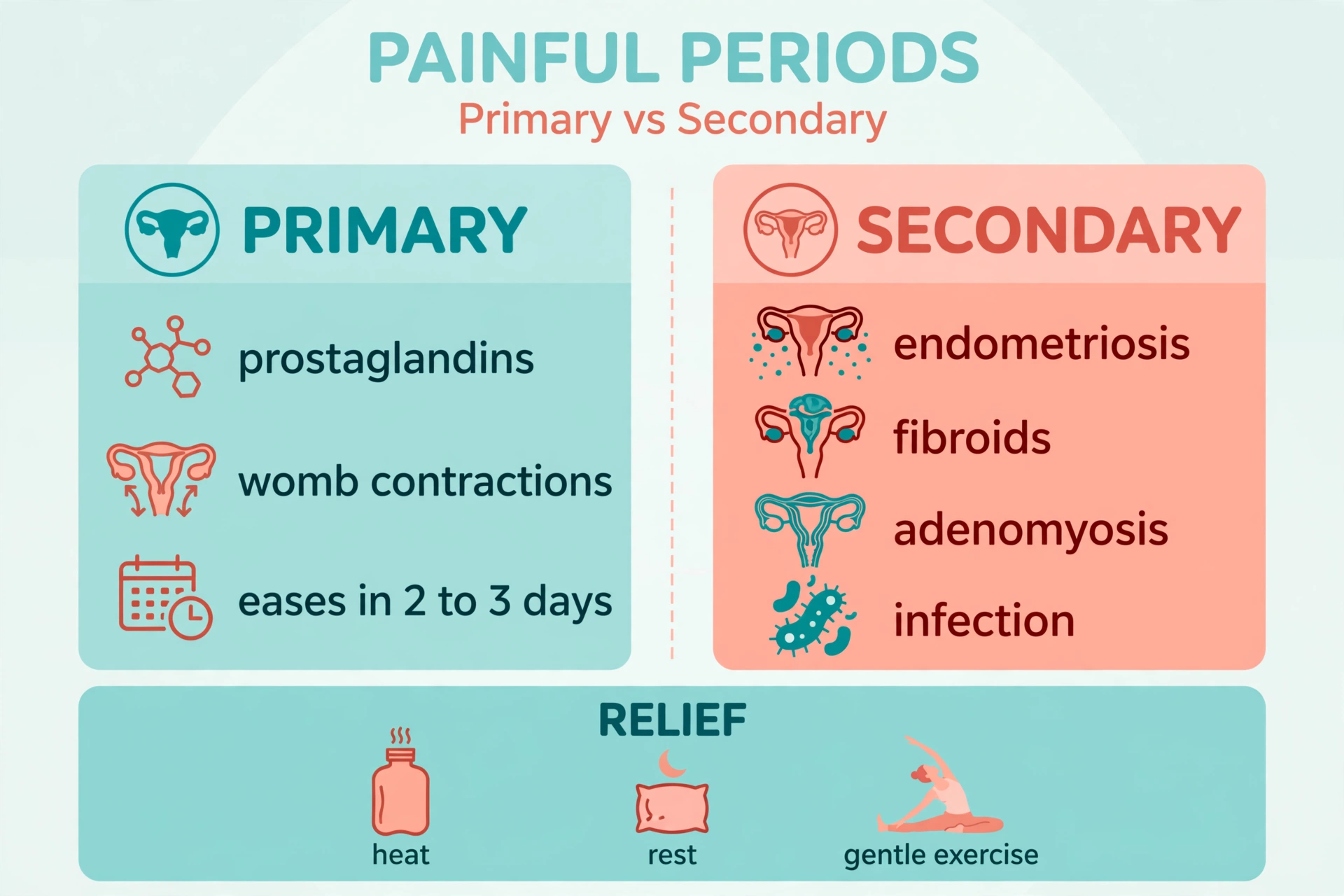
During a period, the womb contracts to help shed its lining. These contractions are triggered by hormone-like substances called prostaglandins, which are involved in pain and inflammation. Higher levels of prostaglandins are associated with more severe menstrual cramps.
Prostaglandin levels rise just before a period begins and fall as the period goes on, which is why cramps tend to be worst at the start and then ease. Doctors divide painful periods into two types, depending on whether an underlying condition is involved.
Primary vs secondary dysmenorrhoea
Primary dysmenorrhoea
Primary dysmenorrhoea is period pain with no underlying condition causing it. It is driven by prostaglandins and the womb contracting more strongly than usual. It often begins soon after periods start in adolescence and, for many people, it tends to lessen with age and often improves after giving birth.
Pain from primary dysmenorrhoea often starts 1 to 3 days before a period, peaks 24 hours after the period begins and subsides in 2 to 3 days. The NHS notes that period pain usually lasts for up to 3 days.
Secondary dysmenorrhoea
Secondary dysmenorrhoea is period pain caused by an underlying condition affecting the reproductive organs. Unlike primary dysmenorrhoea, it often starts later in life, or pain that was once manageable becomes worse over time. Treating the underlying cause is key to reducing the pain.
Conditions that can cause painful periods
- Endometriosis: tissue similar to the lining of the womb grows outside the womb, for example on the ovaries or fallopian tubes. It bleeds during the period, causing swelling, scarring and pain.
- Adenomyosis: the tissue that lines the womb begins to grow into the muscular wall of the womb, which can cause heavy bleeding and pain.
- Fibroids: noncancerous growths in, on or around the womb that can cause pain and heavy bleeding.
- Pelvic inflammatory disease (PID): an infection of the womb, fallopian tubes and ovaries, usually caused by sexually transmitted bacteria.
- Cervical stenosis: the opening of the cervix is narrow, which can impede menstrual flow and increase pressure inside the womb.
- Intrauterine device (IUD): an IUD can cause period pain, particularly during the first 3 to 6 months after it is fitted.
Who is more likely to have painful periods?
Some factors make painful periods more likely. You may be more likely to have dysmenorrhoea if you got your first period before age 12, are younger than 20, have periods that are heavy or last longer than seven days, or smoke cigarettes. A family history of painful periods also raises the likelihood. None of these factors means painful periods are inevitable, and none of them means the pain should be ignored.
What helps painful periods?
For most people, a combination of simple self-care steps eases the pain. The NHS suggests a warm bath or shower, a heat pad or hot water bottle wrapped in a tea towel on the tummy, massaging the tummy and back, and gentle exercise such as yoga, swimming, walking or cycling. Cutting down on alcohol and not smoking may also help ease period pain.
Over-the-counter painkillers such as paracetamol or anti-inflammatory medicines like ibuprofen can help. Anti-inflammatory medicines work by reducing prostaglandin production, so they often work best when started at the first sign of pain rather than after it has peaked. If you are unsure which painkiller is suitable for you, or you take other medicines, talk to a doctor or pharmacist first.
Other steps that some people find helpful include getting enough rest and sleep, keeping a period diary so you can spot patterns and plan ahead, and trying relaxation techniques such as deep breathing. If painkillers and self-care do not help, a doctor may discuss other options, such as hormonal contraception, which thins the womb lining and makes periods lighter, or a TENS machine, a small device that uses mild electrical impulses to reduce pain. A doctor may also arrange tests, such as an ultrasound scan, to check for an underlying condition.
Tracking your periods
Keeping a simple record of when your periods start, how heavy they are, how severe the pain is and which days it affects can be very useful. It helps you notice changes over time, such as pain getting worse or periods becoming heavier or irregular, and it gives your doctor clear information if you seek advice. Note anything else that comes with the pain, such as pain during sex, pain when passing urine or stools, or bleeding between periods, as these details help a doctor decide whether further checks are needed.
When to see a doctor
See a doctor if your periods become more painful, heavier or irregular, if period pain stops you doing your usual daily activities, or if you have pain during sex or when passing urine or stools, bleeding between periods, a swollen tummy, loss of appetite, or unexplained weight loss. Mayo Clinic also advises seeking care if you have only just started having severe menstrual cramps after age 25, as new severe pain in adulthood is more likely to have an underlying cause.
Ask for an urgent appointment, or get help from NHS 111, if your pelvic pain or period pain is severe or worse than usual and painkillers have not helped. Seek urgent care straight away for sudden severe pelvic pain, especially if you also have a fever or unusual vaginal discharge, or if your period is late and you have severe pain.
In an emergency call 911 (US), 999 (UK) or 112 (EU)
Painful periods are common, but severe or worsening pain is not something to suffer in silence. With the right support, most period pain can be eased, and when an underlying condition is the cause, treating it can make a real difference to daily life.
Frequently asked questions
What causes painful periods?
Painful periods are caused by prostaglandins, hormone-like substances that make the womb contract to shed its lining. Higher prostaglandin levels mean stronger contractions and more pain. In some cases, an underlying condition such as endometriosis, adenomyosis, fibroids or pelvic inflammatory disease is the cause, and treating that condition is key to easing the pain.
What is the difference between primary and secondary dysmenorrhoea?
Primary dysmenorrhoea is period pain with no underlying condition behind it, driven by prostaglandins. It often starts soon after periods begin and tends to ease with age. Secondary dysmenorrhoea is caused by a condition affecting the reproductive organs, such as endometriosis or fibroids, and it often starts later in life or gets worse over time.
How can I ease painful periods at home?
A warm bath or shower, a heat pad or hot water bottle on your tummy, massaging your tummy and back, and gentle exercise such as yoga, walking or swimming can all help. Over-the-counter painkillers such as paracetamol or ibuprofen may also ease the pain. If you are unsure which painkiller suits you, talk to a doctor or pharmacist first.
When should I see a doctor about painful periods?
See a doctor if your periods become more painful, heavier or irregular, if pain stops you doing your usual daily activities, or if you have pain during sex, bleeding between periods, or a swollen tummy. Seek urgent care for severe pain that painkillers have not helped, sudden severe pelvic pain, fever, or unusual vaginal discharge.
Can painful periods be a sign of endometriosis?
Yes. Endometriosis, where tissue similar to the womb lining grows outside the womb, is a common cause of secondary dysmenorrhoea. Clues include pain that starts before your period and lingers after it, pain during sex, and bowel or bladder symptoms. If your pain fits this pattern or does not respond to usual pain relief, ask your doctor about further checks.
Sources
- NHS: Period pain www.nhs.uk
- Mayo Clinic: Menstrual cramps - Symptoms and causes www.mayoclinic.org
- Mayo Clinic: Menstrual cramps - Diagnosis and treatment www.mayoclinic.org
- Cleveland Clinic: Dysmenorrhea my.clevelandclinic.org

Try the tool
When is your next period and fertile window?
Six cycles ahead from your last period date.
Open the calculator