What Is PMDD? Symptoms, Causes and Treatment
PMDD is a severe form of PMS that brings intense mood and physical symptoms in the week or two before a period. It affects a small but significant number of people who menstruate — and it is real, diagnosable and treatable.
- Written by
- Health Daily Advice
- Published
- Reading time
- 6 minutes
- Sources
- 9 cited

In this guide
Premenstrual dysphoric disorder (PMDD) is a severe form of premenstrual syndrome (PMS) that causes intense mood and physical symptoms in the one to two weeks before a period. It affects about 2–5% of people who menstruate, can disrupt work and relationships, and is treatable — but it needs a diagnosis, based on tracking symptoms for at least two cycles.
What is PMDD?
PMDD is a hormone-related mood disorder linked to the menstrual cycle. Unlike PMS, which most people who menstruate experience to some degree, PMDD causes symptoms severe enough to interfere with daily life, work, school and relationships. The NHS describes PMDD as similar to PMS but much more intense, while the Mayo Clinic calls it a severe, sometimes disabling extension of PMS.
PMDD is a recognised medical condition, not an exaggeration of PMS and not something to simply put up with. It is thought to affect about 2–5% of menstruating people, and because it is often mistaken for depression or anxiety, it can take years to be recognised. Effective treatments exist, and most people find a combination that helps.
Symptoms of PMDD
PMDD symptoms usually start around one or two weeks before a period and improve a few days after the period starts. The pattern repeats every month, with a largely symptom-free stretch in the week after the period. Symptoms fall into two groups:
Emotional and mood symptoms
- Feeling depressed, hopeless, anxious or worried
- Feeling angry or irritable, or having marked mood swings
- Feeling overwhelmed or out of control
- Losing interest in things you normally enjoy
- Difficulty concentrating or feeling on edge
- Suicidal thoughts — these need urgent help (see below)
Physical symptoms
- Breast tenderness
- Joint and muscle pain
- Feeling more tired than usual
- Problems sleeping, or sleeping much more than usual
- Bloating
- Headaches, food cravings or changes in appetite
For a diagnosis, at least five symptoms are needed, including at least one mood symptom, and they must cause distress or interfere with daily life. The Cleveland Clinic notes that untreated PMDD can lead to depression and, in severe cases, suicide — which is why getting help matters.
PMDD vs PMS: how are they different?
PMS and PMDD share many of the same symptoms, but they differ in severity and impact. In both conditions symptoms usually begin in the week or two before a period and ease once it starts. The difference is that PMDD symptoms are far more intense and can make it difficult to work, socialise and maintain relationships, while PMS symptoms are usually mild to moderate and manageable.
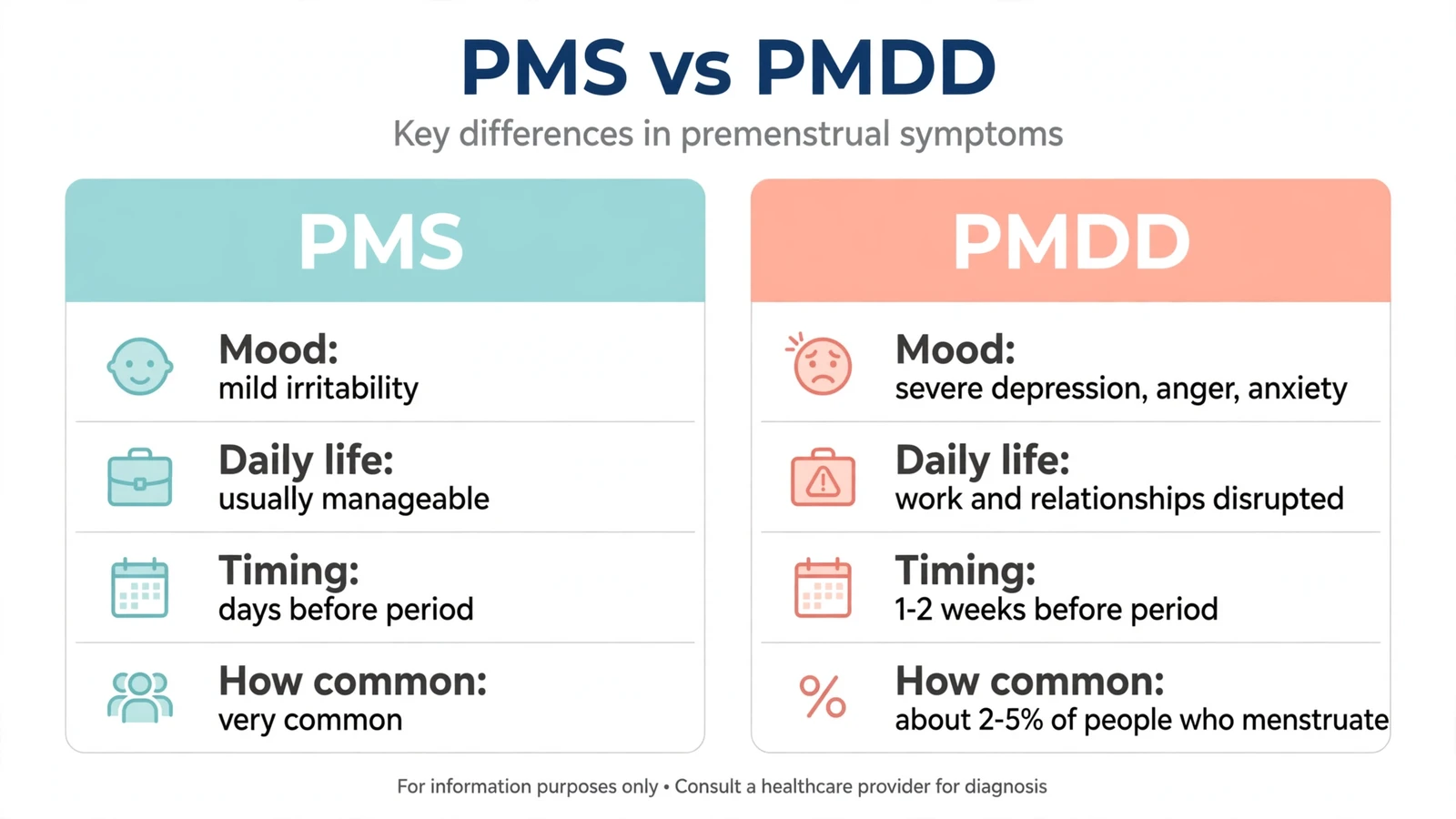
| PMS | PMDD | |
|---|---|---|
| How common | Very common — most people who menstruate have some symptoms | About 2–5% of menstruating people |
| Mood symptoms | Mild irritability or low mood | Severe depression, anxiety, anger or mood swings |
| Impact on daily life | Usually manageable | Can disrupt work, relationships and daily activities |
| Timing | Days before a period | One to two weeks before a period, easing a few days after it starts |
| Diagnosis | Usually based on symptoms alone | Needs symptom tracking over at least two cycles |
It is also possible to have both: PMDD can sit alongside PMS, and it can worsen an existing mood condition such as depression or anxiety. Only a doctor can work out which applies to you.
What causes PMDD?
The exact cause of PMDD is not known. The NHS says it may be caused by increased sensitivity to the natural hormone changes of the menstrual cycle, especially changes in oestrogen and progesterone. Hormone levels in people with PMDD are usually normal — the difference appears to be how the brain responds to those normal changes. Serotonin, a brain chemical that regulates mood, hunger and sleep, may also play a role, as its levels change across the cycle too.
You may be more likely to develop PMDD if you have anxiety or depression, a personal or family history of PMS, PMDD or mood disorders, or a history of trauma or highly stressful events, according to the Cleveland Clinic.
How is PMDD diagnosed?
There is no blood test for PMDD. Diagnosis is based on the pattern of your symptoms across the cycle. A GP will ask about your symptoms and how they affect your life, and may diagnose PMDD if your symptoms happen every month around one or two weeks before your period and you have had them for at least two months.
Keeping a diary of your symptoms for at least two menstrual cycles is the key step. The NHS recommends tracking symptoms for at least two cycles to share with your GP, and research confirms that prospective daily tracking is critical because remembering symptoms afterwards is unreliable. A period-tracking app or a simple written diary both work — note your mood, energy, sleep, appetite and physical symptoms each day, along with the dates of your period.
Your GP will also want to rule out other conditions, such as depression, anxiety, thyroid problems or perimenopause, which can look similar or make symptoms worse.
Treatment for PMDD
Treatment usually focuses on managing symptoms, and the right choice depends on how severe your symptoms are, your preferences and whether you plan to get pregnant. The main treatments a GP may offer are:
Antidepressants (SSRIs)
SSRIs (selective serotonin reuptake inhibitors) are often the first treatment offered for PMDD. Mind explains that they can be taken every day or only during the luteal phase — the time between ovulation and the start of your period — and that they have the strongest evidence of the available treatments, with effects sometimes felt within 24 hours. Your doctor should review them with you after about two months to check they are working.
Hormonal treatments
Hormonal treatments aim to stop ovulation, which stops the hormone changes that trigger symptoms. The combined contraceptive pill is the usual option, and pills that stop ovulation may work better for PMDD. Evidence for the pill is mixed — some people find it helps a lot, others find it makes symptoms worse — so a doctor will usually suggest a trial of a few months. For severe PMDD that has not responded to other treatments, injections that bring on a temporary menopause (GnRH analogues) may be considered, usually with hormone replacement therapy (HRT) alongside.
Talking therapies
Cognitive behavioural therapy (CBT) can help you manage the emotional symptoms of PMDD, and it can work on its own or alongside medicine. In England you can self-refer to an NHS talking therapies service; elsewhere, ask your GP for a referral.
Pain relief
Painkillers or anti-inflammatory medicines such as ibuprofen or naproxen can help with headaches and joint or muscle pain. Talk to a doctor or pharmacist first to make sure they are suitable for you.
In very severe cases where no other treatment has helped, surgery to stop periods may be discussed. This is a last resort, is not reversible and is not suitable if you want to get pregnant. Your doctor should first suggest a trial of GnRH analogues with HRT, which gives an idea of how you may feel after the operation.
Things that may help with PMDD
Self-care will not cure PMDD, but it can reduce the impact of symptoms, especially alongside treatment:
- Exercise regularly — the Mayo Clinic notes that regular exercise often reduces premenstrual symptoms
- Eat a balanced diet — smaller meals every two to three hours may help
- Get plenty of sleep and keep a regular sleep routine
- Try mindfulness or relaxation techniques, such as meditation or yoga
- Cut back on caffeine and alcohol — the NHS suggests avoiding more than 14 units of alcohol a week
- Try to quit smoking
- Track your cycle and plan ahead for the difficult days — for example, keeping busy social plans lighter and having a self-care kit ready
- Talk to someone you trust and consider peer support, such as the groups listed by Mind or the International Association for Premenstrual Disorders (IAPMD)
If you are thinking about taking a supplement, such as calcium, vitamin B6 or chasteberry, talk to a doctor or pharmacist first. There is only limited evidence for these, and they can interact with other medicines.
When to see a doctor
See a GP if you think you might have PMDD, especially if your symptoms repeat every month, disrupt your work or relationships, or do not improve with self-care. Take your symptom diary with you — it is the single most useful thing for getting a diagnosis. If a treatment is not working, go back: there are several options, and finding the right one can take time.
In an emergency call 911 (US), 999 (UK) or 112 (EU). If you are having suicidal thoughts, call 999 or go to A&E, or call Samaritans free on 116 123 at any time. You can also find support at https://www.healthdailyadvice.com/get-help-now/.
Frequently asked questions
What is PMDD?
PMDD (premenstrual dysphoric disorder) is a severe form of PMS that causes intense mood and physical symptoms in the one to two weeks before a period. It affects about 2–5% of people who menstruate. Unlike PMS, its symptoms can disrupt work, school and relationships. It is a recognised medical condition, and treatments including SSRIs, hormonal options and talking therapy can help.
How is PMDD different from PMS?
Both conditions cause mood and physical symptoms before a period, but PMDD is far more severe. PMS symptoms are usually mild to moderate and manageable, while PMDD brings intense depression, anxiety, anger or mood swings that can disrupt work and relationships. PMDD symptoms also tend to start earlier — one to two weeks before a period — and a formal diagnosis needs symptom tracking over at least two cycles.
What causes PMDD?
The exact cause is not known. It is thought to be caused by increased sensitivity to the normal hormone changes of the menstrual cycle, especially oestrogen and progesterone. Hormone levels in people with PMDD are usually normal — the difference seems to be how the brain responds to them. Serotonin, a brain chemical that affects mood, may also play a role. Anxiety, depression or a family history of mood disorders can raise the risk.
How is PMDD diagnosed?
There is no blood test for PMDD. A GP diagnoses it from the pattern of your symptoms across the cycle: they should appear every month in the one to two weeks before your period, ease a few days after it starts, and have been happening for at least two months. Keeping a daily symptom diary for at least two menstrual cycles is the key step, as remembering symptoms afterwards is unreliable. Your GP will also rule out other conditions.
What is the best treatment for PMDD?
There is no single best treatment — it depends on your symptoms and preferences, and you should decide with your doctor. SSRIs are often the first option and have the strongest evidence; they can be taken daily or only in the two weeks before a period. Hormonal treatments such as the combined pill, which stop ovulation, are another first-line option, and talking therapy such as CBT can help too.
Does PMDD go away after menopause?
Usually, yes. PMDD symptoms typically ease in pregnancy or after menopause, because they depend on ovulation and the monthly hormone cycle. But symptoms can worsen during perimenopause, when hormone levels fluctuate more. Until then, symptoms tend to continue each month, though treatment can make them much more manageable. If your symptoms change or get worse, talk to your GP.
Sources
- NHS: PMDD (premenstrual dysphoric disorder) www.nhs.uk
- Mayo Clinic: Premenstrual dysphoric disorder: Different from PMS? www.mayoclinic.org
- Cleveland Clinic: Premenstrual Dysphoric Disorder (PMDD) my.clevelandclinic.org
- Mind: Treatment for premenstrual dysphoric disorder (PMDD) www.mind.org.uk
- Sander BJ, Gordon JL, Brennand EA. Premenstrual dysphoric disorder. CMAJ, 2024 pmc.ncbi.nlm.nih.gov

Try the tool
When is your next period and fertile window?
Six cycles ahead from your last period date.
Open the calculator