Is Snoring Bad for You? When It’s Harmless and When It’s Not
Occasional snoring is usually harmless — but loud, nightly snoring with gasping or daytime tiredness can signal sleep apnea. Here's how to tell the difference and what to do.
- Written by
- Health Daily Advice
- Published
- Reading time
- 4 minutes
- Sources
- 8 cited
In this guide
For most people, no. Occasional light snoring is harmless and just noise. But loud snoring three or more nights a week, especially with gasping, breathing pauses, or daytime sleepiness, can signal sleep apnea — a condition where breathing repeatedly stops and starts, raising the risk of high blood pressure, heart disease, and stroke.
What snoring actually is
Snoring is the rattling and vibration of tissues near the airway in the back of the throat. During sleep the muscles loosen and the airway narrows, so moving air makes the tissue flutter and make noise, according to the Sleep Foundation. The NHS puts it simply: the tongue, mouth, throat, or nasal airways relax and narrow during sleep, and that narrowed passage vibrates as you breathe.
How common is snoring?
Very. About 57% of men, 40% of women, and 27% of children snore in the U.S., and more than a quarter of adults experience snoring on a regular basis (Sleep Foundation). It gets more common with age, and weight matters: a 10% increase in body weight may make you six times more likely to have obstructive sleep apnea (Sleep Foundation). The NHS notes that snoring is very common and is not usually caused by anything serious.
When snoring is just noise
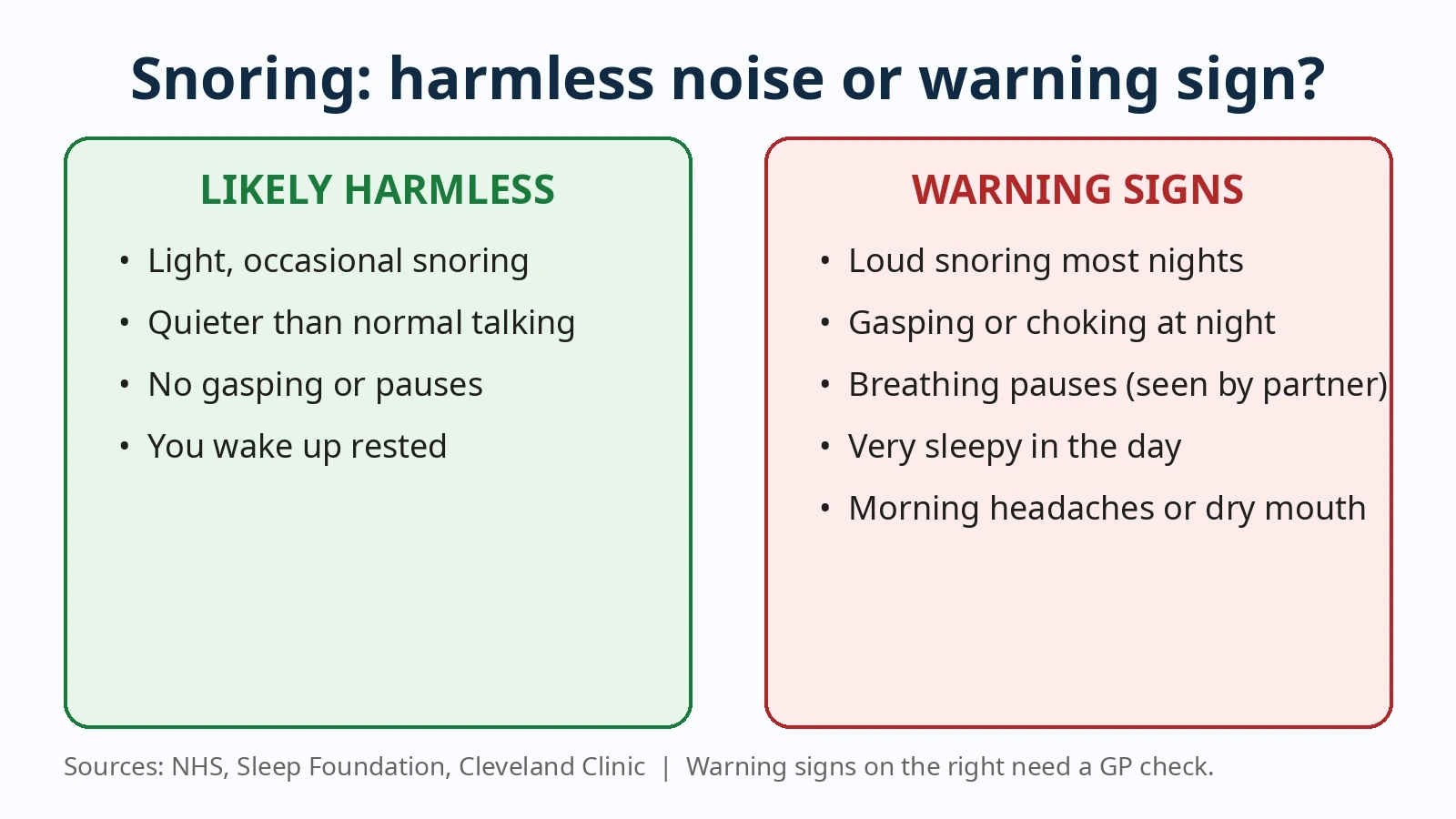
Light, infrequent snoring is normal and does not usually need medical testing or treatment — its main impact is on a partner’s sleep (Sleep Foundation). Snoring that happens more than three nights a week is called “primary snoring”; on its own it is generally not considered a health concern unless there are signs of sleep disruption or sleep apnea (Sleep Foundation). Temporary causes — a cold, allergies, or a few glasses of wine — make snoring worse for a night or two and, in the words of a Cleveland Clinic sleep specialist, are likely nothing to worry about.
When snoring can be bad for you
The line between noise and warning sign is drawn by sleep apnea. Snoring is the most common symptom of obstructive sleep apnea (OSA), in which the airway gets blocked or collapses during sleep and breathing repeatedly stops and starts (Sleep Foundation). Up to 70% of snorers have been diagnosed with sleep apnea, and OSA affects around one billion adults worldwide, with 80–90% of cases going undiagnosed (Sleep Foundation).
“Snoring is really the sound that is made by the upper airway muscles when the airway is collapsing,” says Cleveland Clinic sleep specialist Dr. Nancy Foldvary, who notes that most people who snore have some degree of OSA — a condition that can lead to chronic diseases affecting the heart, brain, and metabolism (Cleveland Clinic). OSA snoring tends to be loud and sounds like choking, snorting, or gasping (Sleep Foundation).
Unchecked OSA is associated with dangerous daytime drowsiness and serious conditions including high blood pressure, heart disease, stroke, diabetes, and depression (Sleep Foundation; NHS). Daytime sleepiness also raises the risk of serious accidents, such as car crashes, and can make it hard to concentrate at work or school (NHS). Cleveland Clinic adds that people whose sleep is frequently disrupted — including by sleep apnea — and who get less than seven hours a night are at higher risk of developing dementia later in life (Cleveland Clinic).
What can make snoring better
These general habits help both ordinary snoring and sleep apnea. They are not medical treatments — and if you suspect sleep apnea, talk to a doctor rather than relying on lifestyle changes alone.
- Keep a healthy weight. Being overweight or obese is a risk factor for snoring and sleep apnea, so maintaining a healthy weight can be an important step against snoring (Sleep Foundation).
- Limit alcohol before bed. Alcohol is a frequent promoter of snoring, and sedative medications relax the throat muscles further (Sleep Foundation). The NHS advises against drinking too much alcohol and against sleeping pills, which can sometimes cause snoring.
- Sleep on your side. Sleeping on your back makes it easier for the airway to become obstructed, while side sleeping opens the airway a little because less gravity presses down on it (Sleep Foundation; Cleveland Clinic).
- Do not smoke. The NHS lists not smoking among its advice for snoring, and Cleveland Clinic’s Dr. Brian Chen names quitting smoking and getting regular exercise among the lifestyle changes that can help.
- Ease nasal congestion. Treating allergies or a cold can combat snoring, and breathing strips worn over the nose may help open the nasal passages at night (Sleep Foundation).
If snoring turns out to be sleep apnea, a doctor may discuss options such as a CPAP machine, which gently pumps air through a mask you wear while you sleep to keep the airway open (NHS).
When to see a doctor
Talk to a doctor if lifestyle changes are not helping your snoring, or if snoring is having a big impact on your or your partner’s life (NHS). Get checked promptly if you notice any of these possible signs of sleep apnea: snoring three or more times a week; very loud snoring; gasping, choking, or snorting sounds; breathing that stops and starts during sleep; daytime drowsiness or trouble concentrating; morning headaches; or high blood pressure (Sleep Foundation). A sleep study is the usual way doctors confirm sleep apnea and measure its severity.
In an emergency call 911 (US), 999 (UK) or 112 (EU)
Frequently asked questions
Is snoring bad for you?
Usually not. Light, occasional snoring is considered normal and is mainly a problem for the person sleeping next to you. It becomes a health concern when it is loud, happens most nights, and comes with signs of sleep apnea such as gasping, pauses in breathing, daytime sleepiness, or morning headaches. Only a doctor can tell you which kind you have, so get checked if you have these signs.
How can I tell if my snoring is sleep apnea?
You cannot be sure on your own. Loud snoring that sounds like choking, snorting, or gasping, breathing pauses noticed by a partner, waking up with a headache, and feeling tired or unfocused during the day all point toward possible sleep apnea, according to the Sleep Foundation. Doctors confirm it with a sleep study, which measures how often your breathing pauses overnight. Talk to a doctor if you have these signs.
Can snoring damage my health?
Ordinary light snoring is not considered harmful. But loud, frequent snoring can be a sign of obstructive sleep apnea, and untreated sleep apnea is associated with high blood pressure, heart disease, stroke, type 2 diabetes, and depression, according to the Sleep Foundation and the NHS. Cleveland Clinic research also links frequent sleep disruption to a higher lifetime risk of dementia. The key step is getting checked to find out which kind of snoring you have.
What helps you stop snoring?
General habits that help include maintaining a healthy weight, limiting alcohol before bed, sleeping on your side instead of your back, not smoking, and easing nasal congestion from allergies or a cold, according to the Sleep Foundation, the NHS, and Cleveland Clinic. These steps help ordinary snoring, but they do not treat sleep apnea. If your snoring is loud or frequent, or you have daytime sleepiness, talk to a doctor rather than relying on lifestyle changes alone.
Should I see a doctor about snoring?
Yes if lifestyle changes have not helped, or if snoring is seriously affecting your sleep or your partner's, according to the NHS. Also see a doctor for red flags of sleep apnea: snoring three or more nights a week, very loud snoring, gasping or choking sounds, pauses in breathing, daytime drowsiness, trouble concentrating, morning headaches, or high blood pressure. If a partner has noticed these symptoms, it can help to bring them to the appointment.
Sources
- Sleep Foundation: Snoring: The Causes, Dangers, & Treatment Options www.sleepfoundation.org
- Sleep Foundation: 126 Sleep Statistics www.sleepfoundation.org
- NHS: Snoring www.nhs.uk
- NHS: Sleep apnoea www.nhs.uk
- Cleveland Clinic Newsroom: When Snoring Is a Cause for Concern newsroom.clevelandclinic.org
- Cleveland Clinic Newsroom: Can Snoring Be a Sign of Something More Serious? newsroom.clevelandclinic.org

Try the tool
Not sure if it can wait?
Common causes and warning signs for 16 everyday symptoms.
Open the symptom guide

