Why Am I Tired All the Time? 7 Common Causes and Fixes
Constant tiredness usually has an identifiable cause: poor or short sleep, ongoing stress, or a medical condition such as anemia, a thyroid problem, or sleep apnea. Here is how to tell them apart, what actually helps, and the red flags that need a doctor.
- Written by
- Health Daily Advice
- Published
- Reading time
- 6 minutes
- Sources
- 8 cited

In this guide
Feeling tired all the time usually comes down to three things: poor or short sleep, ongoing stress, or a medical condition such as anemia, a thyroid problem, or sleep apnea. Most cases improve once the cause is found and treated. If constant tiredness lasts for weeks and you can’t explain it, see a doctor.
Tired vs. fatigued: what’s the difference?
Being tired has a clear cause — a late night, a hard workout, a stressful week — and it usually lifts after rest. Fatigue is different: your mind and body feel exhausted for no clear reason, it’s hard to get through the day, and it doesn’t reliably get better with sleep. As Cleveland Clinic’s Dr. Marianne Sumego puts it, fatigue is when both mind and body are exhausted for no clear reason. The Mayo Clinic describes the same pattern: sometimes fatigue doesn’t go away, it doesn’t get better with rest, and the cause might be unclear.
Knowing which one you have matters. If rest fixes you, you were tired. If rest doesn’t touch it, you may be dealing with fatigue — and it’s worth finding out why. For an estimated 10% to 25% of people, tiredness is an ongoing problem.
Not enough sleep — or not good enough sleep
The simplest explanation is usually the right one: you aren’t getting enough sleep, or the sleep you’re getting isn’t good quality. Adults generally need at least seven hours a night, yet nearly one third of U.S. adults regularly get less. If you’re getting under seven hours, you’re most likely underslept — and extreme daytime tiredness, foggy thinking, and poor focus are hallmark symptoms.
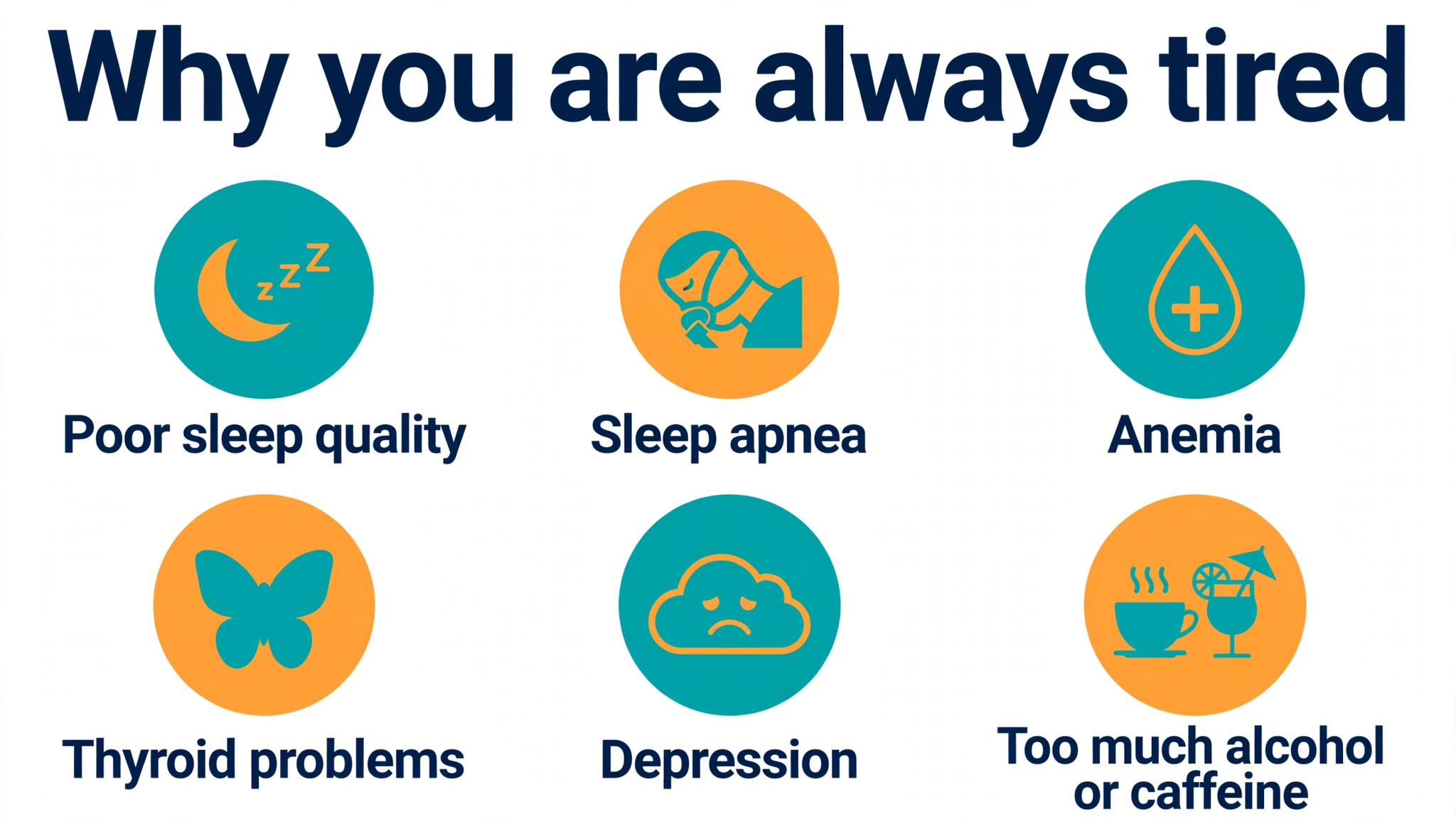
But hours alone don’t tell the whole story. Sleep disorders can wreck sleep quality even when you spend enough time in bed. Sleep apnea causes repeated pauses in breathing, often followed by gasping or choking, which fragments sleep. The NHS flags a classic warning pattern: feeling tired during the day because you wake up at night, make gasping, snorting, or choking noises in your sleep, and snore loudly. If your partner has noticed any of these, mention it to your doctor. Restless legs syndrome and insomnia — trouble falling or staying asleep — are other common sleep saboteurs. If you regularly wake in the early hours, our guide on waking up at 3 a.m. every night walks through the likely reasons.
Medical conditions that can cause constant tiredness
When lifestyle doesn’t explain it, several common medical conditions are worth checking. The NHS lists the following symptom patterns:
| Symptoms | Possible cause |
|---|---|
| Tired during the day; waking at night, gasping, snorting or choking noises, loud snoring | Sleep apnea |
| Lack of energy, noticeable heartbeats (palpitations), shortness of breath, pale skin | Iron deficiency anemia |
| Very tired, very thirsty, urinating more often than usual (especially at night), weight loss | Diabetes |
| Tired all the time, hard to stay still, nervous, anxious and irritable, muscle weakness | Overactive thyroid (hyperthyroidism) |
| Extreme fatigue for at least 3 months (making daily activities very hard), problems with thinking, memory and concentration, flu-like symptoms | ME/CFS (myalgic encephalomyelitis/chronic fatigue syndrome) |
An underactive thyroid, depression, infections such as glandular fever or COVID-19, and heart or kidney disease can also cause lasting fatigue, and Mayo Clinic adds anxiety disorders and low vitamin D to the list. Hormonal changes — during pregnancy, puberty, or menopause — are another common trigger. Don’t try to self-diagnose from the table: a doctor can usually narrow things down with a few blood tests.
Mental health and stress
Stress, anxiety, and depression are among the most common — and most overlooked — causes of constant tiredness. Anxiety and depression can cause excessive daytime sleepiness and longer-than-average sleep, yet you still wake up feeling drained. Cleveland Clinic lists depression and anxiety alongside sleep disorders and anemia as leading causes of chronic fatigue, and notes that ongoing stress alone can drain your energy.
Mental-health-related fatigue has a telltale pattern: it doesn’t improve with rest, and it tends to travel with low mood, loss of interest, or worry. When tiredness comes from a mental health condition, treating that condition usually improves the fatigue too — so it’s worth raising with your doctor rather than powering through.
Everyday habits that drain your energy
Small daily habits can quietly rob you of energy:
- Too little movement — or too much. A sedentary day can make you feel more tired, not less, while overtraining without recovery days can also cause fatigue. Starting an exercise program under professional guidance may help unexplained fatigue; overdone exercise may just need a week or two of rest.
- Alcohol and caffeine timing. Alcohol may help you fall asleep but disrupts sleep quality, and the NHS advises against drinking too much. Caffeine can disrupt your sleep as many as six hours after you drink it, so keep it to the morning and early afternoon.
- Poor diet and dehydration. Eating poorly is a fatigue risk factor (Mayo Clinic), and not drinking enough fluids can cause dehydration-related fatigue that often resolves once fluid levels are restored.
- Medicines. Sleepiness is a known side effect of many medicines, including antihistamines, certain antidepressants, and some blood pressure drugs. Never stop a prescription on your own — talk to a doctor or pharmacist if you suspect a medicine is the culprit.
- Screens before bed. The NHS advises no smartphones or screens in the hour before sleep, and to avoid eating or exercising in the couple of hours before bed.
How to tell if it’s a sleep problem
Ask yourself three questions. First, do you consistently get seven or more hours of sleep? Second, do you doze off during quiet moments — reading, watching TV, sitting in traffic — even after a full night in bed? Third, has anyone told you that you snore loudly or seem to stop breathing in your sleep?
A practical next step is keeping a sleep diary for one to two weeks: note bedtimes, wake times, nighttime awakenings, and how you feel the next day. Bring it to your appointment — it helps your doctor spot patterns like irregular schedules or unrefreshing sleep. Morning headaches can be another clue that something went wrong overnight; see our piece on waking up with a headache for the common causes.
What actually helps
There is no single fix for constant tiredness, because the fix depends on the cause. But these evidence-backed steps help most people:
- Keep a consistent sleep schedule — same bedtime and wake time every day, including weekends. Aim for 6 to 9 hours, the NHS’s recommended range.
- Wind down before bed. Relax for a couple of hours before sleep — read, listen to music or a podcast — and keep the bedroom cool, dark, and quiet.
- Get morning light and move daily. Bright morning light suppresses melatonin and helps you feel alert; regular physical activity boosts mood and sleep quality.
- Eat well and drink enough water throughout the day, and go easy on alcohol.
- Cut late caffeine — nothing caffeinated within six hours of bedtime.
- Address stress head-on. Talking therapies such as CBT are one of the treatments the NHS points to for fatigue, and therapy for insomnia (CBT-I) is the first-line treatment for persistent insomnia.
Give these habits a fair trial — a couple of weeks of consistent change — before deciding they don’t work.
When to see a doctor
See a doctor if you’ve been feeling tired for a few weeks and you’re not sure why, if tiredness is affecting your daily life, or if it comes with other symptoms such as unexplained weight loss, mood changes, or someone hearing you gasp or choke in your sleep. In the UK, your GP can arrange blood tests to check for anemia, diabetes, or thyroid problems.
Mayo Clinic advises making an appointment if resting, reducing stress, eating well, and drinking plenty of fluids for two or more weeks hasn’t helped your fatigue. Seek urgent care if fatigue comes with chest pain, shortness of breath, a very fast or irregular heartbeat, fainting, severe headache, or unusual bleeding.
In an emergency call 911 (US), 999 (UK) or 112 (EU)
Frequently asked questions
Why am I tired even though I sleep 8 hours?
Sleep quality matters as much as quantity. Sleep apnea, restless legs syndrome, or insomnia can fragment your sleep so you never reach the deep, restorative stages — you can spend 8 hours in bed and wake up exhausted. Late caffeine, alcohol, and irregular bedtimes do the same. If you consistently get enough hours yet wake unrefreshed, keep a sleep diary for one to two weeks and see a doctor, who may suggest a sleep study.
Can depression make you tired all the time?
Yes. Depression and anxiety are among the most common causes of constant tiredness. They can cause excessive daytime sleepiness, longer-than-average sleep, and exhaustion that doesn't improve with rest. Fatigue from a mental health condition usually travels with low mood, loss of interest, or worry. Treating the underlying condition typically improves the tiredness, so it's worth raising with a doctor rather than pushing through.
When should I see a doctor about being tired all the time?
See a doctor if you've been tired for a few weeks and don't know why, if tiredness is interfering with your daily life, or if it comes with other symptoms such as unexplained weight loss, mood changes, or loud snoring with gasping or choking at night. Mayo Clinic advises an appointment if two or more weeks of rest, reduced stress, good eating, and plenty of fluids hasn't helped.
Does anemia make you tired all the time?
Yes, it can. Iron deficiency anemia reduces the blood's ability to carry oxygen, leaving you with a persistent lack of energy. The NHS lists the typical pattern as lack of energy plus noticeable heartbeats, shortness of breath, and pale skin. Anemia is one of the conditions doctors usually check with a blood test when tiredness is unexplained, so mention these symptoms if you have them.
Is it normal to feel tired all the time?
No. Feeling tired now and then is normal, but being tired all the time is not — and for 10% to 25% of people it becomes an ongoing problem. Constant exhaustion that has no clear cause, doesn't improve with rest, or keeps getting worse deserves medical attention. Start with the basics: consistent sleep times, enough hours, regular exercise, and less late caffeine, then see a doctor if nothing changes.
Sources
- NHS: Tiredness and fatigue www.nhs.uk
- Cleveland Clinic Newsroom: When feeling tired could be something more newsroom.clevelandclinic.org
- Sleep Foundation: Why Am I So Tired? www.sleepfoundation.org
- Sleep Foundation: Does Daytime Tiredness Mean You Need More Sleep? www.sleepfoundation.org
- Mayo Clinic: Fatigue — definition, causes, when to see a doctor www.mayoclinic.org

Try the tool
Not sure if it can wait?
Common causes and warning signs for 16 everyday symptoms.
Open the symptom guide