Erectile Dysfunction: Causes, Treatment and When to See a Doctor
Erectile dysfunction is common and usually treatable. This guide explains the physical and psychological causes, how doctors investigate it, and the treatment options.
- Written by
- Health Daily Advice
- Published
- Reading time
- 3 minutes
- Sources
- 7 cited

In this guide
Erectile dysfunction (ED) means repeatedly having trouble getting or keeping an erection firm enough for sex. Occasional difficulty is common and usually nothing to worry about, but problems that keep happening are worth checking with a doctor. ED is common, and treatment usually helps once the cause is found.
What is erectile dysfunction?
The US National Institute of Diabetes and Digestive and Kidney Diseases (NIDDK) defines ED as a condition that prevents a man from getting or keeping an erection firm enough for sex. It can mean being able to get an erection sometimes but not every time, being unable to keep it long enough, or being unable to get one at all. The NHS notes that, depending on the cause, a man may still get erections at other times, such as on waking, and that low sex drive can occur alongside ED.
Physical causes
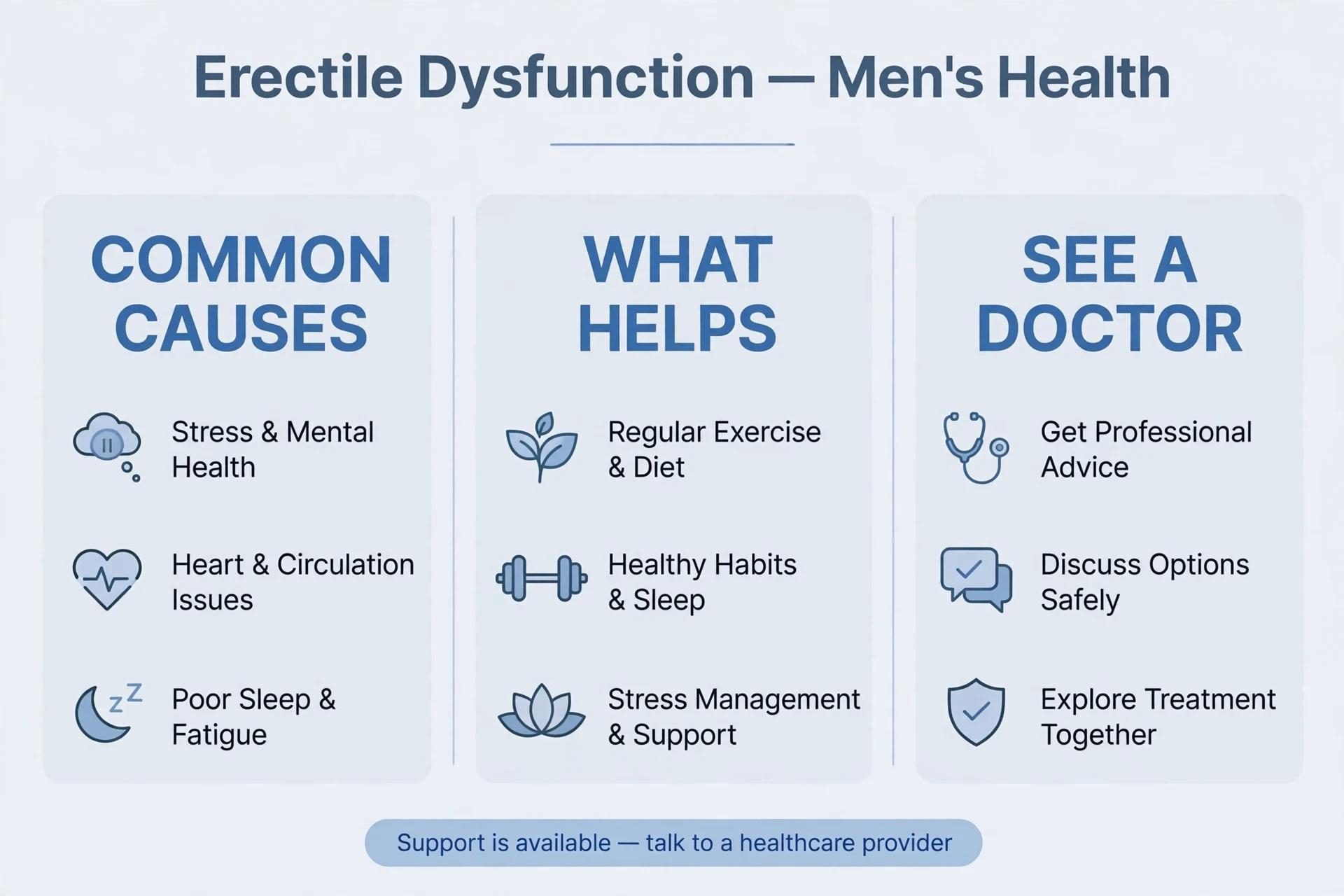
An erection depends on blood flow, nerves, hormones and signals from the brain, so anything that disrupts one of these can contribute to ED. Common physical causes include:
- conditions affecting blood vessels, such as high blood pressure, high cholesterol and cardiovascular disease
- diabetes, which can damage nerves and blood vessels
- hormone problems, including low testosterone
- neurological conditions such as multiple sclerosis or Parkinson’s disease, and nerve damage after prostate surgery
- some medicines, including certain blood pressure medicines and antidepressants
Because ED can be an early sign of a condition such as diabetes or heart disease, persistent ED is a reason to have a general health check, not just to treat the symptom itself.
Psychological causes
Stress, tiredness, anxiety, depression and relationship problems are common psychological contributors. Worry about performance can itself make erections harder to achieve, creating a cycle in which anxiety about one episode leads to more difficulty next time. Physical and psychological causes often occur together: for example, a man with diabetes may also feel anxious about sex. Talking therapy or counselling, including therapy focused on sexual health, can help when emotional or relationship factors are involved.
Lifestyle factors
Smoking, drinking more than the recommended amount of alcohol, being overweight and being inactive can all make ED more likely. The NHS advises losing weight if overweight, stopping smoking, eating a healthy diet, exercising daily and reducing stress and anxiety, and not drinking more than 14 units of alcohol a week. These changes also lower the risk of the heart and metabolic conditions linked to ED, so they are worth discussing with a doctor even when medicine is also used.
How ED is diagnosed
A doctor will usually ask about symptoms, general health, lifestyle, relationships and medicines, and may do basic checks such as blood pressure. Blood tests can look for diabetes, cholesterol problems or hormone issues, and a physical examination can rule out an obvious physical cause. Cleveland Clinic notes that imaging tests of blood flow are sometimes used when the cause is unclear. Being open about symptoms helps the doctor find the cause faster, and these are problems doctors deal with every day.
Treatment options
Treatment starts with the underlying cause where one is found, for example by managing blood pressure or diabetes, or by changing a medicine that may be contributing. The main treatment options include:
- Medicines that increase blood flow, called PDE-5 inhibitors, such as sildenafil, tadalafil, vardenafil and avanafil. A doctor or pharmacist can advise which is suitable and whether it is safe alongside other medicines.
- Vacuum devices, which draw blood into the penis to create an erection and can be used when medicine is not suitable or does not work.
- Talking therapy or counselling, particularly when stress, anxiety, depression or relationship problems contribute.
- Other specialist treatments, such as penile injections or, when other options have not worked, implant surgery, discussed with a specialist.
Talk to a doctor or pharmacist before buying ED medicines online. The NHS warns that many websites sell fake medicines whose ingredients vary and may cause unpleasant side effects or be unsuitable for you.
When to see a doctor
See a GP or a sexual health clinic if erection problems keep happening, as it might be a sign of a health condition that can be treated. Seek urgent medical help for an erection lasting more than four hours, or for chest pain during sex. Do not stop or change a prescribed medicine because you suspect it affects erections; ask the prescriber about alternatives first.
In an emergency call 911 (US), 999 (UK) or 112 (EU).
Frequently asked questions
What is erectile dysfunction?
Erectile dysfunction (ED) is a condition that prevents a man from getting or keeping an erection firm enough for sex. It can mean getting an erection sometimes but not every time, not keeping it long enough, or not getting one at all. Occasional difficulty is common, but problems that keep happening are worth discussing with a doctor.
What causes erectile dysfunction?
Many factors can contribute. Physical causes include conditions affecting blood vessels, such as high blood pressure and cardiovascular disease, diabetes, hormone problems, nerve damage and some medicines. Psychological causes include stress, anxiety, depression and relationship problems. Often physical and psychological factors occur together.
Is erectile dysfunction a normal part of ageing?
ED becomes more common with age, but it is not a routine or inevitable part of ageing, and it is not something to simply accept. Persistent ED can also be an early sign of a condition such as diabetes or heart disease, so a general health check is worthwhile. Most cases can be treated once the cause is found.
What treatments are available for erectile dysfunction?
Treatment starts with any underlying cause, such as managing diabetes or blood pressure. Options include lifestyle changes, medicines that increase blood flow (PDE-5 inhibitors), vacuum devices, talking therapy or counselling, and specialist treatments such as injections or implant surgery when other options have not worked. A doctor or pharmacist can advise what is safe for you.
When should I see a doctor about erectile dysfunction?
See a GP or a sexual health clinic if erection problems keep happening, as they might signal a treatable health condition. Seek urgent medical help for an erection lasting more than four hours, or for chest pain during sex. Do not stop a prescribed medicine you suspect is involved without asking the prescriber first.
Sources
- NHS Wales: Erectile dysfunction (impotence) 111.wales.nhs.uk
- NIDDK: Erectile Dysfunction (ED) www.niddk.nih.gov
- Cleveland Clinic: Erectile Dysfunction Treatment my.clevelandclinic.org
- Mayo Clinic News Network: What causes erectile dysfunction and should it be checked? newsnetwork.mayoclinic.org

Try the tool
Not sure if it can wait?
Common causes and warning signs for 16 everyday symptoms.
Open the symptom guide