Why Do I Get Dizzy When I Stand Up? Causes and What to Do
That woozy moment when you stand up is usually a brief blood pressure dip called postural hypotension. Here is why it happens, what makes it worse, what helps and the warning signs that need prompt care.
- Written by
- Health Daily Advice
- Published
- Reading time
- 5 minutes
- Sources
- 10 cited

In this guide
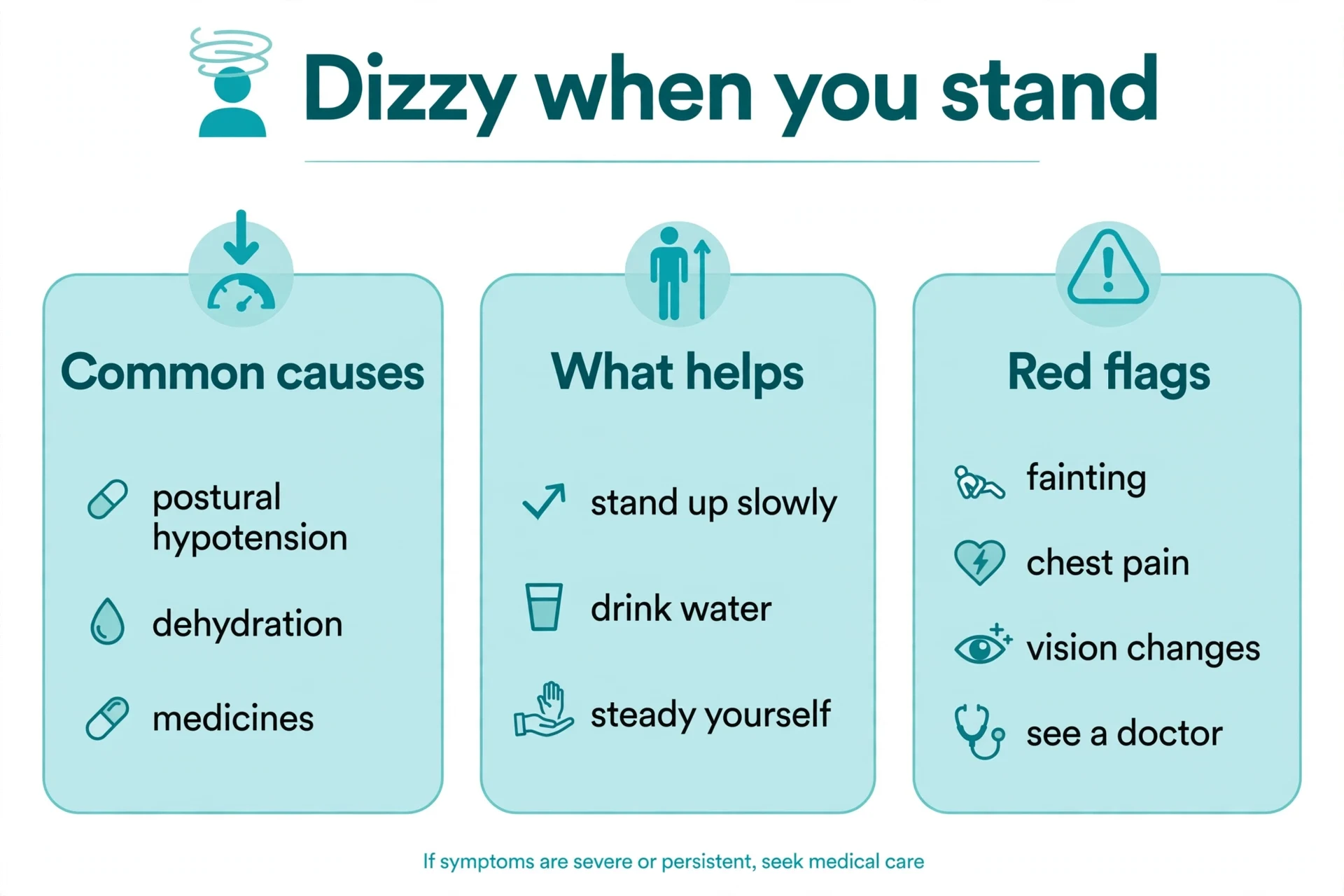
Feeling dizzy when you stand up is usually caused by a brief drop in blood pressure, called postural hypotension (orthostatic hypotension in the US). Gravity pulls blood into your legs as you rise, and if your circulation is slow to adjust, less blood reaches your brain. Dehydration, certain medicines and standing up too quickly make it more likely.
What happens in your body when you stand up
Standing is a bigger job for your circulation than it feels like. Gravity pulls blood down into the veins of your legs and trunk, which briefly lowers blood pressure and the amount of blood your heart pumps to your brain. Less blood flow to the brain is what causes the light-headed or faint feeling. In most people, the nervous system quickly compensates: it raises the heart rate and tightens the blood vessels, pushing blood pressure back up before symptoms can develop. Dizziness happens when that compensation is delayed or incomplete. The symptoms typically arrive within seconds to a few minutes of standing — especially after you have been lying in bed or sitting for a long time — and they usually settle quickly once you sit or lie back down, according to the MSD Manual.
The most common causes
A sudden drop in blood pressure (postural hypotension)
This is the classic explanation for standing dizziness: blood pressure falls when you change position. NHS inform defines low blood pressure as a reading below 90/60mmHg, and notes that some people get its symptoms — light-headedness, fainting, blurred vision, confusion, feeling sick and general weakness — after a sudden movement like standing up. A GP usually confirms postural hypotension by measuring your blood pressure while you are lying down and again after you stand: Mayo Clinic notes that a fall of more than 20 to 30 millimetres of mercury (mmHg) in the systolic number or 10mmHg in the diastolic number, within three minutes of standing, points to the condition.
Dehydration
Losing fluids lowers your blood volume, which makes it harder for your circulation to keep blood pressure steady when you stand. The NHS lists vomiting and diarrhoea, hot weather, heavy sweating, drinking too much alcohol and medicines that make you pee more (NHS) as common reasons you might be low on fluids. Alongside thirst, dark yellow urine and tiredness, the NHS lists dizziness or light-headedness as a dehydration symptom — and says you should seek urgent advice if you feel dizzy when you stand up and it does not go away.
Medicines that lower blood pressure
Standing dizziness can be a side effect of medicines, especially drugs for high blood pressure, some antidepressants, medicines for Parkinson’s disease and water tablets (diuretics). The NHS lists blood pressure medication and antidepressants among the less common causes of dizziness, and Cleveland Clinic notes that medicines for depression, high blood pressure and heart disease can raise the risk. Never stop a prescribed medicine because of dizziness — talk to a GP or pharmacist about whether a review of your medicines is needed.
Heart, nerve and age-related causes
The MSD Manual groups the causes of standing dizziness into problems with the autonomic nervous system (for example in Parkinson’s disease or diabetes), a reduced ability of the heart to pump blood (including heart rhythm problems such as atrial fibrillation, a fast irregular heartbeat), decreased blood volume and faulty hormonal responses. It also notes that dizziness or light-headedness on standing affects about 15 to 20% of older adults, because ageing blunts the reflexes that keep blood pressure steady and stiffens artery walls. Only a doctor can sort out which of these applies to you.
Other triggers: food, heat and mornings
Standing dizziness is often worse in the morning, after standing still for a long time, after a heavy meal or in hot weather. NHS inform also notes that symptoms can appear after eating (postprandial hypotension). Some younger people get similar light-headedness on standing without any blood pressure drop: their heart rate rises sharply instead, a condition called postural orthostatic tachycardia syndrome (POTS) whose cause is not fully understood.
What to do when you feel dizzy on standing
If the room starts spinning as you get up, the priority is to avoid a fall. The NHS advises lying down until the dizziness passes, then getting up slowly; moving slowly and carefully; drinking plenty of fluids, especially water; and avoiding coffee, alcohol, cigarettes and drugs while you feel dizzy. Do not bend down suddenly, and do not drive, climb ladders or use heavy machinery while you are dizzy (NHS inform).
- Get up in stages. Move from lying to sitting to standing, and only start walking once you feel steady. Have something sturdy nearby to hold on to when you stand (Cleveland Clinic).
- Keep up your fluids. Dehydration is a common and fixable trigger, so drink water regularly through the day and more when it is hot or you have been ill (NHS).
- Eat lighter. Small, frequent meals rather than one large one, and avoiding heavy high-carbohydrate meals, can reduce symptoms after eating (NHS inform; Cleveland Clinic).
- Stay cool and keep moving gently. Avoid very hot baths and showers, and avoid standing still for long periods — marching your feet or flexing your leg muscles helps keep blood moving (Cleveland Clinic).
- Ask about support garments. Wearing compression stockings or an abdominal binder can reduce blood pooling in the legs; a pharmacist or GP can advise what is suitable (Mayo Clinic).
How a GP checks standing dizziness
Because standing dizziness has many possible causes, it is worth getting checked — the NHS advises that dizziness should still be investigated by a doctor even though it is usually not serious. Expect your GP to ask how long the episodes last, how often they happen, whether you have fainted, what medicines you take and whether you have conditions such as diabetes. A typical check is to measure your blood pressure and heart rate while you lie down for a few minutes, then again one and three minutes after you stand up. The GP may also arrange blood tests, an ECG (a tracing of the heart’s rhythm) or a tilt table test if an autonomic nerve problem is suspected.
When to see a doctor
See your GP if dizziness on standing keeps coming back, does not go away, or worries you — or if it comes with hearing or speech changes, ringing in the ears, vision changes, numbness or weakness in your face, arms or legs, fainting or headaches. Seek emergency care right away if standing dizziness comes with chest pain or discomfort, an irregular heartbeat, difficulty walking, poor coordination, or black, tarry stools or blood in your stools, as the MSD Manual lists these as warning signs.
In an emergency call 911 (US), 999 (UK) or 112 (EU).
Frequently asked questions
Is it normal to feel dizzy when I stand up?
Occasional brief light-headedness when you stand up too quickly is common and usually harmless: gravity drops your blood pressure for a few seconds before your circulation adjusts. See your GP if it happens every time you stand, brings dimming vision, ringing ears, leg weakness or neck pain, or you actually faint. Those patterns can mean postural hypotension that needs checking.
What helps when I feel dizzy standing up?
Sit or lie down until the dizziness passes, then get up in stages — lying to sitting to standing — and only start walking once you feel steady. Drink plenty of water, since dehydration is a common trigger, and keep something sturdy nearby to hold on to. Avoid coffee and alcohol while you feel dizzy, and do not drive, climb ladders or use machinery until it has fully settled.
Can dehydration cause dizziness when standing up?
Yes. The NHS lists dizziness and light-headedness among the symptoms of dehydration, alongside thirst, dark yellow urine, peeing less often and tiredness. Dehydration lowers your blood volume, so your blood pressure can fall further when you stand. Drink fluids regularly — small sips building up if you feel sick — and seek urgent GP advice if dizziness on standing does not go away.
Which medicines can make you dizzy when you stand up?
Medicines that lower blood pressure are the most likely culprits, along with water tablets (diuretics), some antidepressants and medicines for Parkinson's disease. The NHS and Cleveland Clinic both list these among the causes of standing dizziness. Never stop a prescribed medicine on your own because of dizziness — ask your GP or pharmacist whether a review of your medicines is sensible.
When should I worry about dizziness when standing up?
See your GP if it keeps coming back, does not go away or worries you, or comes with vision changes, hearing changes, numbness or weakness in your face, arms or legs. Get emergency help right away for standing dizziness with chest pain, an irregular heartbeat, fainting, difficulty walking or coordination problems. Frequent episodes deserve investigation, not just being ignored.
Sources
- NHS inform: Dizziness (lightheadedness) www.nhsinform.scot
- NHS inform: Low blood pressure (hypotension) www.nhsinform.scot
- NHS: Dehydration www.nhs.uk
- Mayo Clinic News Network: Q and A: Orthostatic hypotension is more than feeling dizzy every now and then newsnetwork.mayoclinic.org
- Cleveland Clinic: Orthostatic Hypotension: Symptoms & Treatment my.clevelandclinic.org
- MSD Manual (consumer): Dizziness or Light-Headedness When Standing Up www.msdmanuals.com

Try the tool
Not sure if it can wait?
Common causes and warning signs for 16 everyday symptoms.
Open the symptom guide