Why Do My Eyes Twitch? Causes, Fixes and Red Flags
Eye twitching is almost always harmless eyelid twitching (myokymia) driven by tiredness, stress, caffeine or dry eyes. Here's what causes it, how to stop it, and the red flags that mean seeing a doctor.
- Written by
- Health Daily Advice
- Published
- Reading time
- 4 minutes
- Sources
- 12 cited
In this guide
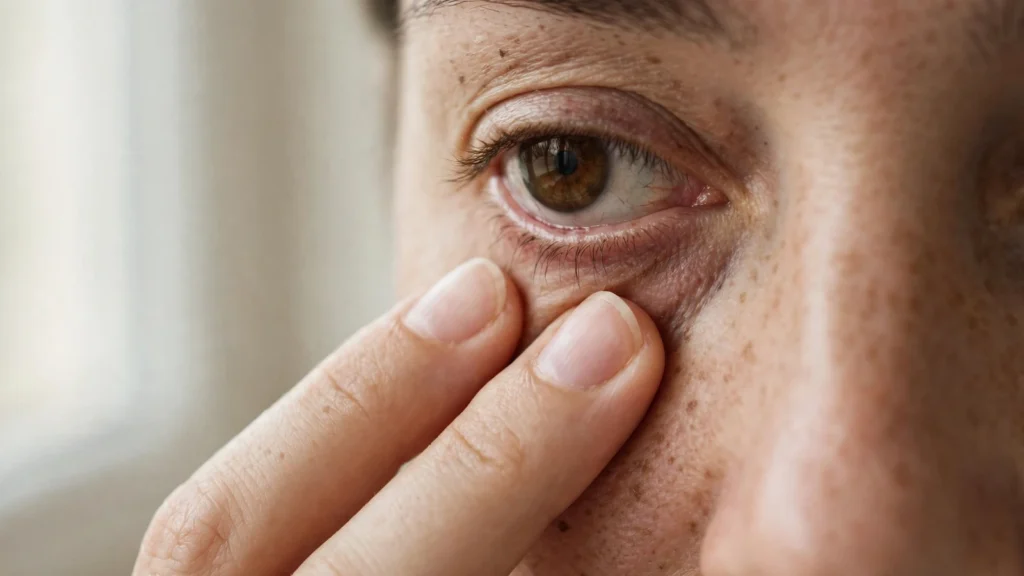
Eye twitching is almost always myokymia — tiny, uncontrollable contractions of the eyelid muscle. It is very common, usually affects one eyelid at a time, and is “very rarely a sign of anything serious”, according to the NHS. Stress, tiredness, too much caffeine and eye strain are the usual triggers, and it normally settles within days or weeks.
What causes eyelid twitching?
Eyelid twitching, or myokymia, is an involuntary spasm of the orbicularis oculi muscle that closes your eyelid. The Mayo Clinic says it is the most common type of eye twitch, “happens to most people at some point”, and usually affects only one eye at a time — most often the lower eyelid.
The exact trigger in any one person is rarely clear, but every major source points to the same shortlist:
- Tiredness and lack of sleep — the most common trigger cited by the NHS, Moorfields Eye Hospital and the Cleveland Clinic.
- Stress and anxiety — your facial muscles tense up under stress, and eyelids are no exception.
- Too much caffeine or alcohol — stimulants can make the twitch worse; the NHS lists both as frequent causes.
- Eye strain — long hours on screens without breaks irritate the eyelid muscles.
- Dry or irritated eyes — dry eyes, bright light, wind and air pollution are all on the Mayo Clinic’s trigger list.
- Nicotine and some medicines — tobacco and certain prescribed drugs can cause twitching; check the side effects leaflet and don’t stop a prescribed medicine without medical advice.
No source puts a number on how often each trigger is responsible — usually it’s a combination of two or three at once.
How long does an eye twitch last?
A single episode usually lasts seconds to hours and can come back over a few hours, days or longer, according to the Mayo Clinic. Most people find the whole thing is over within a few days to a couple of weeks, especially once they sort out the trigger. The NHS says twitches “normally stop in a few days or weeks”.
It is worth knowing that other people almost certainly can’t see it. Johns Hopkins notes that mild twitching “feels more noticeable than it is” — observers are not likely to notice a twitching eyelid in another person.
How to stop an eye twitch
Most eye twitches need no treatment at all and go away on their own. The steps every major source recommends are simple:
- Get more sleep — proper rest is the single most recommended fix.
- Cut back on caffeine and alcohol — and tobacco, if you smoke.
- Reduce stress — exercise, breathing exercises and meditation all help.
- Rest your eyes — take regular screen breaks and wear sunglasses in bright light.
- Try artificial tears — if your eyes feel dry, lubricating eye drops can calm the irritation behind the twitch, says Johns Hopkins.
- Try not to worry about it — the NHS points out that worrying can make twitches worse.
Two things not to bother with: tonic water and vitamin supplements are often recommended online, but WebMD’s review notes there is “no scientific evidence” they work. And despite what some corners of the internet claim, none of the major eye clinics we reviewed linked eyelid twitching to magnesium deficiency — don’t self-treat with supplements; talk to a doctor or pharmacist if you’re concerned.
When an eye twitch is something else
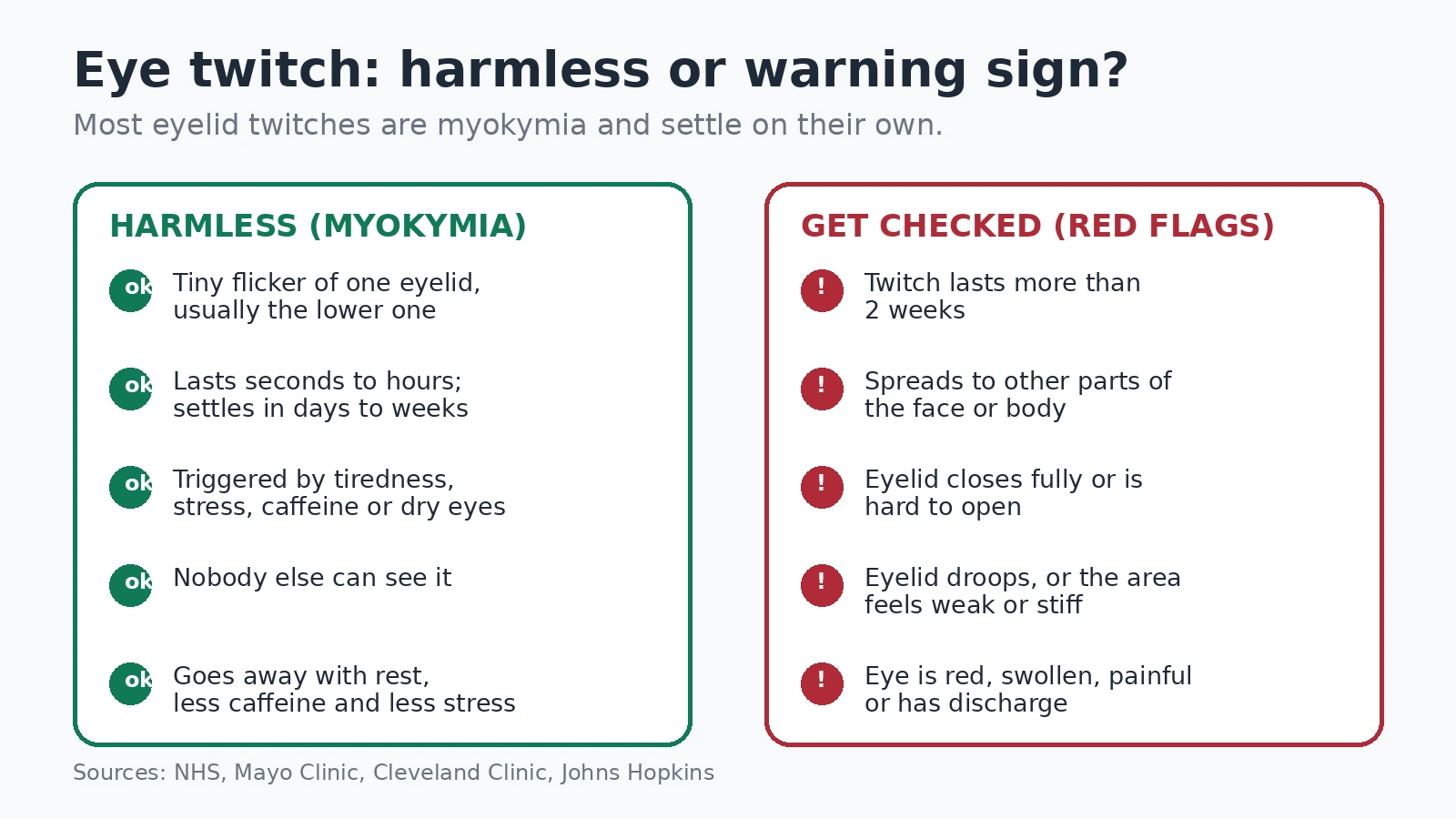
Ordinary myokymia is tiny and self-limiting. Two rarer conditions look different and need a doctor:
- Benign essential blepharospasm — forceful, sustained spasms that can force the eyelids shut, sometimes for seconds or minutes. It’s a form of dystonia, most common in middle-aged and older women, and is usually treated with botulinum toxin injections (Botox) about every three months.
- Hemifacial spasm — the twitch starts around the eye and spreads down one side of the face, caused by a blood vessel pressing on the facial nerve. Because it can rarely signal a growth, the American Academy of Ophthalmology suggests an MRI to check.
Very rarely, eye twitching is linked to neurological conditions such as Bell’s palsy, multiple sclerosis, Parkinson’s disease or dystonia — but the Cleveland Clinic and Mayo Clinic both stress these are rare and almost always come with other obvious symptoms.
When to see a doctor
See a GP or an eye doctor if any of these apply:
- The twitch lasts more than 2 weeks.
- It spreads to other parts of the face or body.
- Your eyelid closes fully with each twitch, or it’s hard to keep the eye open.
- Your eyelid droops, or the area feels weak or stiff.
- Your eye is red, swollen or painful, or has discharge.
- You think a prescribed medicine might be causing it.
In an emergency call 911 (US), 999 (UK) or 112 (EU).
Frequently asked questions
Is eye twitching dangerous?
Almost never. Ordinary eyelid twitching, called myokymia, is annoying but not dangerous, according to the American Academy of Ophthalmology. The NHS adds that twitches are very rarely a sign of anything serious. See a doctor only if it lasts more than two weeks, spreads to the face, forces the eyelid shut, or comes with pain, swelling, discharge, or weakness in the area.
Why won't my eye stop twitching?
Persistent twitching usually means the trigger is still there. The most common ongoing triggers are a sleep debt, stress, too much caffeine or alcohol, long hours of screen use without breaks, and dry eyes. The Mayo Clinic says twitching normally goes away within a few days or weeks once you get more rest, cut back on caffeine and alcohol, and ease stress. If it runs past two weeks, get checked.
Can stress cause eye twitching?
Yes, stress and anxiety are among the top triggers named by every major source, including the NHS, the Mayo Clinic and the Cleveland Clinic. Facial muscles tense under stress, and the tiny muscles around the eyelid are no exception. Stress-reduction steps - exercise, breathing exercises, meditation and simply getting more sleep - are part of the standard self-care advice from Johns Hopkins for calming a twitch.
How do I make an eye twitch go away fast?
There is no instant cure, but the steps with real backing are: sleep more, cut back on caffeine and alcohol, manage stress with exercise or relaxation, and use artificial tear drops if your eyes feel dry, per Johns Hopkins, the Mayo Clinic and the NHS. Try not to worry about the twitch itself - the NHS notes that worrying can make it worse. Most twitches settle within days to weeks.
When should I see a doctor for eye twitching?
See a GP or an eye doctor if the twitch lasts more than two weeks, spreads to other parts of the face or body, forces the eyelid to close fully or makes the eye hard to open, comes with a drooping eyelid or weakness, or is joined by pain, redness, swelling or discharge. Also get checked if you suspect a prescribed medicine is causing it. In an emergency call 911 (US), 999 (UK) or 112 (EU).
Sources
- NHS: Twitches www.nhs.uk
- Moorfields Eye Hospital: Why your eyelids twitch moorfields.nhs.uk
- Johns Hopkins Medicine: Eye twitching www.hopkinsmedicine.org
- Mayo Clinic: Eye twitching www.mayoclinic.org
- Cleveland Clinic: Eye and eyelid twitching my.clevelandclinic.org
- American Academy of Ophthalmology: Eyelid twitching www.aao.org
- WebMD: What to know about eyelid twitching www.webmd.com
- NINDS (via BrainFacts): Benign essential blepharospasm www.brainfacts.org

Try the tool
Not sure if it can wait?
Common causes and warning signs for 16 everyday symptoms.
Open the symptom guide

