Low Testosterone Symptoms in Men: What to Look For
Low testosterone can cause low sex drive, loss of morning erections, tiredness and low mood. Here is which symptoms matter most, how doctors test for it, and when to see a GP.
- Written by
- Health Daily Advice
- Published
- Reading time
- 4 minutes
- Sources
- 6 cited

In this guide
Low testosterone in men can cause low sex drive, loss of morning erections, tiredness, low mood, reduced muscle strength and difficulty concentrating. Many of these symptoms have other causes too, so low testosterone is only diagnosed when symptoms are combined with repeatedly low blood test results and a medical assessment.
What is low testosterone?
Testosterone is the main male sex hormone, made in the testicles. Mayo Clinic explains that male hypogonadism means the testicles do not make enough testosterone. It can be primary, caused by a problem in the testicles themselves, or secondary, caused by a problem in the parts of the brain — the hypothalamus and pituitary gland — that signal the testicles to make testosterone.
Testosterone levels fall gradually with age, and the speed of decline varies from person to person. That gradual fall is not the same as hypogonadism, and it does not automatically need treatment. A recent BMJ analysis notes that up to a fifth of men over 50 may report deficiency symptoms, although under 1% receive treatment in the NHS, and that reversible causes must be excluded before any lifelong therapy begins.
The most specific symptoms
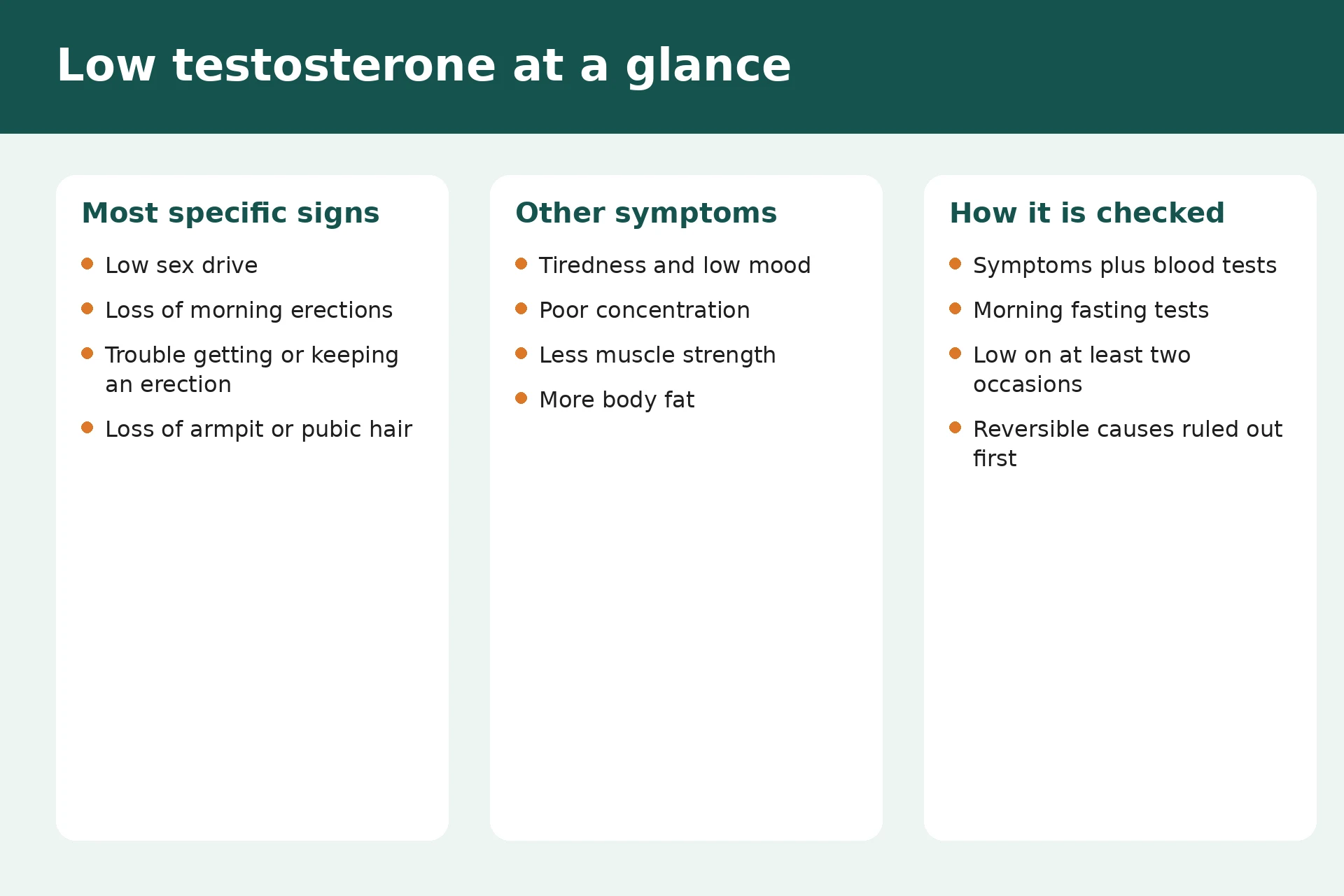
Cleveland Clinic lists the sexual symptoms as the most specific signs of low testosterone:
- low libido (reduced sex drive)
- loss of morning or spontaneous erections
- trouble getting or maintaining an erection
Other symptoms that highly suggest hypogonadism include loss of armpit and pubic hair, shrinking testicles, hot flushes, and a low or zero sperm count. These signs, especially when several occur together, are more suggestive than tiredness or low mood alone.
Other symptoms that can occur
Low testosterone can also be linked with less specific symptoms, which is why diagnosis needs care:
- fatigue and low energy
- depressed mood, irritability and mood changes
- difficulty concentrating and memory problems
- reduced muscle strength and mass, and reduced endurance
- increased body fat, including around the abdomen
- enlarged male breast tissue (gynaecomastia)
- excessive sweating or night sweats
- needing to shave less often
An NHS patient leaflet on testosterone replacement therapy lists the same pattern — fatigue, low mood, irritability, low libido, erectile problems, reduced exercise tolerance and poor concentration — but stresses that other conditions can cause these symptoms, so testosterone treatment may not improve all of them.
What causes low testosterone?
Causes fall into two broad groups. Primary hypogonadism comes from the testicles, for example undescended testicles, injury or removal of the testicles, infection such as mumps orchitis, chemotherapy or radiotherapy, iron overload, or genetic conditions such as Klinefelter syndrome.
Secondary hypogonadism comes from the hypothalamus or pituitary gland, for example a pituitary condition or tumour, head injury, high prolactin levels, or certain medicines. Cleveland Clinic notes, however, that most men with low testosterone symptoms do not have a pituitary or testicular problem: the commonest contributors are obesity and diabetes, and brief illness can also temporarily stop testosterone production.
Other contributors include poorly managed type 2 diabetes, obstructive sleep apnoea, chronic kidney or liver disease, HIV, excess alcohol, anabolic steroid use, and medicines such as opiates. Being older than 45, having obesity, and having sleep apnoea all raise the likelihood, according to Cleveland Clinic.
How is low testosterone diagnosed?
Diagnosis is not made from symptoms alone, and not from a single blood test. An NHS leaflet explains that blood testing is carried out in the morning, preferably after overnight fasting, and that testosterone must be low on at least two occasions before treatment is advised.
The BMJ analysis sets out the thresholds clinicians use: total testosterone below 8 nmol/L confirms deficiency, while 8–12 nmol/L is classified as possible deficiency. Professional guidance differs on exact thresholds, which is one reason a doctor, rather than a home test or an online questionnaire, should interpret the result. Before any treatment, reversible causes — including obesity, medicines, sleep apnoea and depression — must be excluded, because in obesity-related cases weight loss may normalise testosterone without lifelong therapy.
Your doctor may also ask about fertility plans. Testosterone treatment suppresses sperm production, so fertility intentions should always be discussed before treatment starts.
What happens after diagnosis?
If low testosterone is confirmed and reversible causes have been addressed, a specialist may discuss testosterone replacement therapy. This is a prescription treatment started by an endocrinologist, with regular monitoring of blood counts, liver tests, testosterone levels and prostate markers. It is not suitable for everyone, and it does not treat tiredness, erectile problems or low libido when hypogonadism is not present.
Whatever the cause, general health steps matter and are often part of the plan: maintaining a healthy weight, being physically active, eating healthily, sleeping well and treating sleep apnoea, and avoiding excess alcohol. These steps can help symptoms and, in some cases, testosterone levels themselves. Talk to a doctor or pharmacist before starting any supplement or treatment you see advertised, and be cautious about rapid online services that offer treatment after a single test or a short questionnaire.
Low testosterone and the “male menopause”
You may hear low testosterone called the “male menopause”. The term is misleading: unlike menopause, testosterone falls gradually rather than stopping suddenly, and not every man with a lower level has symptoms or needs treatment. A gradual, age-related fall is normal; hypogonadism is a medical condition diagnosed by symptoms plus blood tests.
When to see a doctor
See a GP if you notice several of the symptoms above — especially loss of sex drive, loss of morning erections, or erectile problems — if symptoms are persistent or getting worse, or if they are affecting your mood, relationships or daily life. Mention any medicines you take, alcohol use, sleep problems, weight change, or testicular pain, swelling or shrinkage, as these help your doctor find the cause.
Seek medical advice promptly for testicular pain or swelling, a lump, or sudden severe symptoms. Talk to a doctor or pharmacist before starting or stopping any medicine.
In an emergency call 911 (US), 999 (UK) or 112 (EU).
Frequently asked questions
What are the first signs of low testosterone?
The most specific signs are low sex drive, loss of morning or spontaneous erections, and trouble getting or maintaining an erection. Cleveland Clinic also lists loss of armpit and pubic hair, shrinking testicles, hot flushes and a low sperm count as highly suggestive. Tiredness and low mood alone are less specific and have many other causes.
How do doctors test for low testosterone?
Doctors use symptoms plus blood tests, not symptoms alone. An NHS leaflet explains that testing is done in the morning, preferably after overnight fasting, and that testosterone must be low on at least two occasions before treatment is advised. The BMJ notes that below 8 nmol/L confirms deficiency, while 8 to 12 nmol/L is possible deficiency.
Does low testosterone cause tiredness?
It can contribute to fatigue, but tiredness alone does not prove low testosterone. Poor sleep, sleep apnoea, depression, medicines and many other conditions also cause fatigue. That is why a doctor checks symptoms together with repeated blood tests and looks for reversible causes before considering any treatment.
Can low testosterone be reversed without treatment?
Sometimes, when a reversible cause is found. The BMJ notes that obesity can produce a state resembling low testosterone that usually responds better to weight loss than to testosterone therapy. Treating sleep apnoea, reviewing medicines, reducing excess alcohol and addressing illness can also help levels recover, so these are checked first.
Is low testosterone the same as the male menopause?
No, and the term can mislead. Unlike menopause, testosterone falls gradually with age rather than stopping suddenly, and not every man with a lower level has symptoms or needs treatment. Hypogonadism is a medical condition diagnosed by symptoms plus blood tests, whereas a gradual age-related fall is normal.
Should I get tested if I have no symptoms?
Routine testing without symptoms is not usually recommended. Because testosterone varies and many factors affect it, a single low result without symptoms does not mean treatment is needed. If you develop several suggestive symptoms, especially sexual symptoms, talk to your GP, who can decide whether testing is appropriate.
Sources
- Cleveland Clinic: Low Testosterone (Male Hypogonadism) my.clevelandclinic.org
- Mayo Clinic: Male hypogonadism - symptoms and causes www.mayoclinic.org
- NHS North Cumbria: Testosterone replacement therapy leaflet www.ncic.nhs.uk
- BMJ: Implications of commercial testosterone prescribing for the NHS www.bmj.com

Try the tool
Not sure if it can wait?
Common causes and warning signs for 16 everyday symptoms.
Open the symptom guide

