Does Coffee Dehydrate You? What Research Really Says
Coffee is a mild diuretic, but the water in each cup more than offsets it — research shows moderate coffee intake hydrates similarly to water. Here is what the studies say, the safe caffeine limits, and who should be cautious.
- Written by
- Health Daily Advice
- Published
- Reading time
- 4 minutes
- Sources
- 9 cited
In this guide
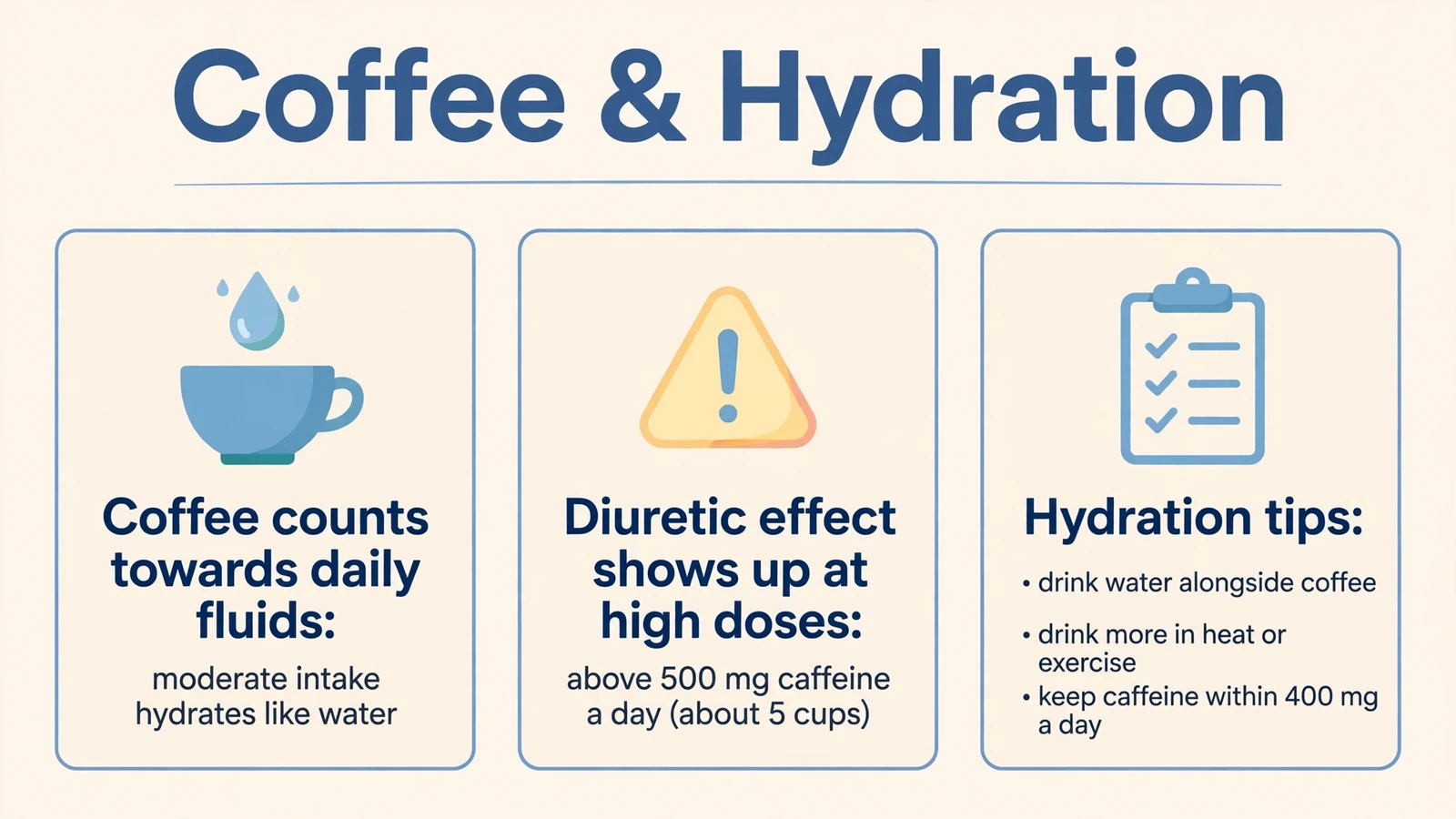
No — for most people, coffee does not dehydrate you. Although caffeine is a mild diuretic, the water in each cup more than offsets it, and trials show moderate coffee intake hydrates similarly to water. Only very high intakes, above about 500 mg of caffeine a day, may noticeably increase urine output.
Why coffee got a reputation for dehydrating you
Caffeine increases urine production, which means it is technically a diuretic (Mayo Clinic). Early research observed this effect mainly at high doses — studies show a significant diuretic effect needs more than 500 mg of caffeine a day, roughly five cups of brewed coffee — yet the warning stuck, and even moderate drinkers ended up hearing it.
There is also a personal-experience trap: coffee can make you need the toilet sooner, which feels like fluid loss. But hydration is measured over the whole day, and the water in the cup usually outweighs the extra urine.
Finally, tolerance changes everything. Regular coffee drinkers develop a tolerance to caffeine’s diuretic effect, and research suggests that caffeine withdrawal of as little as four days is enough for that tolerance to fade (PLOS ONE). That is why an occasional strong coffee may send you to the toilet, while your usual daily brew barely registers.
What the research actually shows
The most direct test comes from the University of Birmingham. In 2014, researchers put 50 regular coffee drinkers through two three-day trials: in one they drank four 200 ml cups of coffee a day (4 mg of caffeine per kilogram of body weight); in the other, the same volume of water. Using deuterium oxide tracing to measure total body water, plus daily blood and urine markers, they found no significant differences — 24-hour urine volume was 2,409 ml on coffee versus 2,428 ml on water — and concluded that coffee “provides similar hydrating qualities to water” for regular drinkers (PLOS ONE).
A smaller study of ten casual coffee drinkers found that 269 mg of caffeine was hydrating, while 537 mg produced a short-term diuretic effect — and even then, the extra urine lost was far less than the fluid consumed (Healthline).
An analysis of 16 studies found that 300 mg of caffeine in a single sitting — about three cups of brewed coffee — increased urine output by only 109 ml compared with the same amount of non-caffeinated drinks (Healthline). The pattern is consistent: moderate coffee counts towards your daily fluid intake; only very high intakes shift the balance.
How much caffeine is too much?
The European Food Safety Authority concluded that single doses of caffeine up to 200 mg do not give rise to safety concerns, and that habitual consumption of up to 400 mg per day does not give rise to safety concerns for non-pregnant adults (EFSA). The US Food and Drug Administration similarly sets a daily limit of 400 mg of caffeine for adults (Mayo Clinic). Staying within these limits also keeps you well below the range where the diuretic effect becomes significant.
Very high intakes are a different story. The Mayo Clinic notes that doses above 10 mg of caffeine per kilogram of body weight per day — about 750 mg for someone weighing 75 kg — have been linked to serious health conditions including chest pain, irregular heartbeat and stroke, and that caffeine poisoning can occur with 1,200 mg of pure caffeine (Mayo Clinic). If you rely on energy drinks, caffeine powders or many strong coffees to get through the day, talk to a doctor or pharmacist.
| Drink | Typical caffeine content |
|---|---|
| Brewed coffee, 240 ml cup | About 95 mg |
| Instant coffee, 240 ml cup | 30–90 mg |
| Espresso, single shot | About 63 mg |
| Decaf coffee, 240 ml cup | About 3 mg |
Caffeine content figures come from Healthline; actual amounts vary by bean, roast and serving size.
Who should be more careful?
Pregnant women are advised to keep caffeine to no more than 200 mg a day — about two mugs of coffee — and EFSA agrees this level raises no safety concerns for the baby (NHS; EFSA). The Mayo Clinic advises that people who are pregnant, breastfeeding or taking certain medicines should talk to their healthcare provider about caffeine (Mayo Clinic).
Caffeine can also worsen anxiety, disturb sleep and quicken the heart rate in sensitive people. If you have a heart condition, an anxiety disorder, or you notice jitters, a racing heart or sleeplessness after coffee, talk to a doctor or pharmacist about what is right for you — this article is general information and cannot tell you what is safe for you personally.
One exception matters: if you are already dehydrated — for example with vomiting or diarrhoea — the NHS advises avoiding caffeinated drinks, as they may worsen fluid loss. Stick to water, diluted sugar-free squash or an oral rehydration solution, and ask your pharmacist which is right for you (NHS).
Signs you might be dehydrated
Watch out for feeling thirsty, headache, dark yellow strong-smelling urine, peeing less often than usual, dizziness, tiredness, and a dry mouth, lips and tongue (NHS). Babies, children and older adults are more at risk of dehydration. If symptoms persist despite drinking fluids, a pharmacist can advise on rehydration solutions.
When to see a doctor
Ask for an urgent GP appointment or contact NHS 111 if you are unusually tired, feel dizzy when standing, have dark yellow urine, pee less than normal, or are breathing quickly (NHS). If you are caring for a baby or child, seek advice sooner — a sunken soft spot on the head, few tears when crying, or fewer wet nappies are warning signs.
In an emergency call 911 (US), 999 (UK) or 112 (EU)
Frequently asked questions
Does coffee count towards my daily water intake?
Yes — research suggests moderate coffee intake contributes to daily fluid intake much like water. In a 2014 trial, 50 regular coffee drinkers showed no difference in hydration markers between four daily cups of coffee and the same volume of water. Still, plain water is the simplest calorie-free choice, and you should drink extra water in hot weather or when exercising.
How much coffee is too much for hydration?
A noticeable diuretic effect appears above about 500 mg of caffeine a day — roughly 5 cups of brewed coffee. A small study found 537 mg of caffeine had a short-term diuretic effect while 269 mg was hydrating. EFSA advises that habitual intakes up to 400 mg daily raise no safety concerns for healthy adults. If you regularly exceed this, talk to a doctor or pharmacist.
Can coffee dehydrate you if you drink it every day?
No — daily drinkers develop tolerance to caffeine's diuretic effect, so regular moderate intake does not dehydrate. Studies suggest caffeine withdrawal of as little as four days is enough for tolerance to fade, which is why occasional drinkers may notice a stronger effect. Keep intake steady and moderate, and drink water alongside.
Should I avoid coffee when I'm already dehydrated?
The NHS advises avoiding caffeinated drinks when you're sick or have diarrhoea, as they may worsen fluid loss — choose water, diluted squash or an oral rehydration solution instead (ask your pharmacist which is right for you). For everyday mild thirst, your usual coffee is unlikely to make things worse, but water is the best choice.
Is coffee safe in pregnancy?
The NHS advises limiting caffeine to no more than 200 mg a day in pregnancy — about two mugs of coffee — and EFSA agrees that up to 200 mg daily raises no safety concerns for the baby. Remember tea, chocolate, cola and some medicines also contain caffeine. If you're pregnant, breastfeeding or trying to conceive, talk to your midwife, doctor or pharmacist about your intake.
Does decaf coffee dehydrate you?
No — decaffeinated coffee contains only about 3 mg of caffeine per cup on average, so its diuretic effect is negligible. It counts towards daily fluid intake like any other drink. Decaf is a good option if you want the coffee ritual later in the day without the caffeine — including the sleep disruption caffeine can cause in the evening.
Sources
- Mayo Clinic: Caffeine – Is it dehydrating or not? www.mayoclinic.org
- PLOS ONE: No Evidence of Dehydration with Moderate Daily Coffee Intake (Killer et al. 2014) journals.plos.org
- EFSA: Scientific Opinion on the safety of caffeine efsa.onlinelibrary.wiley.com
- Healthline: Does Coffee Dehydrate You? www.healthline.com
- NHS: Living healthily during your pregnancy www.nwangliaft.nhs.uk
- NHS: Dehydration www.nhs.uk

Try the tool
Not sure if it can wait?
Common causes and warning signs for 16 everyday symptoms.
Open the symptom guide