Is Apple Cider Vinegar Good for You?
Apple cider vinegar is no miracle cure, but the research is not all hype either. Here is what the evidence says about blood sugar, cholesterol and weight, plus the real risks to teeth, throat and medicines.
- Written by
- Health Daily Advice
- Published
- Reading time
- 4 minutes
- Sources
- 6 cited

In this guide
Apple cider vinegar is probably worth a try in food, but it is no health miracle. Research suggests it may slightly lower blood sugar after meals and modestly improve cholesterol, while weight loss claims are overstated. Its acidity can damage tooth enamel and irritate the throat and oesophagus, and it can interact with diabetes and blood pressure medicines.
What apple cider vinegar is
Apple cider vinegar (ACV) is apple juice that has been fermented twice. First, crushed apples are fermented with yeast so the sugars become alcohol; then bacteria convert that alcohol into acetic acid, which gives vinegar its tangy taste. Finished vinegar is about 5% to 6% acetic acid, according to Cleveland Clinic.
Raw, unfiltered ACV contains a cloudy sediment known as “the mother”, made up of settled bacteria and yeast. The mother is often sold as the part that matters, but research hasn’t shown that the mother offers any particular health benefit, WebMD notes. The acetic acid is thought to be at least partly responsible for any effects, and other types of vinegar contain acetic acid too.
What the evidence actually supports
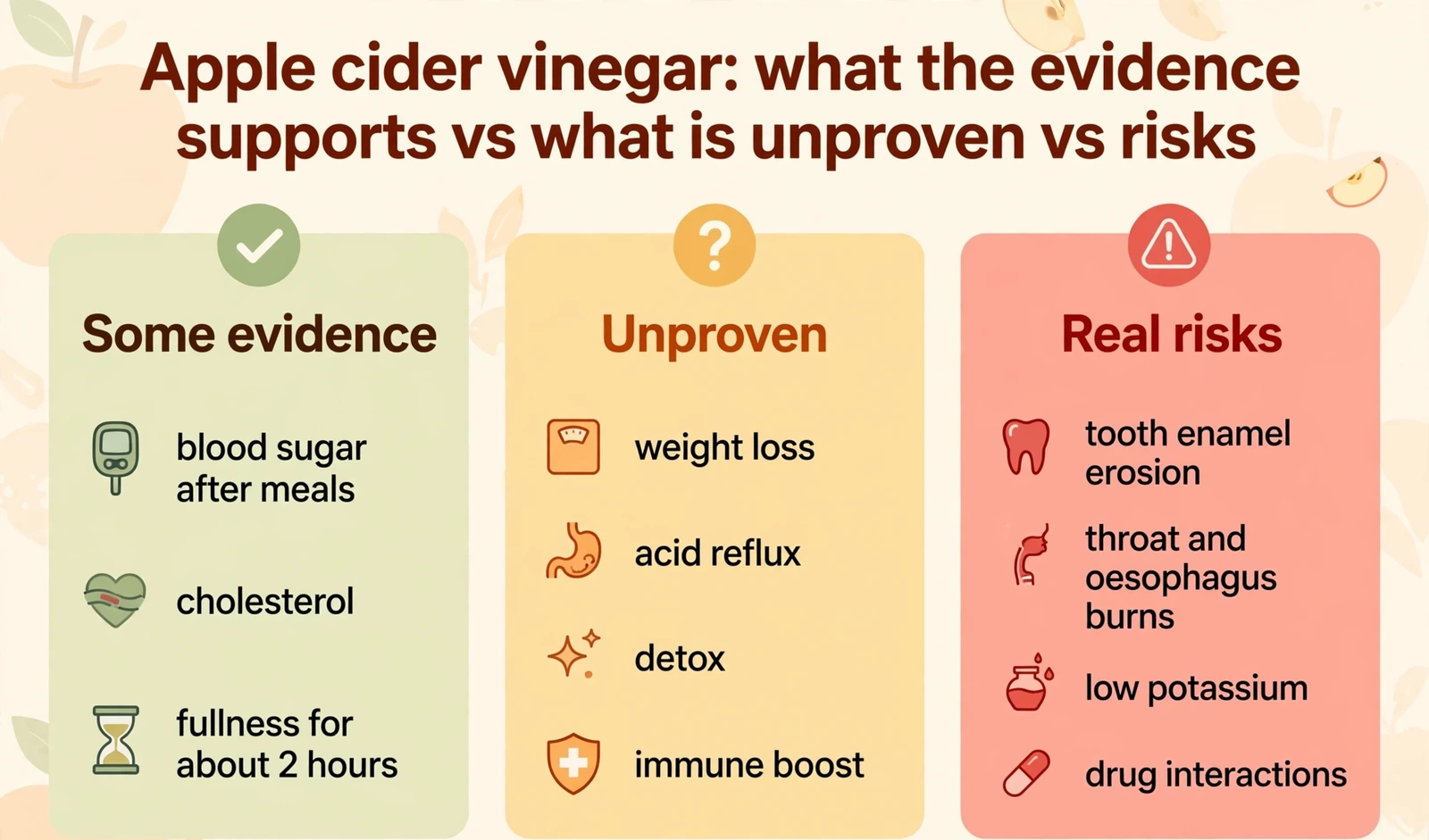
Blood sugar. Analyses of small studies show ACV may decrease fasting plasma glucose when taken with a meal full of complex carbohydrates, by slowing down food’s journey from the stomach to the small intestine. Several smaller trials also found it lowered blood sugar after meals, though the effect was moderate. Cleveland Clinic’s advice is blunt: it might lower your glucose a little, but not enough to prevent or manage diabetes on its own, and it cannot replace medication or a healthy lifestyle.
Cholesterol. A meta-review suggests ACV decreases total cholesterol and triglycerides while raising “good” HDL cholesterol, with effects more pronounced in people who have Type 2 diabetes. Similar small studies point the same way, but researchers stress that larger studies are needed to confirm the link.
Fullness, briefly. A systematic review of studies found that ACV can help you stay full for longer, curbing the urge to snack for about two hours after eating. That said, there is no concrete evidence of any long-term appetite suppression benefit.
The viral weight-loss study was retracted
You may have seen headlines claiming apple cider vinegar caused dramatic weight loss. They came from a 2024 trial of 120 adolescents and young adults with overweight or obesity published in BMJ Nutrition, Prevention & Health, which reported 6–8 kg of weight loss over 12 weeks. That paper was retracted by BMJ Group in September 2025 over implausible statistics, flawed analysis and the lack of trial registration; the authors agreed to the retraction.
Mayo Clinic’s position is clear: ACV “isn’t likely to cause weight loss”, as experts haven’t found meaningful weight loss or long-term hunger control, and the studies have been small or lacking. A Harvard obesity physician told Healio the remaining evidence is “limited and inconsistent”, with no strong high-quality evidence from large trials supporting ACV as a weight-loss intervention.
What is unproven
Acid reflux. Some people swear by ACV for heartburn, but there is no real science to back up the claims about ACV’s anti-heartburn power, and WebMD reports no research proving it works for those conditions.
Detox, immune boosts and skin fixes. Claims that ACV “detoxes” the body, cures acne or treats eczema have little or no research behind them. Some eczema studies reported little effect and skin irritation in some people, and ACV has no proven benefit for allergies, arthritis or preventing cancer.
Risks to take seriously
Tooth enamel. ACV is highly acidic, and its acidity can erode tooth enamel, the protective shield on the outside of your teeth — once it wears away, you cannot get it back. The same concern applies to other acidic drinks such as lemon water. Using a straw and rinsing your mouth with water afterwards can reduce the damage, and you should not brush straight away while the enamel is softened.
Throat and oesophagus. Undiluted ACV can burn your oesophagus, and Mayo Clinic warns it may irritate your throat if drunk often. An ACV tablet that gets stuck in the throat may cause long-lasting pain. Never drink it neat.
Low potassium. ACV may lower potassium levels, so you should not use it if you already have low potassium (hypokalaemia), as it could make the condition worse.
Medication interactions. ACV can interact with diabetes medicines including insulin, diuretics (“water pills”), laxatives and certain blood pressure medicines — always ask your doctor if it is safe with your current medications, particularly if you take anything that lowers blood sugar or potassium.
Other cautions. ACV can cause nausea and vomiting — don’t drink it on an empty stomach, and stop if it makes you feel sick. Because it slows gastric emptying, it can make gastroparesis worse. People with kidney disease should avoid overusing it, since their kidneys may not handle high acid levels well. Keep pure ACV out of reach of children, as it can burn skin and mouths.
How to use it more safely
The safest place for ACV is in food — salad dressings, sauces, marinades and pickles — where the acids generally cause none of the problems above. If you want to drink it, talk to a doctor or pharmacist first, always dilute it in water, drink through a straw to protect your teeth, and don’t sip it repeatedly through the day. Be cautious with ACV pills, powders and gummies: there is little research on whether they work, and supplements are not regulated the way medicines are.
When to see a doctor
Talk to a GP or pharmacist before making ACV a daily habit if you take medicines for diabetes, blood pressure or fluid retention, have kidney disease, gastroparesis, reflux or dental erosion. See a doctor promptly if you develop throat pain, difficulty swallowing, persistent nausea or signs of low potassium such as muscle weakness or cramps.
In an emergency call 911 (US), 999 (UK) or 112 (EU)
Frequently asked questions
Does apple cider vinegar help with weight loss?
Probably not in any meaningful way. Mayo Clinic says experts have not found meaningful weight loss or long-term hunger control with apple cider vinegar, and most studies have been small or flawed. The widely shared 2024 trial claiming 6–8 kg of weight loss was retracted in 2025 over implausible statistics. Small studies show it may keep you full for about two hours after a meal, which could curb snacking, but it is not a weight-loss treatment.
Does apple cider vinegar lower blood sugar?
It may lower blood sugar a little after meals. Analyses of small studies show it can reduce fasting glucose when taken with a carbohydrate-rich meal, probably by slowing how fast food leaves the stomach. But the effect is modest, the studies are small, and it cannot replace diabetes medication or a healthy diet. If you take blood-sugar-lowering medicines, talk to your doctor or pharmacist before adding it to your routine.
Is apple cider vinegar with 'the mother' better?
There is no good evidence that it is. The mother is the cloudy sediment of bacteria and yeast in raw, unfiltered vinegar, and it is often sold as the part that matters. Research has not shown any particular health benefit from it. The acetic acid, which is found in all vinegars, is thought to be at least partly responsible for whatever effects ACV has. Pasteurised, filtered vinegar is the safer choice for food safety.
Can apple cider vinegar damage your teeth?
Yes, if you drink it undiluted. It is highly acidic and can erode tooth enamel, the protective outer layer of your teeth; once enamel wears away, it does not grow back. The risk is the same as with other acidic drinks. To reduce damage, always dilute it, drink through a straw, rinse your mouth with plain water afterwards, and avoid brushing straight away while the enamel is softened.
Does apple cider vinegar help with acid reflux?
There is no real science to back up claims that ACV calms heartburn or acid reflux, despite many people swearing by it. WebMD likewise found no research proving it works for these conditions. Because vinegar is highly acidic, it can also irritate the oesophagus and make symptoms worse in some people. Proven reflux treatments and a GP's advice are the safer route.
Who should not drink apple cider vinegar?
Anyone on insulin or diabetes medicines, diuretics, laxatives or blood pressure drugs should talk to a doctor or pharmacist first, because it can interact with these medicines and lower potassium. Avoid it if you already have low potassium, kidney disease or gastroparesis, and don't give it to children undiluted. Stop and see a doctor if you get throat pain, trouble swallowing, persistent nausea or muscle weakness.
Sources
- Cleveland Clinic: 6 Possible Benefits of Apple Cider Vinegar health.clevelandclinic.org
- Mayo Clinic: Apple cider vinegar for weight loss www.stclair.org
- Healio: Study supporting apple cider vinegar for weight loss retracted (24 Sept 2025) www.healio.com
- WebMD: Apple Cider Vinegar: Benefits, Risks, and Uses www.webmd.com
- Science-Based Medicine: Implausible Apple Cider Vinegar Weight Loss Study Retracted sciencebasedmedicine.org

Try the tool
Not sure if it can wait?
Common causes and warning signs for 16 everyday symptoms.
Open the symptom guide