Can Stress Cause Hair Loss? Why It Happens and What to Do
Losing clumps of hair after a stressful few months is frightening — but stress-related shedding is usually temporary. Here is how telogen effluvium, alopecia areata and trichotillomania work, and when to see a GP.
- Written by
- Health Daily Advice
- Published
- Reading time
- 4 minutes
- Sources
- 10 cited
In this guide
Yes. Severe stress can push many hair follicles into a resting phase, so clumps of hair fall out a few months later — this is called telogen effluvium. Stress is also linked to alopecia areata, where the immune system attacks follicles, and trichotillomania, an urge to pull hair out. Stress-related shedding is usually temporary, and hair often grows back.
The 3 types of hair loss linked to stress
The Mayo Clinic lists three types of hair loss that can be associated with high stress levels. The most common is telogen effluvium; the other two are less common but worth knowing about.
1. Telogen effluvium: heavy shedding a few months later
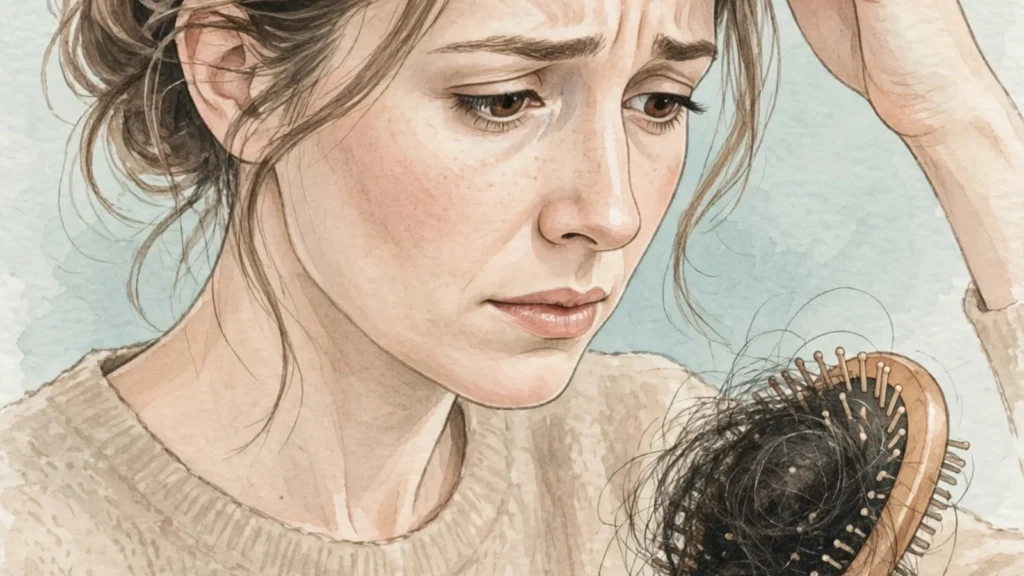
In telogen effluvium, severe physical or emotional stress pushes large numbers of hair follicles into the resting (telogen) phase at once. A few months later those hairs fall out together — often in clumps while combing or washing. Because of the delay, people rarely connect the shedding to the stressful event that caused it.
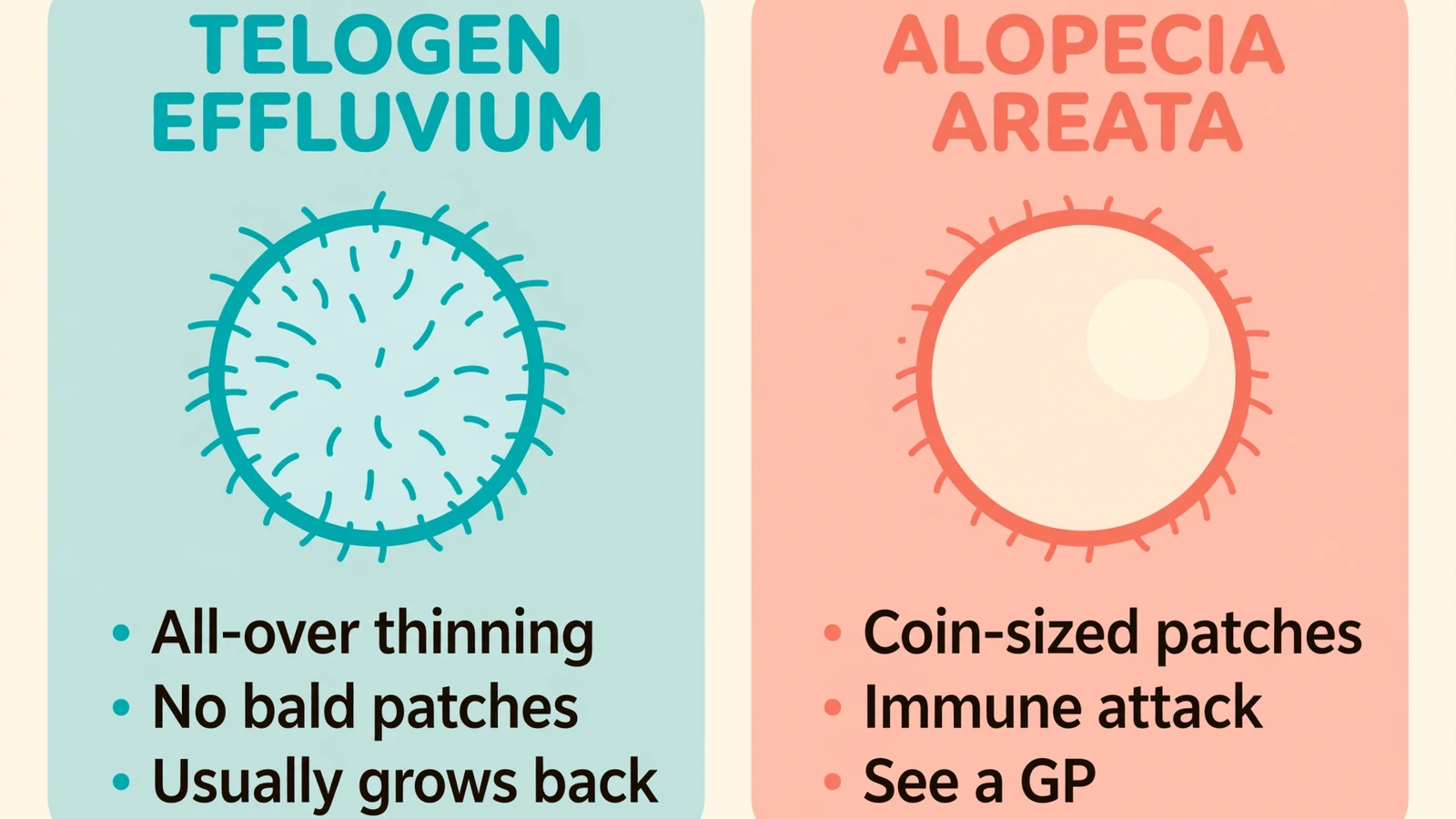
The British Association of Dermatologists (BAD) explains that around 85% of scalp follicles are normally in the growing phase and about 15% in the shedding phase; in telogen effluvium the shedding share rises to 30% or more, usually starting about 3 months after the trigger. The shedding comes from all over the scalp rather than in patches, and it normally lasts 3 to 6 months. The BAD also notes that for 1 in 3 people, no trigger is ever found.
2. Alopecia areata: smooth, coin-sized bald patches
With alopecia areata, the immune system mistakenly attacks the hair follicles, stopping them from growing hair. The British Skin Foundation describes smooth, coin-sized, round patches of baldness on the scalp, sometimes with itching or burning beforehand. Severe stress is thought to be one possible trigger, although the exact cause is not fully understood. The reassuring part: the follicles are not scarred or destroyed, so hair can regrow — 4 out of 5 people with mild loss see complete regrowth within a year.
3. Trichotillomania: the urge to pull your hair out
Trichotillomania — often shortened to “trich” — is a mental health condition involving an irresistible urge to pull out hair from the scalp, eyebrows, eyelashes or elsewhere. The NHS (South London and Maudsley) says it can be a way of dealing with stress or anxiety, although it sometimes happens without really thinking about it. It is more common in teenagers and young adults, and the usual treatment is a type of talking therapy called habit reversal training, which your GP can refer you to.
Why does stress make your hair fall out?
Hair grows in cycles: a long growing (anagen) phase, a short transition, then a resting (telogen) phase that ends with shedding. A major shock — illness, surgery, childbirth, rapid weight loss or intense emotional stress — can push many follicles into the resting phase at the same time. Cleveland Clinic dermatologists explain there is typically a two- to three-month lag between the stressful event and the start of shedding, and that the shedding itself can last up to six to nine months.
It helps to know what is normal: the NHS says we can lose between 50 and 100 hairs a day, often without noticing, and lists stress alongside illness, weight loss and iron deficiency as causes of temporary hair loss. Most stress-related shedding does not need treatment — the NHS notes that hair loss caused by a temporary trigger usually stops or grows back once you have recovered.
What can help while your hair recovers
You cannot rush the hair cycle, but you can avoid making things worse and support regrowth:
- Be gentle with your hair. The BAD advises avoiding harsh brushing, limiting heated styling tools, skipping bleach and harsh chemical treatments, and loosening tight hairstyles.
- Eat a balanced diet. The BAD says food rich in iron and protein, plus fresh fruit and vegetables, may be helpful. Your GP can arrange blood tests to rule out thyroid problems and iron deficiency, which can both cause shedding.
- Manage ongoing stress. Sleep, regular movement and talking about what is worrying you all help. A UK study found higher rates of depression and anxiety among people with alopecia areata, so do not ignore the emotional side — support is available on our get help now page.
- Talk to a doctor or pharmacist before trying any treatment for hair loss, so the cause is checked first.
When to see a doctor
The NHS advises seeing a GP if you are worried about your hair loss — your GP can usually tell what is causing it by looking at your hair, and it is worth getting a diagnosis before thinking about a commercial hair clinic. Seek help sooner if:
- the hair loss is patchy, or the scalp is sore, scaly, red or inflamed;
- shedding has not settled after about 6 months;
- you are pulling your hair out and cannot stop, or you notice a child doing it — eating pulled hair can cause serious illness and needs prompt medical advice;
- hair loss is affecting your wellbeing — the NHS says your GP can help you get counselling, and you can find immediate support on our get help now page.
In an emergency call 911 (US), 999 (UK) or 112 (EU)
Frequently asked questions
Can stress cause hair loss?
Yes. According to the Mayo Clinic, stress can be linked to three types of hair loss: telogen effluvium, in which severe stress pushes many follicles into a resting phase so clumps fall out a few months later; alopecia areata, where the immune system attacks follicles; and trichotillomania, an irresistible urge to pull hair out. Stress-related shedding is usually temporary, and hair often grows back once the stress eases.
How long does stress-related hair loss last?
It depends on the type. Telogen effluvium shedding usually lasts 3 to 6 months, and the British Association of Dermatologists says it normally resolves completely without treatment once the trigger has passed. Shedding that continues beyond 6 months is called chronic telogen effluvium and should be checked by a GP. Alopecia areata is less predictable: the British Skin Foundation says 4 out of 5 people with mild loss regrow their hair within a year.
Does stress cause permanent baldness?
Almost never on its own. Telogen effluvium is a temporary shedding of resting hairs, and the British Association of Dermatologists says hair usually grows back fully once the trigger is gone. Alopecia areata does not scar the scalp, so regrowth is possible, though patches can recur. If you notice a receding hairline or a widening part instead of all-over shedding, that pattern is more typical of inherited pattern hair loss — see a GP rather than assuming it is stress.
Can stress cause patchy hair loss?
Stress itself usually causes diffuse, all-over shedding rather than patches, but it is linked to two conditions that can look patchy. Alopecia areata causes smooth, coin-sized bald patches where the immune system has attacked the follicles. Trichotillomania — the urge to pull out your own hair — can leave irregular patches of different hair lengths. Any sudden or patchy hair loss is worth discussing with a GP, because only a clinician can tell which type you have.
Will my hair grow back after stress-related shedding?
In most cases, yes. The Mayo Clinic notes that if you get your stress under control, your hair might grow back. The British Association of Dermatologists says telogen effluvium usually gets completely better without treatment, although it can take many months for volume to return, depending on hair length. Keeping up gentle hair care, eating a balanced diet and managing ongoing stress support recovery. If shedding has not settled after about 6 months, see your GP.
Is hair pulling (trichotillomania) related to stress?
Yes. The NHS describes trichotillomania as an irresistible urge to pull out hair that can be a way of dealing with stress or anxiety, though for some people it happens without thinking. It is more common in teenagers and young adults and can cause shame and low self-esteem. The usual treatment is a type of talking therapy called habit reversal training, and your GP can refer you.
Sources
- Mayo Clinic: Stress and hair loss — are they related? www.mayoclinic.org
- NHS: Hair loss www.nhs.uk
- British Association of Dermatologists (BAD Patient Hub): Telogen effluvium www.skinhealthinfo.org.uk
- Cleveland Clinic (ConsultQD): COVID-19 Related Hair Loss consultqd.clevelandclinic.org
- NHS (South London and Maudsley): Trichotillomania (hair pulling disorder) slam.nhs.uk
- British Skin Foundation: Alopecia areata www.britishskinfoundation.org.uk

Try the tool
How have you felt over the last 2 weeks?
The PHQ-9 and GAD-7 that GPs use. Private, about 3 minutes.
Start the self-check