What Is Burnout? Signs, Causes and How to Recover
Burnout is exhaustion, detachment and reduced effectiveness after chronic workplace stress. Here is how to spot it, what causes it, and how recovery works.
- Written by
- Health Daily Advice
- Published
- Reading time
- 4 minutes
- Sources
- 10 cited

In this guide
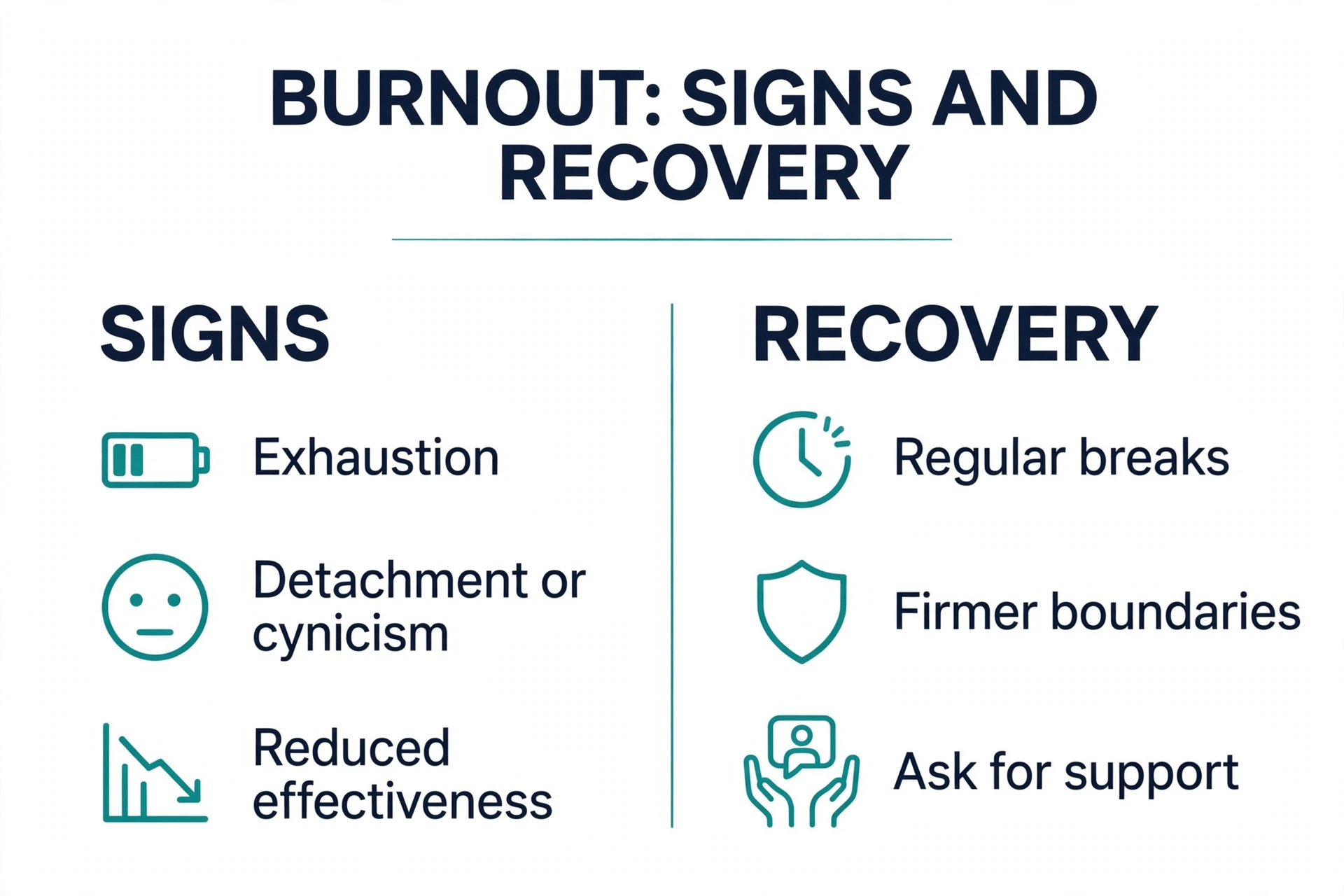
Burnout is physical, emotional and mental exhaustion caused by chronic workplace stress that has not been successfully managed. It brings exhaustion, growing distance or cynicism about work, and reduced effectiveness. Unlike a bad week, it builds gradually, persists despite rest, and improves only when demands, recovery and support change.
What is burnout?
The World Health Organization (WHO) defines burn-out in ICD-11 as a syndrome resulting from chronic workplace stress that has not been successfully managed, with three dimensions: feelings of energy depletion or exhaustion; increased mental distance from one’s job, or feelings of negativism or cynicism related to one’s job; and reduced professional efficacy (WHO).
WHO is clear that burn-out is included in ICD-11 as an occupational phenomenon and is not classified as a medical condition. It refers specifically to phenomena in the occupational context and should not be applied to experiences in other areas of life. Mayo Clinic likewise states that burnout is not a medical diagnosis, while noting that it can raise the risk of depression (Mayo Clinic). That distinction matters: burnout is real and can seriously affect health, even though it is not itself a diagnosis.
Signs of burnout
Mayo Clinic lists possible signs including questioning the value of work, dragging yourself to work, feeling removed from work and colleagues, loss of patience, lack of energy, difficulty concentrating, little satisfaction from achievements, self-doubt, changed sleep habits, and unexplained headaches or stomach and bowel problems (Mayo Clinic).
Cleveland Clinic lists fatigue, persistent apathy and dissatisfaction, mood changes and irritability, changes in eating and sleeping patterns, tension headaches, back pain and gastrointestinal symptoms such as constipation or diarrhoea (Cleveland Clinic). An NHS Keeping Well guide adds behavioural signs such as withdrawing from responsibilities, isolating from others, procrastinating, and using food, alcohol or drugs to cope (NHS Keeping Well).
Burnout vs stress vs depression
Stress and burnout are related but not the same. NHS Keeping Well contrasts them neatly: stress is associated with a feeling of “too much”, whereas burnout relates to a feeling of “not enough” (NHS Keeping Well). Stress often feels like too many pressures and too little time; burnout feels like emptiness, detachment and loss of motivation after prolonged stress without adequate recovery.
Depression is different again. Cleveland Clinic notes that burnout is usually tied to a specific situation or environment, such as work, and stepping away from that source can often bring relief, whereas depression does not always have a clear trigger and depressive symptoms tend to accompany a person even on holiday (Cleveland Clinic). The two can resemble one another and can occur together, which is why persistent symptoms deserve professional assessment rather than self-diagnosis.
What causes burnout?
Burnout usually follows long periods of stress without enough recovery, rather than one difficult day. Mayo Clinic lists causes including lack of control over schedule, assignments or workload; unclear expectations; conflicts with others; too much or too little to do; lack of support; and work-life imbalance (Mayo Clinic).
Cleveland Clinic adds long hours or being constantly “on”, difficulty setting or maintaining boundaries, high personal expectations or perfectionism, and ongoing life stressors alongside work demands (Cleveland Clinic). Risk factors include a heavy workload, struggling with work-life balance, working in a helping profession such as health care, and feeling little or no control over work. In short, burnout is usually a mix of workload, control, clarity, support and boundaries — not personal weakness alone.
The scale of work-related stress in the UK underlines why this matters: for 2023/24, 776,000 workers reported suffering from work-related stress, depression or anxiety, accounting for nearly half of all self-reported work-related ill health and an estimated 16.4 million working days lost (Health and Safety Executive). That is a combined figure for stress, depression and anxiety, not a burnout-only rate — but it shows how common unmanaged work stress is.
How burnout develops
Cleveland Clinic describes burnout as developing gradually, not all at once, and breaks it into five simpler stages: honeymoon phase, onset of stress, chronic stress, burnout, and habitual burnout (Cleveland Clinic). Early signs — persistent fatigue, irritability, poor concentration and changed sleep or appetite — matter more than any single bad day, because they are the point where change is easiest.
How to recover from burnout
Cleveland Clinic describes burnout as reversible, with recovery involving breaks, work-life boundaries, a daily routine, mindfulness, movement, fulfilment outside work, and working with a therapist (Cleveland Clinic). Mayo Clinic suggests talking to your manager about concerns and realistic goals, seeking support from colleagues, friends or loved ones, relaxing activities such as yoga or meditation, regular physical activity, sleep, and mindfulness (Mayo Clinic).
Manchester Mind adds practical steps: regular breaks away from screens, a proper lunch break, taking annual leave, exercise and fresh air, not routinely working beyond normal hours, switching off from work messages outside working hours, and improving sleep and routine — plus asking a manager or HR for support (Manchester Mind).
Recovery usually needs changes at work as well as at home. Rest alone rarely fixes burnout if you return to the same workload, the same unclear expectations and the same lack of support. If you can, agree realistic goals and boundaries with your manager, and keep an eye on early warning signs so a relapse is caught early.
When to see a doctor
See your GP or a mental health professional if symptoms persist, worsen, or interfere with work, sleep, relationships or daily life. Talk to a doctor or pharmacist about any medicines or supplements rather than starting something new on your own, and seek professional assessment because burnout symptoms can also reflect conditions such as depression.
If you feel unable to cope, hopeless, or at risk of harming yourself, seek urgent help. You can find immediate support options on our get help now page.
In an emergency call 911 (US), 999 (UK) or 112 (EU).
Frequently asked questions
What is burnout?
Burnout is a state of physical, emotional and mental exhaustion linked to chronic workplace stress that has not been successfully managed. The World Health Organization describes three dimensions: exhaustion, increased mental distance or cynicism about work, and reduced professional effectiveness. It is classed as an occupational phenomenon, not a medical condition, and refers specifically to the occupational context.
How is burnout different from stress and depression?
Stress often feels like too much: too many pressures and too little time. Burnout feels like not enough: emptiness, detachment and loss of motivation after prolonged stress without adequate recovery. Burnout is usually tied to a specific situation, such as work, and may ease when you step away from that source. Depression is not always tied to one trigger and often persists across settings, so it needs separate assessment and treatment.
What causes burnout?
Burnout usually follows long periods of stress without enough recovery, rather than one difficult day. Common contributors include heavy workload and long hours, little control over schedules or workload, unclear expectations, conflict at work, poor support, and work taking over time for family, friends and rest. High personal expectations, perfectionism and difficulty maintaining boundaries can increase vulnerability.
Can burnout be reversed, and how long does recovery take?
Yes, Cleveland Clinic describes burnout as reversible, but recovery usually requires intentional change, not rest alone. Helpful steps include regular breaks, firmer work-life boundaries, a consistent daily routine, movement, mindfulness, enjoyable activities outside work, and support from colleagues, friends or a therapist. Tackling workload, control and support at work matters too, because returning to unchanged pressures can undo progress.
When should I seek professional help for burnout?
See your GP or a mental health professional if symptoms persist, worsen, or interfere with work, sleep, relationships or daily life. Mayo Clinic advises talking to a healthcare professional because burnout symptoms can also reflect conditions such as depression. Seek urgent help if you feel unable to cope, hopeless, or at risk of harming yourself. In the UK, contact your GP or NHS Talking Therapies for assessment and support.
Sources
- WHO: Burn-out an occupational phenomenon (ICD-11) www.who.int
- Mayo Clinic: Burnout www.mayoclinic.org
- Cleveland Clinic: Signs of burnout health.clevelandclinic.org
- NHS Keeping Well: Coping with stress www.keepingwellnwl.nhs.uk
- Manchester Mind: Burnout www.manchestermind.org
- HSE: Stress Awareness Week 2025 press.hse.gov.uk

Try the tool
How have you felt over the last 2 weeks?
The PHQ-9 and GAD-7 that GPs use. Private, about 3 minutes.
Start the self-check