What Is Red Light Therapy? Benefits, Evidence and Risks
Red light therapy is one of the fastest-rising health searches of 2026. Here is what photobiomodulation is, where the trial evidence is real, and which claims have no support.
- Written by
- Health Daily Advice
- Published
- Reading time
- 5 minutes
- Sources
- 4 cited
In this guide
Red light therapy shines low levels of red and near-infrared light onto the skin, and searches for it are up 115% in a year. It can help with a few specific skin and hair problems, modestly and gradually — but many of the bigger claims made for it have little or no evidence behind them.
What is red light therapy?
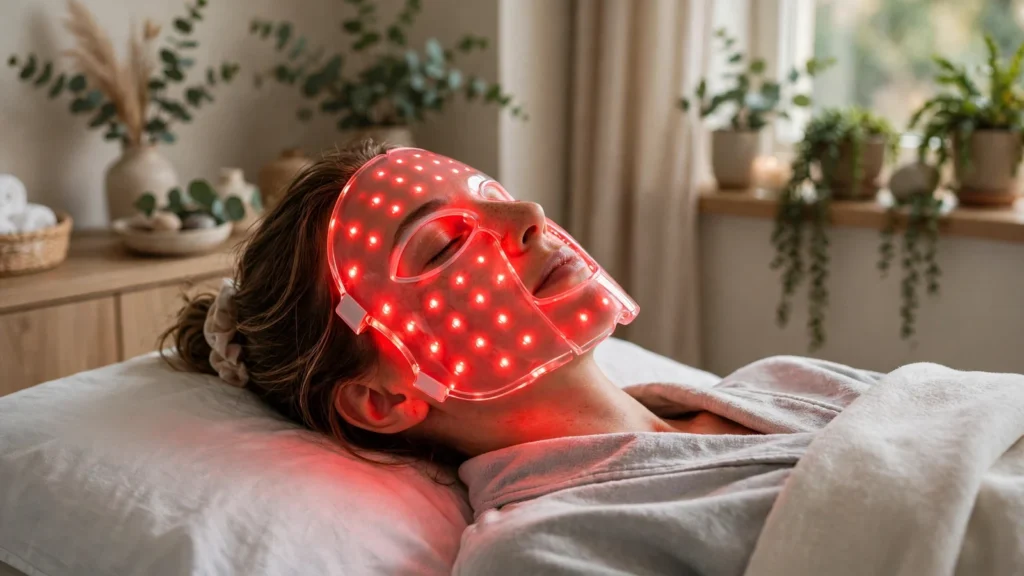
Known medically as photobiomodulation, and previously called low-level laser light therapy, red light therapy uses devices that emit red light (roughly 630–660 nanometres) or near-infrared light (roughly 810–850 nanometres) aimed at the skin. It is available in a dermatologist’s office or through a growing range of at-home devices, including masks, caps, wands and full-body panels. Interest in the idea goes back decades: NASA-funded work on LEDs in the 1990s helped move it from lasers to the panels sold today, and a related form of light treatment, photodynamic therapy, is already widely used in medicine for some skin cancers, psoriasis and acne.
How is it supposed to work?
Red light therapy is thought to work by acting on the mitochondria, the “power plants” in your body’s cells. An enzyme in the cellular energy chain absorbs the light, which appears to modestly boost production of ATP, the molecule cells run on. That extra energy is believed to stimulate collagen production, increase fibroblast activity (the cells that make collagen), improve blood circulation to the tissue and reduce inflammation in cells. Red light only penetrates a few millimetres, which is enough to reach the skin’s collagen-producing layer and hair follicles, but not your liver, thyroid or deep joint cartilage — a useful reality check on claims that a surface panel treats deep internal organs.
What does the evidence actually support?
Most experts say the studies so far show some promise for certain conditions, but that more and larger trials are needed, and the full effectiveness of red light therapy has yet to be determined.
Skin ageing: the best-tested use
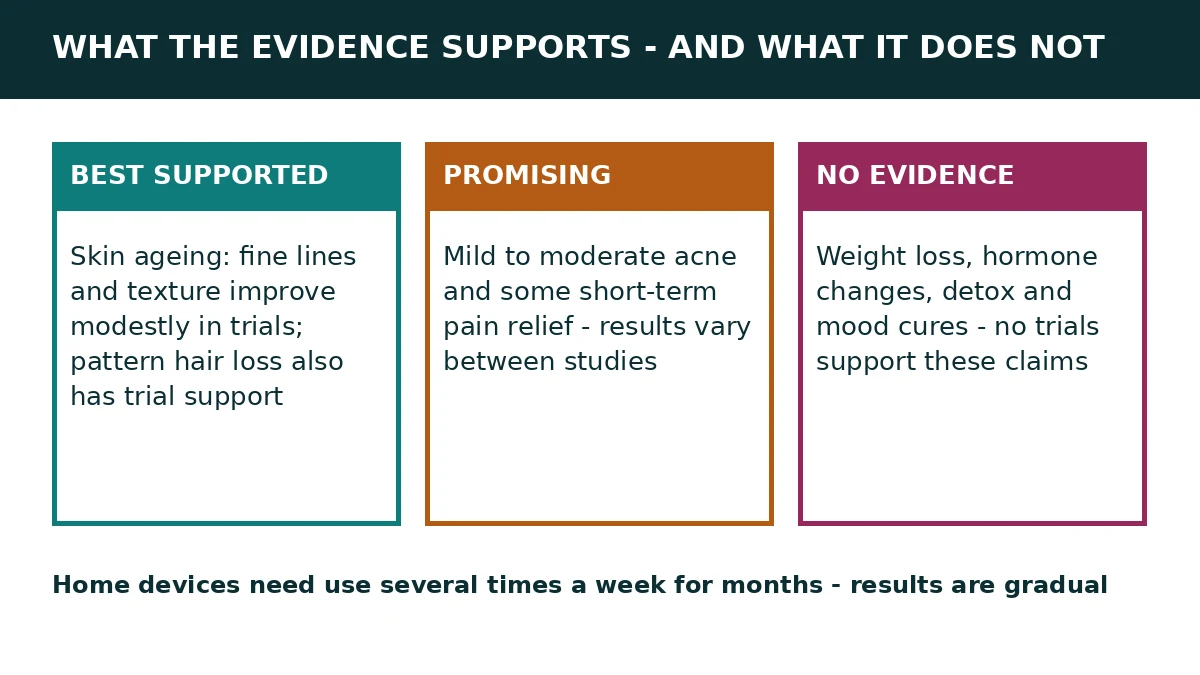
The American Academy of Dermatology says research suggests red light therapy can help reduce fine lines and wrinkles, lighten dark spots, smooth skin texture, diminish redness and ease acne. A 2014 randomised controlled trial followed 113 participants receiving red and near-infrared light treatments twice a week; compared with controls, they showed improved skin complexion, reduced skin roughness and increased collagen density measured by ultrasound, not just self-report. Harvard Health’s review reaches a similar verdict: there is credible evidence that red wavelengths can soften fine lines and improve texture over time, although results are subtle and build gradually — think eight to twelve weeks of consistent use before judging, not eight days.
Hair loss: a qualified yes
For androgenetic alopecia, the common pattern thinning that affects both men and women, pooled analyses of randomised, sham-controlled trials report measurable increases in hair density in treated areas compared with placebo devices, and low-level light devices have earned regulatory clearance for this use. The gains are modest, trials typically ran 16 to 26 weeks before measuring results, and benefits need ongoing use. It works on thinning follicles, not dead ones, and pattern loss is only one cause of shedding — thyroid problems, iron deficiency, autoimmune disease and stress-related shedding all thin hair too, and light does nothing for the underlying cause.
Acne, wounds and pain: promising but patchy
A 2025 review of six randomised trials with 216 people found at-home LED devices improved mild to moderate acne more than control, usually after 4 to 12 weeks. Light therapy is also used in hospitals to help manage painful mouth sores during some cancer treatments. For tendon problems, joint pain and muscle recovery after exercise, the picture is mixed: some sham-controlled studies report short-term pain reduction, others find no difference from placebo, often because doses and devices vary widely between studies.
What red light therapy cannot do
According to the Cleveland Clinic, there is no scientific evidence to support red light therapy for weight loss, cancer, cellulite removal or mental health conditions such as depression and seasonal affective disorder. Claims about fat reduction that lasts, hormone changes, thyroid treatment, “detoxification” and systemic anti-ageing effects sit in the same category: the marketing runs far ahead of any controlled human data. It also cannot undo deep static wrinkles, lift sagging tissue, or compensate for unprotected sun exposure — ultraviolet light remains the single biggest driver of visible skin ageing.
Is red light therapy safe?
Red light therapy appears to be safe and is not associated with side effects, at least when used short-term and as directed. Unlike ultraviolet light, it has not been linked to skin cancer. Temporary skin redness is the most common side effect, and misuse — using a device too often or not following the directions — can damage the skin or the eyes if they are not protected. The long-term safety of these devices is not yet known.
Harvard Health advises looking for a device labelled “FDA-cleared”, which means the agency considers it safe — not that it is proven to work. Avoid use if you have a light-sensitive condition such as lupus, or if you take light-sensitive medicines such as certain antibiotics, and wear eye protection if the device’s directions recommend it. People with darker skin should check with a dermatologist first, as they may be more sensitive to visible light such as red light, which can lead to dark spots. For the devices to be effective, they must be used multiple times a week for four to six months: slow and steady, not a quick fix.
Home device or clinic?
At-home products are generally safe to use, but they may be less powerful than devices used by dermatologists or other trained skin professionals, so you may not get the results you hope for. Home panels also vary enormously in dose: intensity falls off sharply with distance, and some brands advertise inflated figures measured with the sensor pressed against the LEDs. A positive trial using a calibrated clinical device tells you the biology can work under those conditions; it does not guarantee your panel, at your distance, for your session length, reproduces them. The Cleveland Clinic’s advice is to see a dermatologist first, who can confirm what your skin condition is and discuss red light therapy alongside other, better-proven options.
When to see a doctor
See a doctor or dermatologist before starting red light therapy if you have a skin condition that has not been diagnosed, a changing mole, unexplained or patchy hair loss, or joint pain that limits your daily life. Get medical advice promptly for any skin change that bleeds, does not heal, or grows quickly. In an emergency call 911 (US), 999 (UK) or 112 (EU). And if a skin problem is getting worse while you treat it with light at home, that delay in proper care — not the light itself — is the real risk.
Frequently asked questions
What is red light therapy?
It is a treatment, also called photobiomodulation, that shines low-level red light (about 630-660 nanometres) or near-infrared light (about 810-850 nanometres) onto the skin. It is thought to stimulate mitochondria in skin cells, boosting collagen production and reducing inflammation over time.
Does red light therapy work for wrinkles?
There is credible evidence it can soften fine lines and improve skin texture, but results are modest and gradual. A 2014 trial of 113 people found better complexion, less roughness and more collagen. Harvard Health says to expect eight to twelve weeks of consistent use before judging.
Can red light therapy regrow hair?
For pattern hair loss, pooled trials report measurable increases in hair density compared with placebo devices, and devices have regulatory clearance for this use. Gains are modest, trials ran 16 to 26 weeks, and benefits need ongoing use. It does not restore a full head of hair.
Is red light therapy safe?
It appears safe when used short-term and as directed, and it has not been linked to skin cancer. Temporary redness is the main side effect. Protect your eyes, avoid it if you have a light-sensitive condition or take light-sensitive medicines, and check with a dermatologist first if you have darker skin.
Do at-home red light devices work?
They can help, but they are usually weaker than clinic devices and vary widely in dose. Intensity falls off sharply with distance, and some brands advertise inflated figures. Look for a device labelled FDA-cleared, which means it is considered safe, not that it is proven to work.
Sources
- Cleveland Clinic: Red Light Therapy: Benefits, Side Effects & Uses my.clevelandclinic.org
- Harvard Health: Red light therapy for skin care www.health.harvard.edu
- Acibadem International: Red Light Therapy: Home Panels vs the Clinical Evidence acibademinternational.com
- Next Big: Health trends 2027: what's rising going into next year nextbig.io

Try the tool
Not sure if it can wait?
Common causes and warning signs for 16 everyday symptoms.
Open the symptom guide