Andropause: Male Menopause Symptoms and What Helps
Andropause is the slow fall in testosterone that comes with ageing, and it can bring low mood, tiredness and a lower sex drive. Here is how it differs from female menopause, what the symptoms mean and what helps.
- Written by
- Health Daily Advice
- Published
- Reading time
- 7 minutes
- Sources
- 9 cited

In this guide
Andropause, often called “male menopause”, is the gradual fall in testosterone that happens as men age, and it can bring low mood, tiredness, a lower sex drive and weaker muscles. Unlike female menopause, there is no sudden hormone drop, and many of these symptoms have other causes, so new or persistent symptoms are worth discussing with a doctor.
What is andropause?
Andropause is a popular name for the slow decline in testosterone that comes with ageing. The medical term for a testosterone deficiency that develops later in life is late-onset hypogonadism. The NHS calls “male menopause” an unhelpful term, because it suggests a sudden drop in testosterone in middle age, similar to female menopause. This is not true: in women, ovulation ends and hormone production falls over a fairly short time, while in men testosterone production falls slowly over many years, as Mayo Clinic explains.
Testosterone levels fall by about 1% a year from around the age of 30 to 40, according to the NHS, and Mayo Clinic gives the same figure from age 40. That steady decline is unlikely to cause problems on its own. Most older men still have testosterone levels within the standard range, and only about 10% to 25% of men have levels thought to be low, according to Mayo Clinic. Not everyone with age-related low testosterone has symptoms.
It is also important to know that andropause is not a normal part of ageing in the same way for everyone. The NHS notes that late-onset hypogonadism is an uncommon and specific medical condition, and that in many cases the symptoms blamed on “male menopause” have nothing to do with hormones at all.
Symptoms of andropause
Symptoms usually develop slowly and can be hard to pin down, because they overlap with stress, poor sleep and other health problems. The NHS lists the symptoms that some men develop in their late 40s to early 50s, and Cleveland Clinic and Mayo Clinic describe the same pattern.
Sexual symptoms
- Lower sex drive and less sexual activity
- Erection problems, including fewer morning or spontaneous erections
- Fertility problems or a low sperm count
Physical symptoms
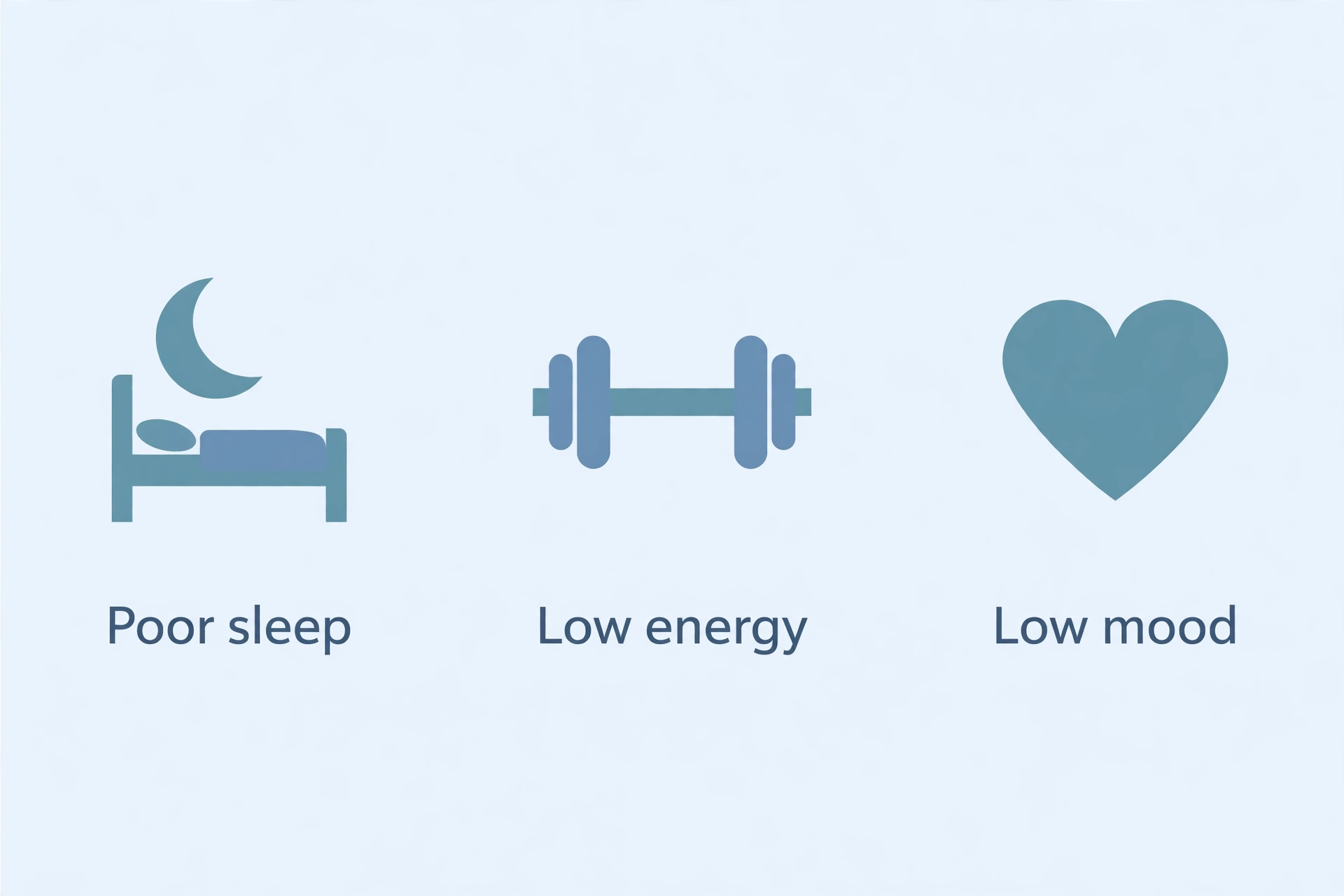
- Tiredness and a general lack of energy or enthusiasm
- Loss of muscle mass and strength, and reduced ability to exercise
- More body fat, including a larger belly
- Hot flushes or sweats, and breast tenderness or swelling
- Loss of bone density, which can lead to height loss or fractures from minor falls
Mood, sleep and thinking
- Low mood or depression, mood swings and irritability
- Difficulty sleeping, or feeling sleepy during the day
- Poor concentration and short-term memory
- Less motivation and confidence
What causes low testosterone in later life?
Ageing is the main driver, but it is rarely the whole story. The NHS points out that lifestyle and psychological problems are often responsible for many of these symptoms, including stress, depression, anxiety, lack of sleep, a poor diet, lack of exercise, drinking too much alcohol and smoking. Mayo Clinic adds that smoking, sitting most of the day and late nights with alcohol can cause andropause-like symptoms, and that high-stress jobs and disrupted sleep from shift work can make them worse.
Some health conditions and medicines also lower testosterone. Cleveland Clinic notes that late-onset hypogonadism is more common in men who have type 2 diabetes, overweight or obesity, and that most men with low testosterone symptoms do not have a problem with the pituitary gland or testicles — obesity or diabetes is usually behind it. Other causes include obstructive sleep apnoea, kidney or liver disease, HIV, some medicines such as opioid pain relievers, and problems with the pituitary gland or hypothalamus, the parts of the brain that control testosterone production.
How is andropause diagnosed?
There is no single test that proves andropause. A diagnosis of late-onset hypogonadism is usually made from symptoms together with blood tests that measure testosterone, according to the NHS. Mayo Clinic explains that experts suggest testing only men who have symptoms, and repeating the test to confirm the result if the first one is low. The Endocrine Society makes the same point: a man should only be diagnosed with hypogonadism if he has symptoms and his testosterone measurements are unequivocally and consistently low. In fact, about 30% of men whose testosterone is first measured in the low range have normal levels when retested, the Society notes, so a single low reading is not enough.
Your doctor will also look for other causes. That can mean checking for sleep apnoea, obesity, diabetes, thyroid problems and medicines that affect hormones, and sometimes further tests of the pituitary gland. Cleveland Clinic notes that healthcare providers generally consider testosterone below 300 nanograms per decilitre (ng/dL) to be low in adults, and call it male hypogonadism when low levels come with symptoms.
What helps: lifestyle steps
For many men, the most useful first steps are the everyday ones, because they tackle the causes that often sit behind the symptoms. Cleveland Clinic lists habits that may help keep testosterone levels normal: keeping a healthy weight, eating healthy foods, being physically active, sleeping seven hours a night and treating sleep apnoea, and avoiding too much use of addictive substances.
- Move regularly. Mayo Clinic notes that regular workouts, especially ones that get the heart pumping and the muscles working, can help improve testosterone levels.
- Eat well and work towards a healthy weight. A balanced diet with plenty of fruit and vegetables supports general health, and weight loss can help when obesity is part of the picture.
- Sleep better. Aim for around seven hours a night and talk to a doctor if you snore heavily or feel unrefreshed, as sleep apnoea is a known cause of low testosterone.
- Cut back on alcohol and stop smoking. Both can worsen symptoms and the conditions linked to low testosterone.
- Manage stress. Stress, anxiety and depression can cause many of the same symptoms, and the NHS notes that talking therapy such as cognitive behavioural therapy (CBT) may help when stress or anxiety are involved.
Be sceptical of “testosterone booster” supplements sold online. Mayo Clinic warns that many are all hype and no help, and some may do more harm than good. Talk to a doctor or pharmacist before taking any supplement.
Testosterone therapy: a decision for your doctor
Testosterone therapy is a medical treatment, not an anti-ageing fix, and it is only considered when symptoms and confirmed low testosterone point to hypogonadism. The Endocrine Society recommends testosterone therapy for men with symptomatic testosterone deficiency, but advises against routinely prescribing it to all men aged 65 or older with low levels, and against testing and treating healthy men where the risks and benefits are unclear. The NHS explains that if blood tests suggest a deficiency, a GP may refer you to an endocrinologist, a hormone specialist, who may offer testosterone replacement as an injection or gel.
Guidance differs on exactly who should be offered treatment. The Mayo Clinic summary notes that in 2020 the American College of Physicians suggested considering testosterone treatment for men with sexual dysfunction who wanted to improve their sexual function, after explaining the risks and benefits, while in 2018 the Endocrine Society recommended it for men with age-related low testosterone who have symptoms.
The risks matter. Mayo Clinic notes that testosterone therapy might raise the risk of prostate and breast cancer, has been linked to blood clots in the veins, and may raise the risk of heart attack and stroke, though more research is needed. It is generally not started in men who are planning fertility in the near future, or who have a history of breast or prostate cancer, untreated severe sleep apnoea, uncontrolled heart failure, a history of blood clots, or a recent heart attack or stroke. Anyone considering it needs a frank discussion with their doctor about the benefits, the risks and the follow-up testing involved.
Andropause or something else?
| Feature | Female menopause | Andropause (male) |
|---|---|---|
| Hormone change | Fairly sudden fall in oestrogen as ovulation ends | Gradual fall in testosterone, about 1% a year from around age 30 to 40 |
| Typical age | Usually between 45 and 55 | Symptoms often noticed in the late 40s to early 50s, if they appear at all |
| Fertility | Ends | Men usually stay fertile until later in life |
| Who is affected | All women who go through menopause | Only about 10% to 25% of men have levels thought to be low, and not all have symptoms |
Sources: NHS; Mayo Clinic.
When to see a doctor
See your GP if you notice a lower sex drive, erection problems, persistent tiredness, low mood, poor sleep or loss of muscle that does not improve, or if symptoms are affecting your daily life or relationship. It is worth getting checked even if you feel embarrassed — these are common problems, and a doctor can look for hormone, mood, sleep and heart-related causes. Bring a note of your medicines and any other health conditions, as these can affect testosterone.
Get medical help sooner if you feel very low or hopeless, have thoughts of harming yourself, or notice chest pain, breathlessness, or a new lump or swelling. In an emergency call 911 (US), 999 (UK) or 112 (EU).
The bottom line
Andropause is real, but it is not a male version of menopause: testosterone falls slowly, only a minority of men develop low levels, and many symptoms blamed on it come from stress, sleep, weight or other health problems. Lifestyle steps help many men, and testosterone therapy is an option only for men with symptoms and confirmed low levels, decided with a doctor after weighing the risks. If something has changed for you, talk to a doctor rather than putting it down to age.
Frequently asked questions
Is male menopause real?
Yes, but the name is misleading. The NHS says the term suggests a sudden drop in testosterone like female menopause, which does not happen in men. Testosterone falls slowly, about 1% a year from around age 30 to 40. When low testosterone does cause symptoms in later life, doctors call it late-onset hypogonadism. Many symptoms blamed on it, such as tiredness or low mood, have other causes.
What are the symptoms of andropause?
The most specific symptoms are sexual: a lower sex drive, fewer morning erections and erection problems. Other symptoms include tiredness, low mood or irritability, poor sleep, trouble concentrating, loss of muscle and strength, more body fat, hot flushes and breast tenderness. Because these symptoms overlap with stress, depression, poor sleep and other health problems, they need checking rather than assuming low testosterone is the cause.
How common is low testosterone in older men?
Less common than many adverts suggest. Mayo Clinic notes that most older men still have testosterone levels within the standard range, and only about 10% to 25% of men have levels thought to be low. Not everyone with age-related low testosterone has symptoms. Low levels become more likely with obesity, type 2 diabetes, sleep apnoea and some medicines, so a doctor will check for these causes too.
How is andropause diagnosed?
A doctor will ask about your symptoms, medicines and general health, then arrange blood tests to measure testosterone. The Endocrine Society says a diagnosis should only be made when symptoms match testosterone levels that are unequivocally and consistently low, so the test is usually repeated to confirm a low result. About 30% of men with a first low reading have normal levels on retesting. Further tests may check the pituitary gland.
Does testosterone therapy help andropause?
It can ease symptoms in men who have both symptoms and confirmed low testosterone, but it is not an anti-ageing treatment and it carries risks. Mayo Clinic notes it might raise the risk of prostate and breast cancer, has been linked to blood clots, and may raise the risk of heart attack and stroke. It is generally avoided in men planning fertility soon or with certain conditions. The decision, and follow-up testing, belong with a doctor.
What helps andropause without medication?
Everyday steps help many men. Cleveland Clinic lists keeping a healthy weight, eating healthy foods, being physically active, sleeping seven hours a night and treating sleep apnoea. Mayo Clinic adds that regular exercise, a balanced diet, less stress, enough sleep and limiting alcohol can support healthy testosterone levels. Be sceptical of testosterone booster supplements sold online, and talk to a doctor or pharmacist before taking any supplement.
Sources
- NHS 111 Wales: Male menopause 111.wales.nhs.uk
- Mayo Clinic: Male menopause: Myth or reality? www.mayoclinic.org
- Mayo Clinic: Male menopause: 10 things to know www.mayoclinic.org
- Cleveland Clinic: Low Testosterone (Male Hypogonadism) my.clevelandclinic.org
- Endocrine Society: Experts issue recommendations to improve testosterone prescribing practices www.endocrine.org

Try the tool
Not sure if it can wait?
Common causes and warning signs for 16 everyday symptoms.
Open the symptom guide