Bird Flu in Humans: Symptoms, Risk and the Oregon Case
Oregon has confirmed its first human bird flu case of 2026, in a dairy worker with mild symptoms. Here is what the illness looks like in people, who is most at risk, and how to stay safe.
- Written by
- Health Daily Advice
- Published
- Reading time
- 8 minutes
- Sources
- 8 cited

In this guide
Bird flu in humans is a rare infection caught from infected birds or animals, usually poultry or dairy cattle. Most cases cause mild flu-like illness or sore, red eyes, and the risk to the public is low. Oregon confirmed its first human case of 2026 on 19 November, in a dairy worker with mild symptoms who needed no hospital care.
What is bird flu in humans?
Bird flu, also called avian influenza, is an illness caused by flu viruses that normally circulate in wild birds. The strain behind most recent human cases is a highly pathogenic avian influenza (HPAI) virus known as H5 bird flu, the same virus that has been spreading through poultry flocks and dairy herds in the United States since 2024.
People rarely catch it. The virus does not pass easily from birds to people, and health agencies in the US and around the world say there is no sign of it spreading from person to person in a sustained way. The World Health Organization notes that wild aquatic birds are the natural home of these viruses, which is why they keep turning up in poultry, wild birds and, more recently, mammals such as dairy cattle.
Most human infections so far have been mild. A small number of people have become seriously ill, and the WHO points out that the share of deaths among reported H5 infections has been higher than for ordinary seasonal flu — one reason every human case is investigated so carefully.
What happened in Oregon?
On 19 November 2026, the Oregon Health Authority (OHA) confirmed the state’s first human case of highly pathogenic avian influenza of the year. The infection was linked to an outbreak among cattle at a dairy farm in Morrow County, in north-eastern Oregon.
The state’s public health laboratory confirmed the case on 18 November. The person affected developed mild symptoms and was promptly treated with the antiviral medicine oseltamivir. They did not need hospital care. As a precaution, health officials in Morrow County also offered oseltamivir to members of the person’s household.
The human case came about a week after Oregon confirmed its first detection of the virus in dairy cattle — also in Morrow County — picked up through the state’s routine milk-testing programme. The farm was placed under quarantine, and the Oregon Department of Agriculture supplied protective equipment and safety training to workers.
Oregon’s last human case was in 2024, when a person linked to a commercial poultry outbreak became infected. Since 2022, public health teams in Oregon have monitored more than 300 people who were exposed to sick animals. Dr Melissa Sutton, OHA’s medical director for respiratory viral pathogens, said the new case was “not cause for alarm” and showed that “the surveillance and response system we have in place is working”.
The Oregon case is part of a wider picture. The CDC’s running total now stands at 75 human cases of H5 bird flu in the United States since February 2024, up from 74 in its 5 November update. Of those, 68 were found by monitoring people known to have been exposed to infected animals, and seven were picked up through routine flu surveillance. The CDC still rates the current public health risk as low.
What are the symptoms of bird flu in humans?
Symptoms usually begin about three days after exposure, though they can appear anywhere from two to seven days later. Eye symptoms can show up sooner, within one to two days. Most people feel better within a few days, and the illness usually lasts less than two weeks — though some people have no symptoms at all.
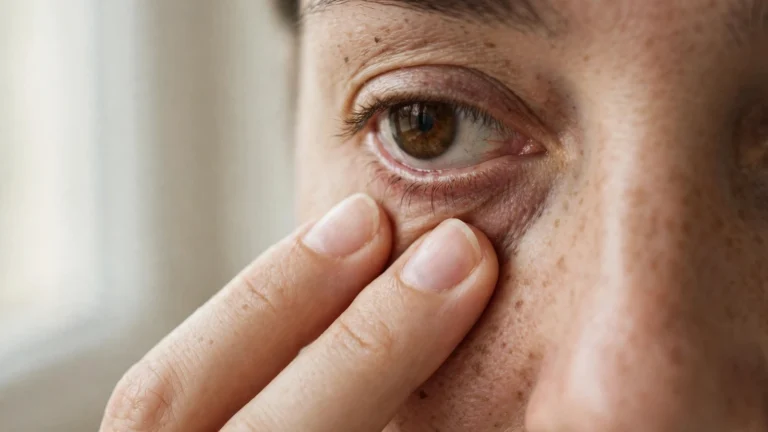
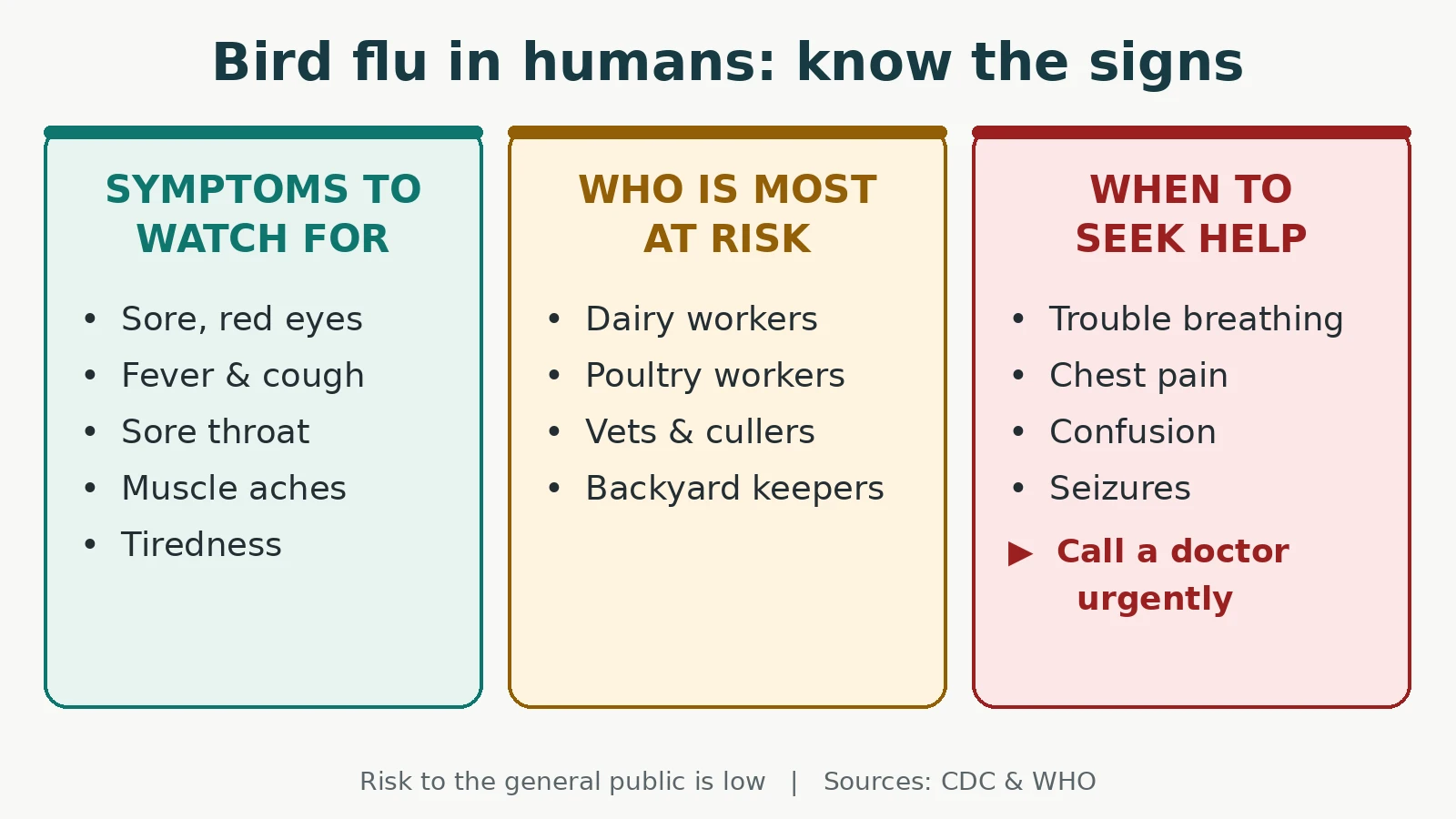
The most common sign in recent US cases has been sore, red, irritated eyes — known as conjunctivitis. The CDC lists the following mild symptoms:
- Eye redness and irritation (conjunctivitis)
- Mild fever of 100°F (37.8°C) or higher, or feeling feverish — though fever is not always present
- Cough
- Sore throat
- Runny or stuffy nose
- Muscle or body aches
- Headaches
- Fatigue
Less commonly, people report diarrhoea, nausea or vomiting.
When bird flu becomes serious
A smaller number of infections turn severe. Warning signs include a high fever, shortness of breath or difficulty breathing, confusion or a change in consciousness, and seizures. Complications can include pneumonia, respiratory failure, acute respiratory distress syndrome, kidney injury, multi-organ failure, sepsis and inflammation of the brain. Anyone with these symptoms after contact with sick birds or animals needs urgent medical attention.
How do people catch bird flu?
People usually catch bird flu through close, prolonged and unprotected contact with infected birds or animals, or with surfaces contaminated by them. The virus lives in the saliva, mucus, droppings and other body fluids of infected animals — including the milk of infected dairy cows — and can enter the body through the eyes, nose or mouth, or be breathed in as droplets or dust.
Everyday contact with healthy birds or animals is not the concern. The risk comes from handling sick or dead poultry or cattle, working in barns or sheds where infected animals are kept, cleaning up after them, or touching bedding and equipment soiled with their droppings. Visiting a live bird market or a farm with an active outbreak carries a similar risk.
There is no evidence that bird flu spreads through properly cooked poultry or eggs. The WHO is clear on this point: meat and eggs are safe to eat when properly prepared, while raw or undercooked meat and eggs from outbreak areas are high risk and should be avoided.
Who is most at risk of bird flu in humans?
For most people, the risk is very low. The people most likely to be exposed are those whose work or hobbies bring them into close contact with birds or livestock:
- Dairy and poultry farm workers, including people who milk cows or handle birds
- Workers involved in culling or clearing infected flocks
- Vets, abattoir workers and people who handle animal carcasses
- People who keep backyard or hobby flocks
- Hunters who handle wild birds
That pattern shows up clearly in the US numbers: the large majority of the 75 cases recorded since February 2024 were in people with known exposure to infected dairy herds or poultry farms. People with no contact with infected animals or contaminated surfaces are considered to be at very low risk.
Is milk and food safe?
Yes — with one important exception. Pasteurised milk is safe to drink. Pasteurisation, the process of heating milk to kill germs, destroys the bird flu virus, so pasteurised milk and dairy products made from it cannot pass on the infection. The CDC recommends always choosing pasteurised milk and products made with it.
Raw, or unpasteurised, milk is a different story. The CDC advises against drinking it or eating raw milk products, especially from animals with confirmed or suspected bird flu or in areas with infected herds. The WHO gives the same advice and says that if pasteurised milk is not available, heating raw milk until it boils makes it safer.
The same logic applies to food. Cooking poultry, eggs and beef to the right internal temperature kills bacteria and viruses, including bird flu viruses. Undercooked poultry or beef and raw eggs are best avoided, and hands and surfaces should be washed during food preparation.
How can you prevent bird flu?
The best protection is to avoid the source of exposure in the first place. The CDC’s advice is straightforward:
- Keep away from sick or dead wild birds, poultry, dairy cows and other animals, and watch them only from a distance.
- If you must handle them, wear recommended protective equipment — goggles, gloves, a fitted respirator mask, coveralls and boots.
- Do not touch surfaces or materials soiled with saliva, mucus or droppings from birds or animals with suspected or confirmed bird flu.
- Do not drink raw milk or eat raw milk products.
- Wash your hands often with soap and water, especially after any contact with animals or their surroundings.
- Report sick or dead birds or animals to your state or local wildlife or agriculture department.
Anyone who has been exposed to infected animals should watch for symptoms for 10 days after their last exposure. If illness develops in that window, the CDC advises staying home and away from other household members, and contacting the local public health department, which can arrange testing and advise when isolation can end.
The seasonal flu vaccine does not protect against H5 bird flu — it is designed for human flu viruses, not avian ones. Even so, health officials recommend it for everyone, and particularly for people who work with birds or livestock, because it lowers the chance of catching seasonal flu at the same time as bird flu, which could in theory allow the two viruses to mix. The WHO makes the same point: the seasonal vaccine will not stop avian flu, but it may reduce the likelihood of being infected with both viruses at once.
How is bird flu in humans treated?
Bird flu in humans is treated with antiviral medicines, most commonly oseltamivir — the drug sold as Tamiflu. The WHO advises that people with confirmed infection, and those with severe or worsening illness, should receive antivirals as soon as possible, alongside supportive care. The Oregon dairy worker was treated promptly with oseltamivir and recovered without hospital care, and household contacts were offered the medicine as a precaution.
There is currently no vaccine against bird flu recommended for the general public, and no bird flu vaccine is commercially available. The US government is developing vaccines against H5 viruses in case they are ever needed. If you think you may have been exposed and feel unwell, talk to a doctor or pharmacist promptly and mention the exposure — early treatment works best, and a clinician can decide whether testing or antiviral treatment is appropriate.
When to see a doctor
Contact a doctor promptly if you develop flu-like symptoms — fever, cough, sore throat or sore, red eyes — within 10 days of contact with sick or dead birds, dairy cattle or other animals, or after drinking raw milk. Tell the doctor about the exposure before you arrive, so they can advise you safely.
Get urgent medical help straight away if you have difficulty breathing, persistent chest pain, confusion, difficulty staying awake, seizures or vomiting that stops you keeping fluids down.
In an emergency call 911 (US), 999 (UK) or 112 (EU)
If you are in the UK and are unsure whether you need care, NHS 111 can advise. In the US, your state or local health department can help with testing and monitoring after an animal exposure.
Frequently asked questions
Can humans get bird flu?
Yes, but it is rare. People usually catch bird flu through close, prolonged and unprotected contact with infected birds or animals, such as poultry or dairy cattle, or with surfaces contaminated by them. The virus enters through the eyes, nose or mouth. There is no evidence of sustained spread between people, and the CDC rates the risk to the general public as low.
What are the symptoms of bird flu in humans?
The most common symptom in recent US cases is sore, red, irritated eyes, known as conjunctivitis. Other symptoms include mild fever, cough, sore throat, a runny or stuffy nose, muscle aches, headaches and fatigue. Symptoms usually begin about three days after exposure. Severe illness is uncommon but can cause breathing difficulty, confusion or pneumonia.
Is it safe to drink milk during a bird flu outbreak?
Pasteurised milk is safe, because pasteurisation kills the bird flu virus. The CDC recommends always choosing pasteurised milk and dairy products. Raw, or unpasteurised, milk can carry the virus and should not be drunk, especially milk from animals with confirmed or suspected bird flu or from herds in affected areas.
Does the flu vaccine protect against bird flu?
No. The seasonal flu vaccine is designed for human flu viruses, not avian flu viruses, so it does not protect against H5 bird flu. Health officials still recommend it, particularly for people who work with birds or livestock, because it lowers the chance of catching seasonal flu at the same time as bird flu.
How is bird flu in humans treated?
Bird flu in humans is treated with antiviral medicines, most commonly oseltamivir, the drug sold as Tamiflu. Treatment works best when it starts early, so anyone who feels ill after contact with sick birds or animals should talk to a doctor promptly and mention the exposure. There is no bird flu vaccine recommended for the general public.
What happened in the Oregon bird flu case?
On 19 November 2026, Oregon confirmed its first human case of highly pathogenic avian influenza of the year, in a dairy worker linked to an infected herd in Morrow County. The person had mild symptoms, was treated promptly with the antiviral oseltamivir, and did not need hospital care. Officials say the virus is not known to spread between people and the public risk is extremely low.
Sources
- CDC: Signs and Symptoms of Bird Flu in People www.cdc.gov
- CDC: H5 Bird Flu: Current Situation www.cdc.gov
- CDC: Preventing Bird Flu Infections www.cdc.gov
- WHO: Influenza (avian and other zoonotic) www.who.int
- WHO: Influenza: Avian (Q&A) www.who.int
- Oregon Health Authority: OHA confirms state's first human case of avian influenza of 2026 rightnoworegon.com

Try the tool
Not sure if it can wait?
Common causes and warning signs for 16 everyday symptoms.
Open the symptom guide