What Is Barometric Flu? Weather, Headaches and Joint Pain
Barometric flu is a viral social-media label for the headaches and joint aches some people feel when air pressure drops before a storm. It is not a real illness — but the weather link is not all in people's heads.
- Written by
- Health Daily Advice
- Published
- Reading time
- 5 minutes
- Sources
- 9 cited

In this guide
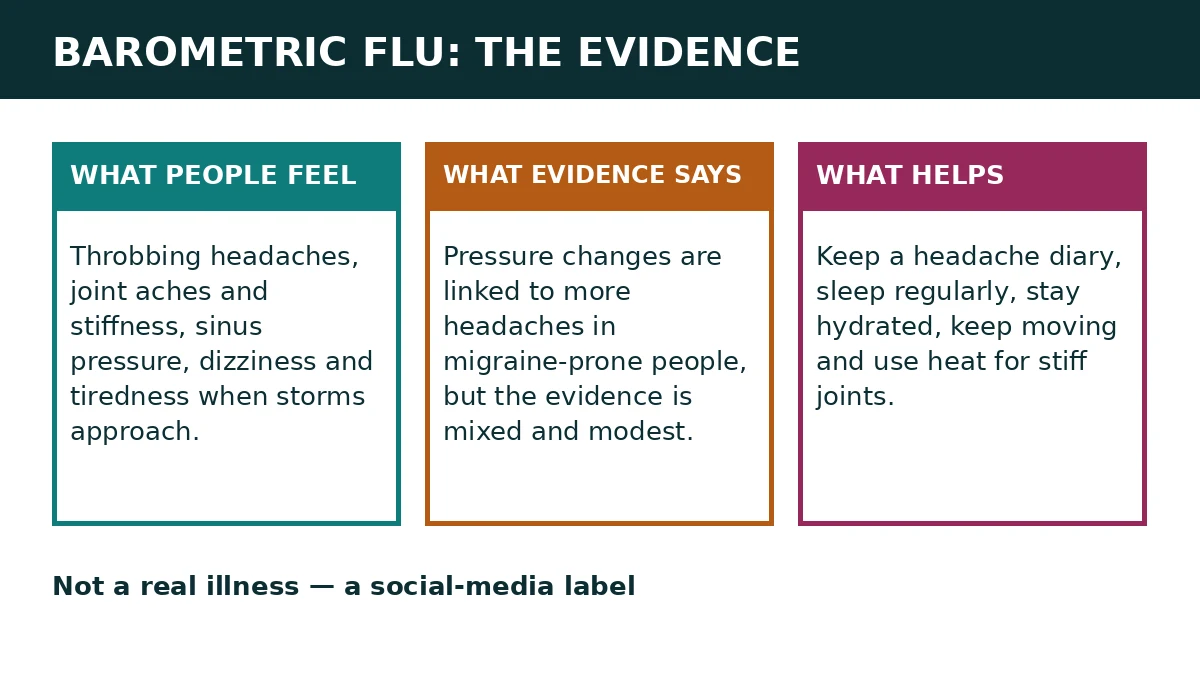
Barometric flu is not an illness. It is a label for the headaches, joint aches and tiredness some people feel when air pressure drops before a storm. There is no virus and nothing contagious about it, but research does link pressure changes to more headaches in people prone to migraine, and to worse joint pain in people with arthritis.
Where did “barometric flu” come from?
The phrase is a social-media label, not a medical diagnosis. It went viral in posts from 12 November 2026, when a TikTok creator told viewers on the US East Coast that falling pressure ahead of a storm was hitting them hard, and later called it “the barometric flu”. The posts drew thousands of comments, mostly from women, describing pounding headaches, dizzy spells and even tooth pain.
Doctors quoted in the coverage have been clear: this is an internet label for a flare-up of underlying sensitivities, such as migraine and arthritis, rather than a viral infection. There is no such condition in medical textbooks, and no test can diagnose it.
What is barometric pressure?
Barometric pressure is the weight of the air pressing down on us — on average about 14.7 pounds per square inch at sea level. It falls as bad weather and storms move in, and rises in settled weather. Large storm systems such as nor’easters, which form most often between September and April, can bring rapid drops in pressure.
The idea behind the label is that a falling outside pressure lets body tissues swell slightly, and that air-filled spaces such as the sinuses and inner ear are sensitive to the change. These are theories, not proven mechanisms, and researchers are still working out exactly what happens.
What do people report feeling?
The symptoms people describe are familiar ones: throbbing or pulsing headaches that get worse with activity, sensitivity to light and sound, pressure or fullness in the face and ears, and pain behind the eyes. Others report joint aches and stiffness, sinus pressure, dizziness and fatigue. These are the same kinds of symptoms that migraine and arthritis produce on any day — the claim is that stormy weather brings them on together.
What does the evidence say about headaches?
The link between weather and migraine is real for many people, but the science is mixed. A study published in Headache: The Journal of Head and Face Pain, covering 40,000 headache respondents, found that low barometric pressure, pressure changes, higher humidity and rainfall were associated with more headache occurrences. A 2025 review of 14 studies involving 2,696 participants found some evidence linking pressure drops or rapid atmospheric swings with more frequent migraines, though no study tied pressure changes to how long an attack lasts.
A 2022 analysis in the journal Atmosphere found almost half of participants said weather affected their health, with migraine among the most common complaints. And the Mayo Clinic notes that weather changes are a recognised migraine trigger for some people. Yet other research has found no link at all, and the American Migraine Association describes the evidence as mixed.
One thing the sources agree on is that pressure is rarely the whole story. Doctors describe a “trigger stack”: falling pressure combines with poor sleep, skipped meals, stress or hormonal changes to push someone over their migraine threshold. On its own, pressure is usually not enough to start a migraine.
What does the evidence say about joint pain?
The picture is similar — a modest effect at most, and studies disagree. The University of Manchester’s “Cloudy with a Chance of Pain” study tracked more than 13,000 UK residents by smartphone and found that damp, windy, low-pressure days increased the chance of a painful day. The Cleveland Clinic summarises the same study: aches increased on days with higher humidity, lower barometric pressure and stronger winds.
But a 2017 Harvard Medical School analysis of more than 11 million Medicare outpatient visits by over 1.5 million older adults found no meaningful difference in doctor visits for joint or back pain on rainy days compared with dry days. And a 2014 Australian study of nearly 1,000 patients found no link between new low-back pain episodes and temperature, humidity or air pressure. As one Cleveland Clinic doctor put it: “It doesn’t happen to every person — but we know it happens to some. There’s something there. We just haven’t quite figured it out scientifically yet.”
How is it different from real flu?
Real flu is a viral infection, and it behaves very differently. According to the NHS, flu symptoms come on very quickly and include a sudden high temperature, an aching body, exhaustion, a dry cough, a sore throat, headache, difficulty sleeping and loss of appetite. Flu is very infectious, most likely to spread in the first 5 days, and spreads through coughs and sneezes.
Barometric flu involves no virus, no fever, no cough and no contagion. Its symptoms track the weather and ease as it settles, and they mainly affect people who already have migraine or joint problems. If you have a sudden high temperature and a cough, that is far more likely to be flu or another infection than the weather.
What can help?
Keeping a headache diary — date, duration and possible triggers — helps you spot patterns and plan ahead, and the NHS lists weather changes among the triggers worth tracking. When a storm is coming, the basics matter most: regular sleep, staying hydrated, eating regularly and keeping stress down.
For joints, keep moving — “motion is lotion” — stretch regularly, stay warm and dress for the weather, and use heat such as a hot shower or heating pad. Over-the-counter pain relievers such as paracetamol or ibuprofen can help mild headaches, and people diagnosed with migraine may be prescribed triptans or preventive therapies. Take migraine medicine at the first sign of an attack, and talk to your doctor or pharmacist about options.
When to see a doctor
See a doctor if headaches are frequent, do not respond to treatments that usually help, or disrupt your daily life. Get urgent help for a sudden, severe headache with no history of severe headaches — especially a “thunderclap” headache that peaks within a minute — or a headache with weakness on one side of the body, vision changes, confusion, slurred speech, loss of consciousness, or fever with a stiff neck. The same applies if joint pain keeps getting worse or does not improve with basic measures.
In an emergency call 911 (US), 999 (UK) or 112 (EU)
Frequently asked questions
What is barometric flu?
Barometric flu is a label that went viral on social media in November 2026 for the headaches, joint aches, sinus pressure, dizziness and tiredness some people feel when air pressure drops before a storm. It is not a real illness or a medical diagnosis, and there is no virus involved. Doctors describe it as a flare-up of underlying sensitivities, such as migraine and arthritis, rather than a new infection.
Can barometric pressure cause headaches?
It can trigger headaches in people who are prone to them. A study of 40,000 headache respondents found that low barometric pressure, pressure changes, higher humidity and rainfall were linked to more headache occurrences. A 2025 review of 14 studies found some evidence linking pressure drops to more frequent migraines. But other research has found no link at all, so the evidence is mixed.
Can weather make joint pain worse?
Possibly, but the effect is modest and studies disagree. The University of Manchester's Cloudy with a Chance of Pain study, tracking more than 13,000 UK residents, found that damp, windy, low-pressure days increased the chance of a painful day. But a 2017 Harvard study of more than 11 million Medicare visits found no meaningful difference in joint or back pain visits on rainy days versus dry days.
How is barometric flu different from real flu?
Real flu is a viral infection. According to the NHS, flu symptoms come on very quickly and include a sudden high temperature, an aching body, exhaustion, a dry cough and a sore throat, and flu is very infectious in the first 5 days. Barometric flu involves no virus, no fever, no cough and no contagion. Its symptoms track the weather and ease as it settles.
What helps with weather-related headaches?
Keep a headache diary with dates, duration and possible triggers so you can spot patterns and plan ahead. When a storm is coming, keep regular sleep, stay hydrated, eat regularly and keep stress down. Over-the-counter pain relievers can help mild headaches, and people diagnosed with migraine may be prescribed triptans or preventive therapies. Take migraine medicine at the first sign of an attack.
When should I see a doctor about weather headaches?
See a doctor if headaches are frequent, do not respond to treatments that usually help, or disrupt your daily life. Get urgent help for a sudden severe headache with no history of severe headaches, especially a thunderclap headache peaking within a minute, or a headache with weakness on one side, vision changes, confusion, slurred speech, loss of consciousness, or fever with a stiff neck.
Sources
- Mayo Clinic: Migraines: Are they triggered by weather changes? www.mayoclinic.org
- Cleveland Clinic: How Changes in Weather Affect Joint Pain health.clevelandclinic.org
- NHS: 10 headache triggers www.nhs.uk
- NHS: Flu www.nhs.uk
- AARP: Barometric Pressure Headaches: Weather & Migraines www.aarp.org
- Rochester Regional Health: Can Air Pressure Changes Give You a Headache? www.rochesterregional.org

Try the tool
Not sure if it can wait?
Common causes and warning signs for 16 everyday symptoms.
Open the symptom guide