What Is Hyperbaric Oxygen Therapy? Uses, Risks and the Hype
Searches for hyperbaric oxygen therapy have soared 99-fold in a year. Here is what the treatment really does, what it is cleared for, and what the wellness claims get wrong.
- Written by
- Health Daily Advice
- Published
- Reading time
- 5 minutes
- Sources
- 6 cited
In this guide
Hyperbaric oxygen therapy (HBOT) means breathing pure oxygen inside a chamber at two to three times normal air pressure, so more oxygen dissolves into your blood and reaches damaged tissue. It is a treatment for a short list of conditions, including decompression sickness, carbon monoxide poisoning and slow-healing wounds — but most anti-ageing and wellness claims around it are unproven.
What is hyperbaric oxygen therapy?
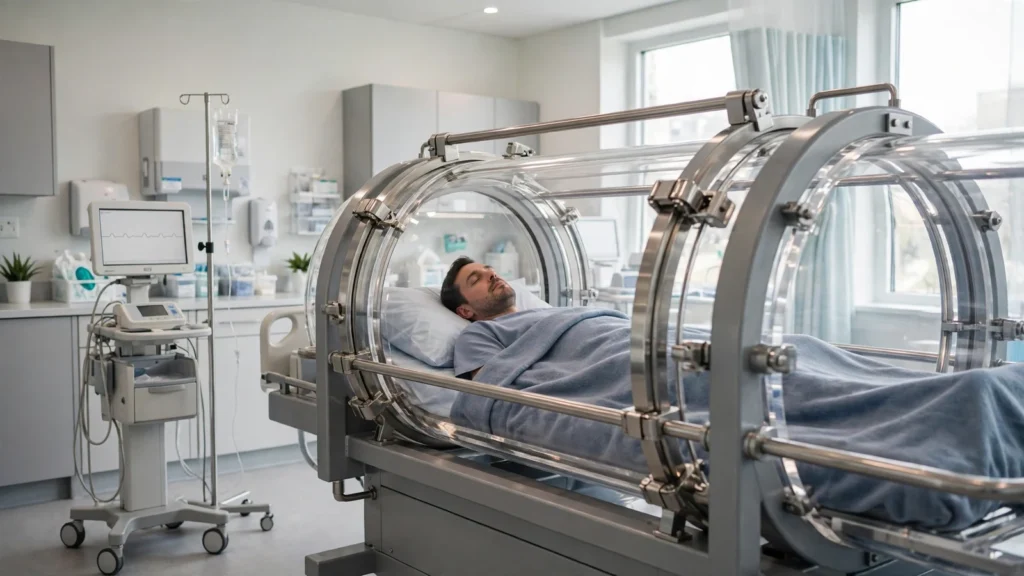
Room air contains about 21% oxygen. Inside a hyperbaric chamber you breathe 100% oxygen while the pressure is raised to two to three times normal, which lets your lungs gather far more oxygen than breathing pure oxygen at normal pressure could. The extra oxygen dissolves directly into the liquid part of your blood, the plasma, and reaches tissue where circulation is poor. As the Mayo Clinic explains, this helps fight bacteria and encourages the release of growth factors and stem cells that promote healing.
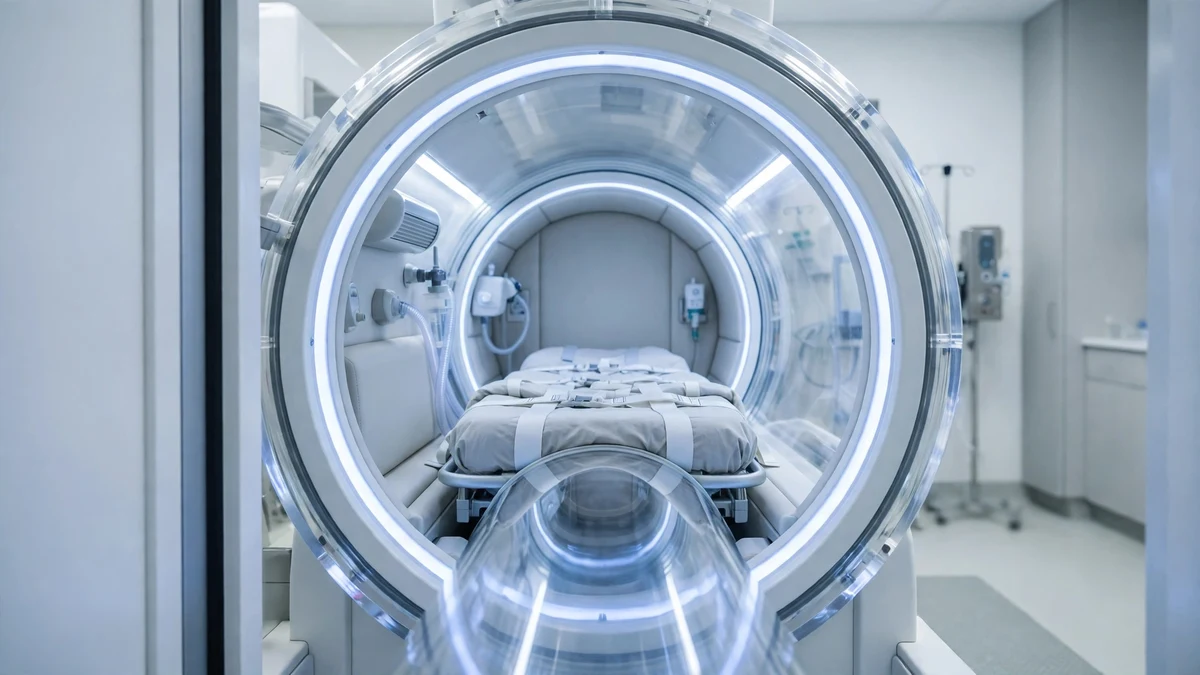
There are two kinds of chamber. In a monoplace chamber, one person lies on a table that slides into a clear tube. In a multiplace chamber, several people sit together and breathe oxygen through a mask or a lightweight, clear hood. A session usually lasts one to two hours, and a healthcare provider monitors you throughout. Some conditions, such as carbon monoxide poisoning, may need only a few visits; non-healing wounds may need 40 treatments or more.
Why is everyone searching for it now?
Searches for “HBOT therapy” reached 90,500 a month in October 2026 — 99 times the level a year earlier, according to search data from Rising Trends. Wellness clinics and celebrity endorsements have pushed a hospital treatment into the mainstream: a survey of 22 wellness venues that publish prices found a single session costs a median of $150, ranging from $50 to $300. That surge in curiosity is exactly why the line between the medical treatment and the wellness product matters.
What is HBOT actually approved for?
Hyperbaric chambers are medical devices cleared by the US Food and Drug Administration for a specific list of conditions — 13 in the labelling of a chamber cleared in November 2024, following the list recognised by the Undersea and Hyperbaric Medical Society (UHMS), which recognises 15 indications. They include:
- Air or gas embolism and decompression sickness (the bends)
- Carbon monoxide poisoning, including when complicated by cyanide poisoning
- Gas gangrene and necrotising soft tissue infections
- Crush injuries, compartment syndrome and other acute traumatic loss of blood flow
- Selected problem wounds, such as diabetic foot ulcers that have not healed
- Delayed radiation injury to soft tissue and bone
- Compromised skin grafts and flaps, and acute thermal burns
- Severe anaemia when transfusion is not possible, intracranial abscess and refractory bone infection
- Sudden sensorineural hearing loss and central retinal artery occlusion
For these conditions, HBOT is usually part of a wider treatment plan, not a standalone cure. The Cleveland Clinic notes that providers use it alone or alongside medicines or surgery, and only after assessing the condition, your age and your overall health.
What HBOT is not proven to treat
The FDA has warned repeatedly that some centres promote hyperbaric chambers for uses that have not been cleared, including autism, cancer, diabetes, HIV/AIDS, Alzheimer’s disease, asthma, Bell’s palsy, brain injury, depression, heart disease, migraines, Parkinson’s disease, spinal cord injury and stroke. Anti-ageing, longevity, general “brain optimisation”, athletic recovery, hangover recovery and Lyme disease are also not among the cleared uses, and the evidence for them is weak or absent. The FDA’s August 2025 letter to healthcare providers said it was aware of reports of serious injuries and deaths with HBOT devices, including fires, and told facilities to follow each device’s instructions.
There is a useful warning sign in the wording itself: chambers are cleared by the FDA through the 510(k) process, which finds a device substantially equivalent to one already on the market. That is not the same as approved, a more demanding review of clinical evidence. A clinic that calls its chamber “FDA-approved” for a long list of conditions is overstating what the clearance covers.
What are the risks?
HBOT is generally safe when used for a cleared condition under medical supervision, and serious complications are rare. The Mayo Clinic lists these potential risks:
- Middle ear injuries, including leaking fluid and eardrum rupture, from changes in air pressure — the most common complication. Your ears may feel full or pop, like on an aeroplane; yawning or swallowing usually relieves it.
- Temporary nearsightedness (myopia), caused by temporary changes in the eye’s lens.
- Lung collapse caused by air pressure changes (barotrauma). An untreated collapsed lung is an absolute reason not to have HBOT.
- Seizures from too much oxygen affecting the central nervous system (oxygen toxicity).
- Lowered blood sugar in people with diabetes treated with insulin.
- Fire, because of the oxygen-rich environment. Lighters, battery-powered devices and petroleum-based skin products are kept out of the chamber, and you change into a hospital gown.
Soft-sided “mild” chambers used in many wellness settings typically reach only about 1.3 atmospheres, well below the 2 to 3 atmospheres used in medical HBOT, and the UHMS does not consider them to deliver hyperbaric oxygen therapy as medically defined. They are cleared only for acute mountain sickness.
How to choose a clinic
If your doctor has recommended HBOT for a recognised condition, ask for a physician-supervised programme at a hospital, wound care centre or clinic accredited by the UHMS. Ask what type of chamber it uses, what pressure the protocol reaches, who supervises treatment, and what the clinic is actually cleared to treat. Be wary of packages sold without a physician assessment, promises of specific results or timelines, and any claim that HBOT treats cancer, autism or ageing.
When to see a doctor
Talk to a doctor before trying HBOT, especially if you have lung disease, ear or sinus problems, a history of seizures, claustrophobia, or you are pregnant. Mention medicines such as cisplatin, doxorubicin or disulfiram, which can interact with high oxygen, and any medical implants. Seek urgent care for chest pain, severe shortness of breath, a seizure, or a collapsed lung after a session. In an emergency call 911 (US), 999 (UK) or 112 (EU).
Frequently asked questions
What does hyperbaric oxygen therapy do?
It raises the amount of oxygen your blood can carry by having you breathe pure oxygen under pressure. The extra oxygen dissolves into the blood plasma and reaches tissue where circulation is poor, which helps fight bacteria and supports healing in wounds, radiation injury and some infections.
Is hyperbaric oxygen therapy FDA approved?
Not in the strict sense. Chambers are cleared by the FDA through the 510(k) process, which finds a device substantially equivalent to one already on the market. Clearance covers specific labelled uses — 13 conditions — not every condition a clinic might advertise.
Does HBOT help with anti-ageing or sports recovery?
There is no established evidence that it does. Anti-ageing, longevity, brain optimisation and athletic recovery are not among the cleared uses, and the FDA warns against clinics promoting them. Controlled evidence for sports recovery is weak, and medical HBOT is a different treatment from a mild wellness chamber session.
How long does a hyperbaric oxygen therapy session last?
A session usually lasts one to two hours, including the time to pressurise and depressurise the chamber. A full course depends on the condition: carbon monoxide poisoning may need only a few visits, while non-healing wounds may need 40 treatments or more.
Is hyperbaric oxygen therapy safe?
For a cleared condition under medical supervision, it is generally safe and serious complications are rare. The most common problem is middle-ear injury. Rare risks include temporary vision changes, lung collapse, seizures from oxygen toxicity and fire in the oxygen-rich chamber.
How much does HBOT cost?
A survey of 22 wellness venues that publish prices found a single session costs a median of $150, ranging from $50 to $300. Medical HBOT for a cleared condition is often covered by insurance with a physician's referral, while wellness sessions are not.
Sources
- Mayo Clinic: Hyperbaric oxygen therapy www.stormontvail.org
- Cleveland Clinic: Hyperbaric Oxygen Therapy my.clevelandclinic.org
- Rising Trends: Top 50 Health & Wellness Trends (November 2026) www.risingtrends.co
- TendGround: Hyperbaric Oxygen Therapy: FDA Uses vs Wellness Hype www.tendground.com
- Generations Wellness: FDA-Cleared Hyperbaric Chamber: What It Really Means www.generationswellness.net

Try the tool
Not sure if it can wait?
Common causes and warning signs for 16 everyday symptoms.
Open the symptom guide