Norovirus: Symptoms, How Long It Lasts and When to Worry
Norovirus cases are climbing as winter sets in. Here are the symptoms to watch for, how long the bug lasts, how long you stay contagious, and the simple steps that stop it spreading.
- Written by
- Health Daily Advice
- Published
- Reading time
- 7 minutes
- Sources
- 8 cited
In this guide
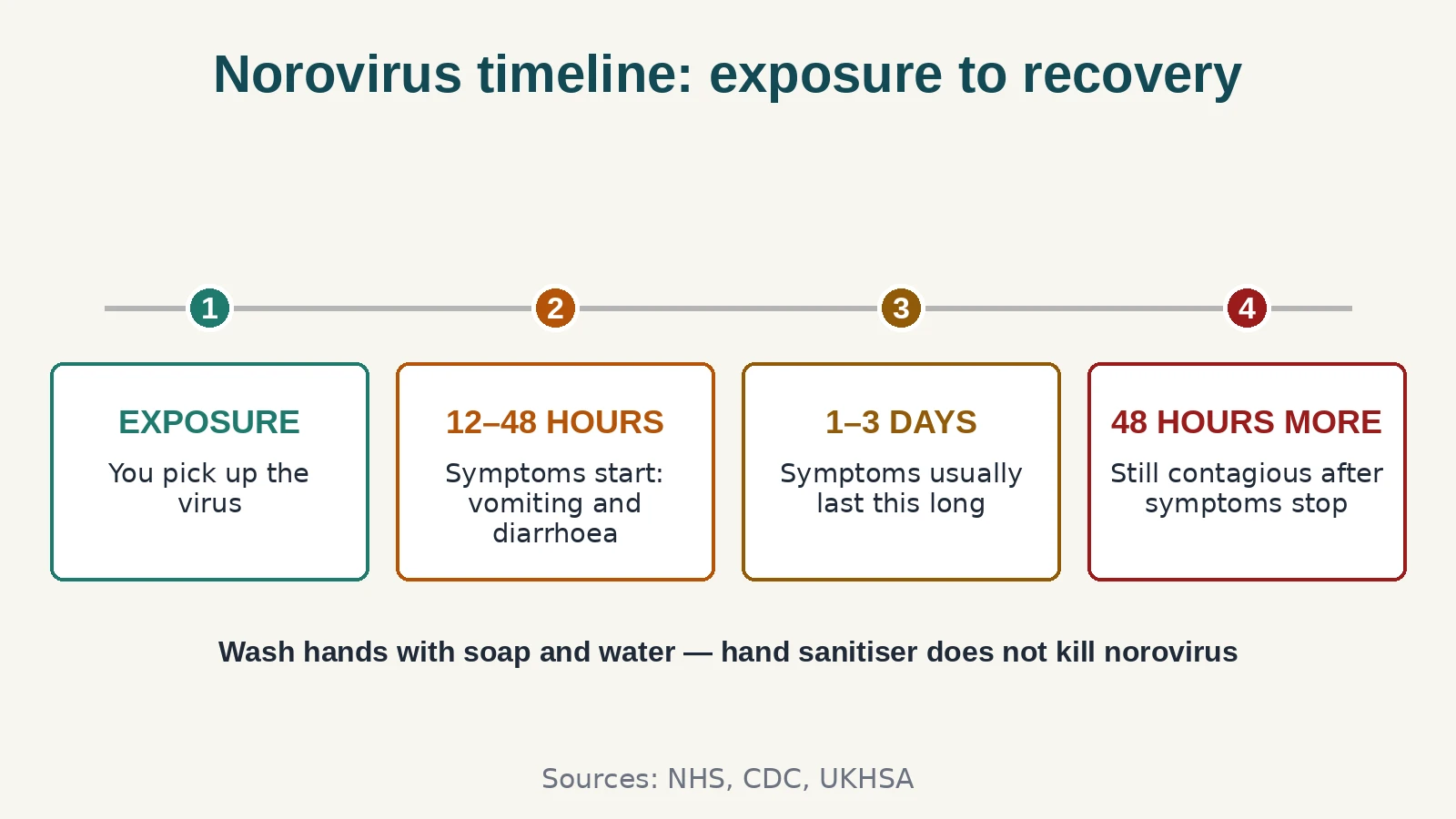
Norovirus, often called the winter vomiting bug, is a highly contagious stomach bug that causes sudden vomiting and watery diarrhoea. Symptoms usually appear 12 to 48 hours after exposure and clear up within one to three days, though you can still pass the virus on for at least 48 hours after feeling better.
Why is norovirus in the news right now?
Norovirus activity in England has been climbing as winter approaches. According to the UK Health Security Agency’s weekly winter virus bulletin, published on 19 November 2026, laboratory reports of norovirus for weeks 45 to 46 of 2026 (2 to 15 November) were 5.4% higher than the five-season average for the same two-week period. The agency said activity has increased in recent weeks but remains within expected levels.
Rotavirus has risen more sharply: reports for the same period were 60.3% higher than the five-season average, and the agency said rotavirus activity has exceeded expected levels. Amy Douglas, lead epidemiologist at UKHSA, said the agency expects norovirus cases to keep rising as winter sets in.
Norovirus peaks in the colder months, which is how it earned the nickname “winter vomiting bug”, although you can catch it at any time of year. It spreads fast where people are close together, such as hospitals, care homes, schools and cruise ships.
What is norovirus?
It is one of the most common causes of vomiting and diarrhoea. In the United States, the Centers for Disease Control and Prevention calls norovirus the leading cause of vomiting and diarrhoea, and of foodborne illness. People of all ages can catch it, and catching it once does not protect you for long.
What are the symptoms of norovirus?
The main symptoms come on suddenly and include:
- feeling sick (nausea)
- being sick, sometimes forcefully (projectile vomiting)
- watery diarrhoea
Some people also develop a high temperature, stomach pain or cramps, a headache and aching limbs. You may simply feel generally unwell and exhausted.
Symptoms usually begin 12 to 48 hours after you are exposed to the virus, according to the Mayo Clinic. That gap, the incubation period, is one reason outbreaks spread so quickly: people can pass the virus on before they realise they are ill.
How long norovirus usually lasts
For most people, norovirus is miserable but short-lived. The NHS says it usually gets better in about two days, and you will usually start to feel better within two to three days. The CDC and Mayo Clinic both put the typical illness at one to three days.
Young children, older adults and people with weakened immune systems may take longer to recover, and dehydration is the main danger for them.
| Stage | Typical timing |
|---|---|
| Incubation (exposure to first symptoms) | 12 to 48 hours |
| Symptoms (vomiting and diarrhoea) | 1 to 3 days for most people |
| Most infectious period | From when symptoms start until 48 hours after they stop |
| Stay off work or school | Until at least 48 hours after the last episode of vomiting or diarrhoea |
| Virus shedding in stool after recovery | Can continue for two weeks or more |
How contagious is norovirus?
Norovirus is one of the most contagious bugs around. You are most infectious while you have symptoms, but you can pass it on for a short time before symptoms start and after they have stopped. That is why the 48-hour rule matters: UKHSA advises staying at home and avoiding preparing food for others until 48 hours after symptoms have completely stopped, because you may still be shedding the virus during that time.
The window may be longer than that. The CDC says you can still spread norovirus for two weeks or more after you feel better, and the Mayo Clinic notes that the body can keep releasing the virus in stool for many weeks after recovery. In practice, the risk is highest while you are ill and in the two days afterwards, which is why public health advice focuses on that period. Some people carry norovirus without any symptoms at all and can still pass it on to others.
How does norovirus spread?
Norovirus spreads through tiny particles of vomit or stool from an infected person. You can catch it through close contact with someone who is ill, eating food prepared or handled by someone with the virus, drinking contaminated water or eating contaminated food such as raw shellfish, or touching a contaminated surface and then touching your mouth.
The virus is remarkably hardy. UKHSA explains that norovirus can survive on surfaces for days or weeks, which is a key reason it spreads so easily through communities. It can also survive hot and cold temperatures and many common disinfectants, according to the Mayo Clinic.
How can you stop norovirus spreading?
Good hygiene is the best defence, because there is no vaccine for norovirus and no specific medicine that kills it. Wash your hands thoroughly with soap and warm water, especially after using the toilet, before preparing or eating food, and after cleaning up vomit or diarrhoea. Alcohol-based hand gels do not kill norovirus, so do not rely on them alone.
If someone in your household is ill, clean and disinfect contaminated surfaces with a bleach-based product. UKHSA recommends a 0.1% sodium hypochlorite solution (1,000 parts per million) for surfaces, wearing disposable gloves where possible. Pay special attention to toilet seats, flush handles, taps and door handles. Wash any clothing or bedding soiled with vomit or stool separately from other laundry, on a 60°C wash where possible.
The person who is ill should not prepare food for others until at least 48 hours after symptoms have stopped, and should avoid visiting people in hospital or care homes during that time. If you are ill, stay at home and rest, and do not go to work, school or nursery until you have not been sick or had diarrhoea for two days. The same 48-hour rule applies to children. Avoid visiting your GP surgery or hospital while you are symptomatic; if you are worried, phone your GP or contact NHS 111 instead.
What should you do if you catch norovirus?
There is no specific treatment for norovirus, and antibiotics will not help because they fight bacteria, not viruses. Most people recover on their own within a few days, so the main aim is to rest and replace lost fluids.
Drink plenty of fluids, taking small sips if you feel sick. Water or squash is a good choice; the NHS advises avoiding fruit juice and fizzy drinks, which can make diarrhoea worse. Eat when you feel able to, and it may help to avoid foods that are fatty or spicy. Keep breastfeeding or bottle-feeding your baby, giving small feeds more often if they are being sick.
If you or your child show signs of dehydration, such as dark, smelly urine or peeing less than usual, talk to a doctor or pharmacist. A pharmacist may suggest oral rehydration sachets. If you cannot keep any fluids down, contact your GP by phone or call NHS 111.
Who is most at risk?
Anyone can catch norovirus, but some people are more likely to become seriously unwell. Young children, older adults, pregnant people and those with weakened immune systems or other health conditions face the greatest risk of dehydration and complications. The CDC notes that children under five, older adults and people with weakened immune systems are more likely to develop severe infections.
Dehydration warning signs include feeling very tired or dizzy, a dry mouth and throat, peeing less than usual or having dark urine, and, in children, crying without tears or having no wet nappies for three or more hours. Severe dehydration can need hospital care, so do not ignore these signs.
Catching norovirus more than once
Yes, and sometimes within a short space of time. Many different types of norovirus circulate at once, and immunity to one type may not protect you against another. UKHSA explains that you may develop limited immunity to one strain but can still be infected by a different one soon after, which is why the bug keeps returning every winter.
Is norovirus the same as stomach flu?
No. “Stomach flu” is a misleading nickname. Norovirus is not related to the flu virus at all. Seasonal flu is caused by influenza viruses and mainly affects the nose, throat and lungs, while norovirus is a gastrointestinal virus that affects the stomach and intestines.
When to see a doctor
Most people with norovirus do not need to see a doctor and can look after themselves at home. But seek medical advice promptly if you or your child keep being sick and cannot keep any fluids down, have bloody diarrhoea or bleeding from the bottom, or still show signs of dehydration after using oral rehydration sachets.
Call NHS 111 now if you are worried about a baby under 12 months, if your child stops breastfeeding or bottle-feeding while ill, if a child under five shows signs of dehydration, or if diarrhoea lasts more than seven days or vomiting more than two days.
Call 999 or go to A&E immediately if you or your child vomit blood or vomit that looks like ground coffee, have green vomit, a stiff neck with pain when looking at bright lights, a sudden severe headache or tummy ache, blue, grey, pale or blotchy skin, severe difficulty breathing, or become confused or unresponsive.
In an emergency call 911 (US), 999 (UK) or 112 (EU)
Frequently asked questions
How long does norovirus last?
For most people, norovirus lasts one to three days. The NHS says it usually gets better in about two days. You may feel washed out for a little longer, but vomiting and diarrhoea normally settle quickly. Young children, older adults and people with weakened immune systems can take longer to recover, so watch for dehydration and seek advice if symptoms drag on.
How long is norovirus contagious?
You are most contagious while you have symptoms, and you should stay at home until 48 hours after the last episode of vomiting or diarrhoea. You can pass the virus on for a short time before symptoms start and after they stop. The CDC says people can still spread norovirus for two weeks or more after feeling better, so keep washing your hands well even once you feel recovered.
What are the first symptoms of norovirus?
Norovirus usually starts suddenly with nausea, forceful vomiting and watery diarrhoea. Some people also get a high temperature, stomach cramps, a headache and aching limbs. Symptoms normally appear 12 to 48 hours after exposure. Because the onset is so abrupt, many people go from feeling fine to being unwell within a few hours.
Does hand sanitiser kill norovirus?
No. Alcohol-based hand gels do not kill norovirus, according to the NHS and UKHSA. Soap and water are the only reliable way to wash the virus off your hands. Wash thoroughly after using the toilet, before preparing or eating food, and after cleaning up vomit or diarrhoea. Use a bleach-based product to disinfect contaminated surfaces, as ordinary cleaners may not be enough.
Can you catch norovirus more than once?
Yes. Many different types of norovirus circulate at any one time, and immunity to one type may not protect you against another. UKHSA says you may develop limited immunity to one strain but can still be infected by a different one soon after. That is why the bug returns every winter, and why handwashing and staying home while ill matter every time.
Sources
- NHS: Norovirus (vomiting bug) www.nhs.uk
- UKHSA blog: Norovirus — what to do if you catch it and helping to stop the spread ukhsa.blog.gov.uk
- CDC: About Norovirus www.cdc.gov
- UKHSA: Latest weekly winter virus surveillance data www.gov.uk
- Mayo Clinic: Norovirus infection — Symptoms and causes www.mayoclinic.org

Try the tool
Not sure if it can wait?
Common causes and warning signs for 16 everyday symptoms.
Open the symptom guide