RSV Symptoms in Adults: Signs, Risks and When to Worry
RSV in adults usually feels like an ordinary cold, but for older adults and people with heart, lung or immune conditions it can turn serious. Here are the symptoms to watch for, who is most at risk, and when to seek help.
- Written by
- Health Daily Advice
- Published
- Reading time
- 7 minutes
- Sources
- 11 cited
In this guide
RSV in adults usually feels like a cold: a runny nose, a dry cough, a sore throat and a low-grade fever that begin four to six days after exposure and clear within one to two weeks. Most healthy adults recover at home, but for people over 75, and for adults with heart, lung or immune conditions, RSV can turn serious.
What is RSV?
Respiratory syncytial virus, better known as RSV, is a common virus that infects the nose, throat and lungs. For most healthy adults, it is little more than a winter cold that runs its course.
But RSV can also cause severe disease in older adults and people with certain long-term conditions. The Centers for Disease Control and Prevention (CDC) estimates RSV causes between 110,000 and 180,000 hospitalisations each year among adults aged 50 and older in the United States. The season starts in autumn and peaks in winter.
What are the symptoms of RSV in adults?
In adults, RSV usually causes mild, cold-like symptoms, and some people have mild symptoms or none at all. Symptoms tend to arrive in stages, so it is easily mistaken for an ordinary cold at first.
Mild, cold-like symptoms
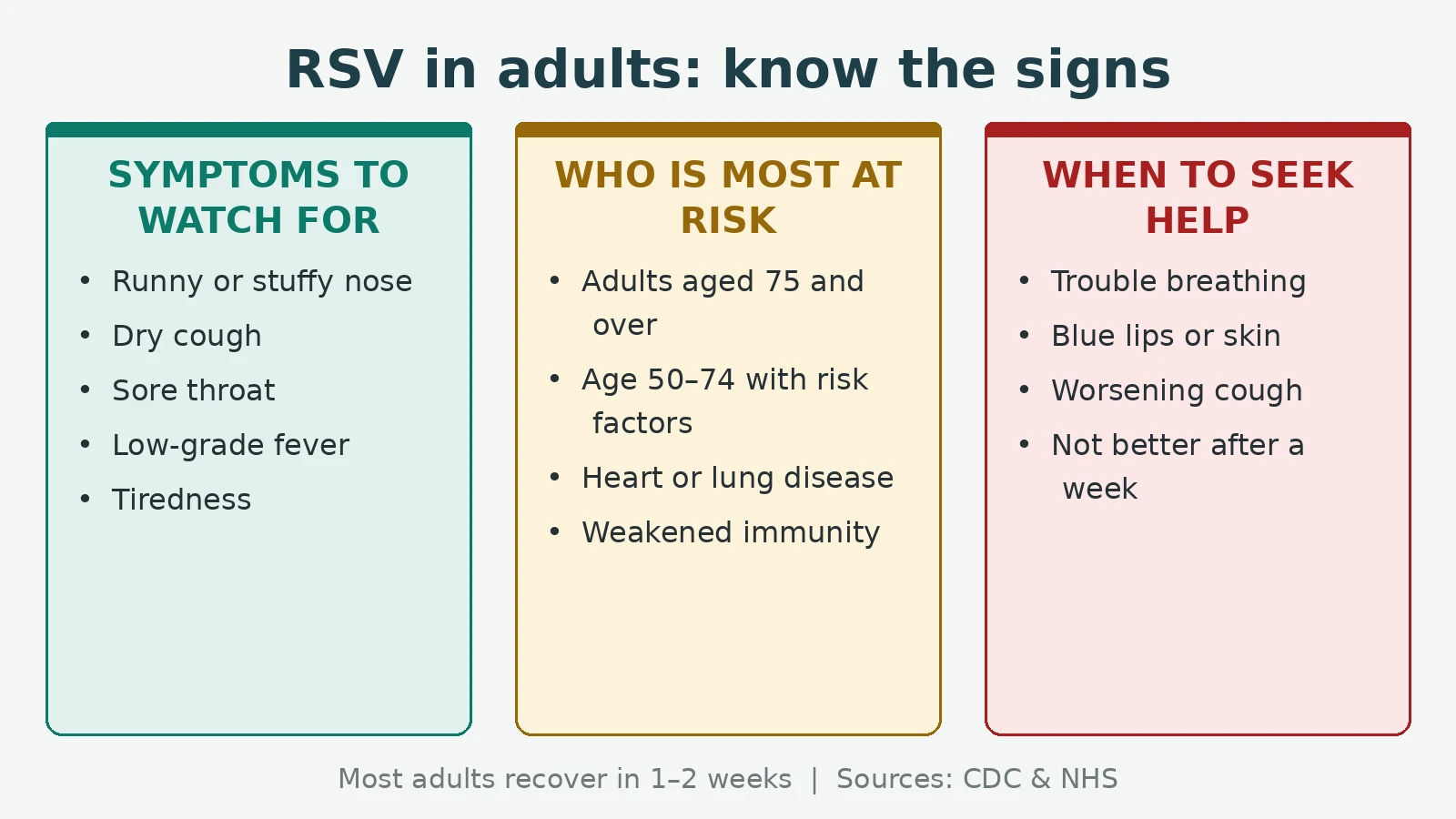
For most adults, the illness stays in the upper airways: a runny or congested, stuffy nose; a cough, usually dry; sneezing; a sore throat; a low-grade fever, sometimes with sweating or shivering; a headache; tiredness; a reduced appetite; wheezing; and red eyes.
Severe symptoms — when RSV reaches the lungs
Sometimes the virus spreads into the lower respiratory tract, causing pneumonia or bronchiolitis, inflammation of the small airways in the lungs. Mayo Clinic lists the warning signs as fever, severe cough, wheezing, rapid or difficult breathing, and bluish skin from lack of oxygen. The NHS adds a worsening cough, shortness of breath, faster breathing or long gaps between breaths, noisy breathing, loss of appetite and, in older adults, confusion. RSV can also worsen asthma or COPD, and can lead to bronchitis, pneumonia, ear infections, dehydration and respiratory failure.
How long does RSV last in adults?
Symptoms most commonly appear about four to six days after exposure, according to the CDC and Mayo Clinic, although it can take up to a week to fully develop. For most adults, mild illness resolves in one to two weeks. The NHS says it often gets better on its own in one or two weeks. If symptoms do not improve after a week, or get worse instead of better, contact a healthcare professional.
Who is most at risk of severe RSV?
Age is the biggest single risk factor. All adults aged 75 and older are at increased risk of severe RSV, and so are adults aged 50 to 74 who have certain risk factors, according to the CDC. The NHS adds people who smoke tobacco.
The conditions that raise the risk include chronic heart disease (heart failure, coronary artery disease); chronic lung disease (COPD, emphysema, asthma, interstitial lung disease, cystic fibrosis); end-stage kidney disease or dialysis; diabetes with organ damage or needing insulin or an SGLT2 inhibitor; neurological conditions impairing airway clearance or weakening breathing muscles (post-stroke swallowing problems, ALS, muscular dystrophy); liver disease (cirrhosis); blood conditions (sickle cell disease, thalassaemia); severe obesity (BMI of 40 or higher); moderate or severe immune compromise; and living in a nursing home. A clinician may also judge that another condition, such as frailty, raises risk.
The American Lung Association estimates up to 160,000 adults aged 65 and over are hospitalised each year in the United States because of RSV or its complications, and up to 10,000 die.
RSV vs flu vs COVID-19: how to tell them apart
RSV, flu and COVID-19 are all respiratory viruses, and their symptoms overlap heavily in adults. A runny nose, cough, sore throat, fever and fatigue could be any of the three; no single symptom reliably separates them. Because the illnesses look so alike, testing is the reliable way to tell them apart.
One verified difference matters for treatment. Flu has prescription antiviral drugs that should be started as early as possible, especially for people at higher risk of complications. For RSV, antiviral medication is not routinely recommended. That is another reason a diagnosis is worth having, particularly if you are in a higher-risk group.
How is RSV diagnosed?
If a clinician suspects RSV, confirming it is fairly simple: a rapid RSV test can confirm the virus, often within an hour or less. Alongside testing, the clinician will carry out a thorough physical examination and may order more laboratory tests. If the illness may be severe, imaging such as a chest X-ray or CT scan may be used to look at the lungs and check for complications such as pneumonia. Most healthy adults with mild symptoms never need a test.
How is RSV treated in adults?
There is no specific treatment for RSV. Antiviral medication is not routinely recommended, and most infections go away on their own in a week or two. Antibiotics do not treat RSV either, because it is a virus, not a bacterial infection.
Mild illness is managed at home with rest and plenty of fluids. Over-the-counter fever reducers and pain relievers such as paracetamol (acetaminophen) or ibuprofen can help with fever or a sore throat, and saline nose drops may help a blocked nose. The CDC advises older adults and people at increased risk of severe RSV to talk to a healthcare provider about non-prescription medicines first, because some can raise blood pressure or interfere with prescription medicines. Severe cases may need hospital treatment: oxygen therapy, intravenous fluids to prevent dehydration, and mechanical ventilation if the person cannot breathe unaided. Never give aspirin to children.
How to prevent RSV
Who should get the RSV vaccine?
The CDC recommends a single dose of RSV vaccine for all adults aged 75 and older, and for adults aged 50 to 74 who are at increased risk of severe RSV. The vaccine is not currently an annual vaccine: if you have already had one, you should not get another at this time, and one dose protects adults aged 50 and over for at least two years. Three RSV vaccines are licensed by the US Food and Drug Administration: Arexvy from GSK, Abrysvo from Pfizer and mResvia from Moderna.
In the UK, eligibility differs: the NHS offers a free RSV vaccine if you are 28 weeks pregnant or more, aged 75 or over, aged 65 to 74 with a weakened immune system or a long-term lung condition (not including asthma that is under control), or living in a care home for older adults. It helps reduce the risk of serious problems such as pneumonia and bronchiolitis. If you are unsure whether you qualify, ask your GP or pharmacist.
Everyday hygiene
RSV spreads in the coughs and sneezes of someone who has the virus, and by touching objects that carry it. Wash your hands often with soap and water, scrubbing for at least 20 seconds, or use an alcohol-based hand sanitiser when soap is unavailable; do not touch your face with unwashed hands; use disposable tissues and throw them away straight after use; disinfect commonly touched surfaces such as doorknobs, light switches and phones; and avoid close contact with anyone who is unwell, and keep newborn babies away from anyone with a cold or flu.
RSV in winter 2026–27: what the latest CDC data show
According to the CDC’s FluView report for Week 44, the week ending 7 November 2026, seasonal flu activity is increasing across the United States and is higher than typically observed at this time of year. That week, 11.3% of specimens tested by clinical laboratories were positive for flu, against 1.9% in the same period last year, and 3.2% of outpatient visits were for influenza-like illness, above the national baseline of 2.9%. The CDC estimates at least 2,600,000 flu illnesses, 36,000 hospitalisations and 2,100 deaths so far this season, including 9,584 laboratory-confirmed flu admissions in Week 44 alone.
RSV itself was described as low in most areas of the country in the CDC’s Respiratory Illnesses Data Channel update of 13 November 2026, but it rises into winter every year. Secondary reporting of CDC data put RSV test positivity at around 1.6% in the week ending 7 November, with national RSV admissions at around 0.4 per 100,000. RSV is not yet surging, but the season is under way.
When to see a doctor
Most adults can manage RSV at home, but contact a healthcare professional if you have difficulty breathing, are not drinking enough fluids, or your symptoms are getting worse. Adults over 65, people with a weakened immune system, and anyone with a heart or lung condition should call a healthcare provider if they develop symptoms.
Seek immediate medical care for a more serious respiratory infection. Red flags include shortness of breath, a worsening cough, a bluish tint to the skin — particularly on the lips and in the nail beds — a high fever, or confusion in an older adult. The NHS advises an urgent GP appointment or NHS 111 if cold symptoms appear alongside a long-term condition or weakened immunity.
In an emergency call 911 (US), 999 (UK) or 112 (EU)
Call 999 in the UK for severe difficulty breathing — gasping, choking or not being able to get words out — or if lips or skin turn very pale, blue or grey.
Frequently asked questions
How long do RSV symptoms last in adults?
Symptoms usually appear about four to six days after exposure, and mild illness typically clears in one to two weeks. A cough or wheezing may linger a little longer after the rest of the illness has settled. If your symptoms do not improve after a week, or they get worse instead of better, contact a healthcare professional.
Can adults get RSV more than once?
Yes. Most people first catch RSV as a child, but a past infection does not necessarily prevent reinfection, so adults can catch it again — often more than once over a lifetime. Repeat infections in healthy adults are usually mild, but they can still be serious for older adults and people with heart, lung or immune conditions.
Is RSV contagious?
Yes. RSV spreads in the coughs and sneezes of someone who has the virus, and by touching objects that carry the virus on them. Washing your hands often, not touching your face with unwashed hands, using disposable tissues and avoiding close contact with anyone who is unwell all help reduce the spread.
Do I need antibiotics for RSV?
No. Antibiotics do not treat RSV because it is a virus, not a bacterial infection, and there is no specific antiviral treatment either. Mild illness is managed at home with rest, plenty of fluids and over-the-counter fever and pain relief. Severe cases may need hospital care, including oxygen and intravenous fluids.
Who should get the RSV vaccine?
The CDC recommends a single dose of RSV vaccine for all adults aged 75 and older, and for adults aged 50 to 74 who are at increased risk of severe RSV. The vaccine is not currently an annual vaccine, and one dose protects adults aged 50 and over for at least two years. In the UK, the NHS offers a free vaccine to adults aged 75 and over and some other groups.
How is RSV different from a common cold?
In healthy adults, RSV often feels exactly like a cold — runny nose, cough, sore throat and low-grade fever — and the two cannot be told apart by symptoms alone. The difference is the risk: RSV can spread to the lungs and cause pneumonia or bronchiolitis, especially in older adults and people with long-term conditions. Testing is the reliable way to tell them apart.
Sources
- CDC: Clinical Overview of RSV www.cdc.gov
- CDC: Symptoms and Care of RSV www.cdc.gov
- CDC: RSV Vaccines for Adults www.cdc.gov
- CDC FluView: Weekly US Influenza Surveillance Report, Week 44 www.cdc.gov
- Mayo Clinic: Respiratory syncytial virus (RSV) www.mayoclinic.org
- NHS: Respiratory syncytial virus (RSV) www.nhs.uk
- Cleveland Clinic: RSV Symptoms, Causes & Treatment my.clevelandclinic.org
- University of Maryland Medical System: What to Know About RSV in Adults health.umms.org

Try the tool
Not sure if it can wait?
Common causes and warning signs for 16 everyday symptoms.
Open the symptom guide