What Is Chikungunya? Symptoms, Spread and the 2026 Europe Cases
Chikungunya has reached Switzerland for the first time, with locally acquired cases reported in Ticino. Here is what the virus is, how it spreads, and how to protect yourself.
- Written by
- Health Daily Advice
- Published
- Reading time
- 6 minutes
- Sources
- 6 cited
In this guide
Chikungunya is a mosquito-borne viral illness best known for sudden fever and severe joint pain. Most people recover within a week, although aching joints can linger for months. In November 2026 Switzerland reported its first locally acquired cases, as the virus spreads beyond the tropics.
What is chikungunya?
Chikungunya is a mosquito-borne viral disease caused by the chikungunya virus, an alphavirus in the Togaviridae family. The name comes from a word in the Kimakonde language of southern Tanzania meaning “that which bends up”, a nod to the stooped posture of people suffering severe joint pain, according to the WHO chikungunya fact sheet.
The virus was first identified in Tanzania in 1952. Since then it has spread widely and has now been found in more than 110 countries across Asia, Africa, Europe and the Americas. Large outbreaks have mostly struck tropical and subtropical regions, with smaller, occasional outbreaks in Europe — but the 2026 season shows that picture changing.
Why is chikungunya in the news in 2026?
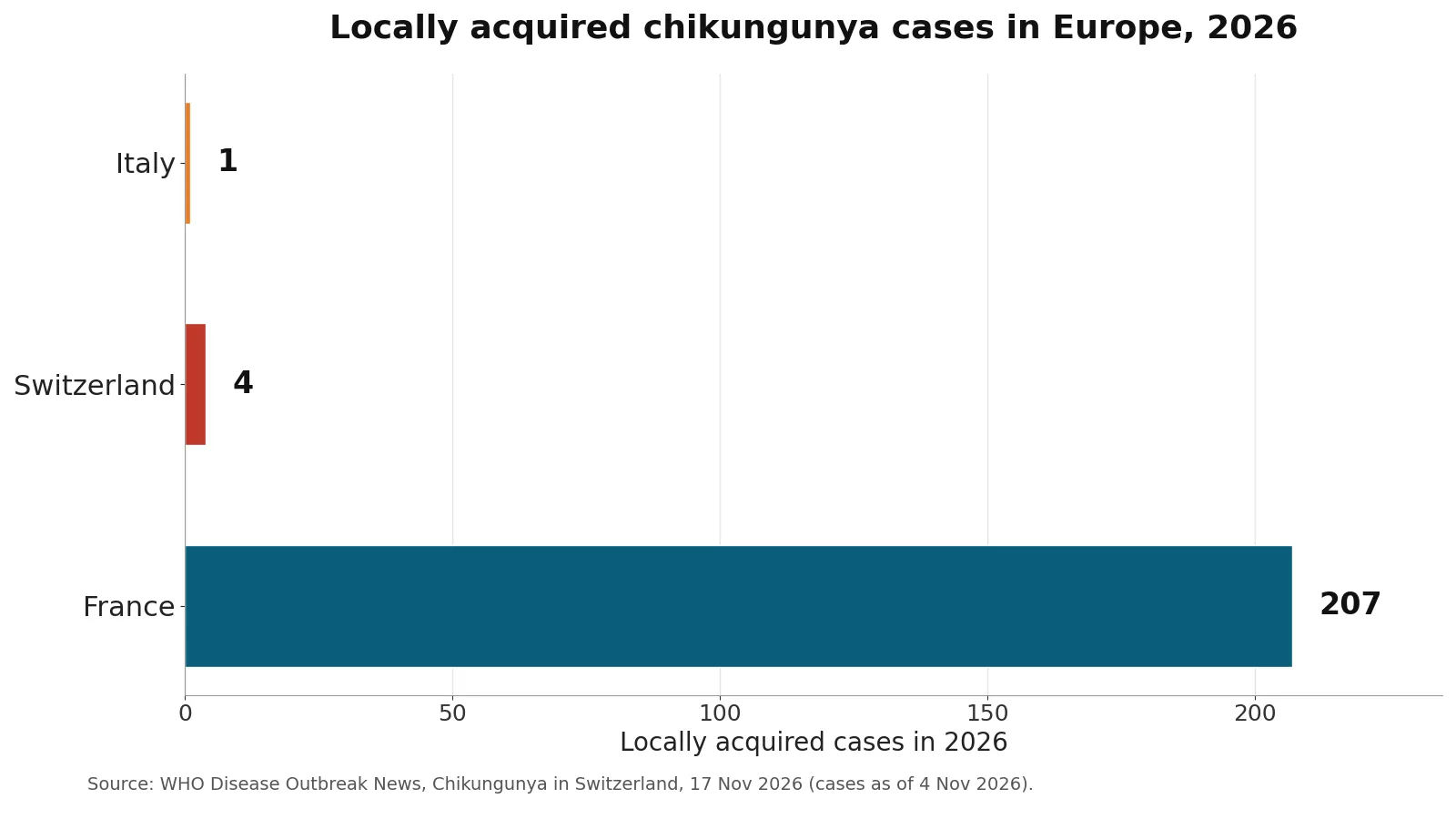
On 4 November 2026, health authorities in Ticino, Switzerland, reported four locally acquired cases of chikungunya — the first ever in Switzerland. None of the four had travelled to an area where the virus circulates, and all lived in the same small area, which strongly suggests they were bitten by local mosquitoes. The earliest symptoms began on 10 August 2026, and the cases were picked up during October. All four had a favourable course, though joint symptoms persisted in some of them.
Switzerland was not alone. In the same period, France reported 207 locally acquired cases and Italy reported one locally acquired case in Rome, with symptoms starting in August. The ECDC seasonal surveillance for 2026 shows the same pattern, with France carrying by far the largest share of Europe’s locally acquired cases.
Globally, the scale is far bigger. From 1 January to 30 September 2026, 327,086 cases were reported worldwide, including 83,660 confirmed cases and 98 deaths, according to the WHO global chikungunya surveillance dashboard. The Americas and South-East Asia accounted for the largest shares.
How does chikungunya spread?
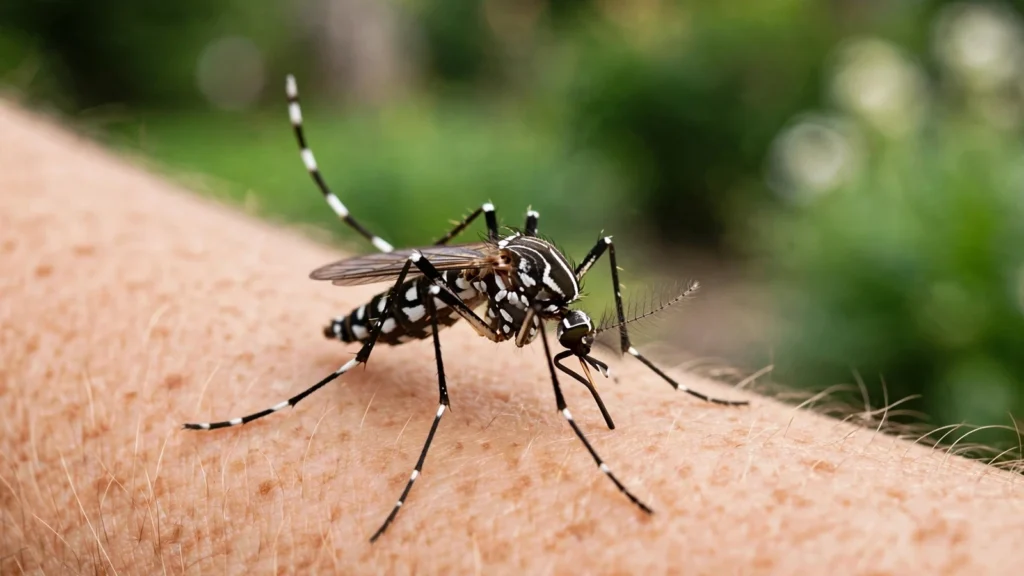
The virus passes to people through the bites of infected female Aedes aegypti and Aedes albopictus mosquitoes — the Asian tiger mosquito. These mosquitoes bite mainly during daylight hours, and they lay their eggs in containers holding standing water, from flowerpots to old tyres, the WHO fact sheet explains.
When a mosquito feeds on someone with the virus circulating in their blood, it can pick the virus up and pass it on to the next person it bites. Chikungunya does not spread directly from person to person. That is why the WHO advises people who are ill to avoid mosquito bites during the first week of illness, so local mosquitoes cannot pick the virus up from them.
The tiger mosquito is now established in several Swiss cantons, including Ticino, and across much of southern Europe. The WHO notes that the risk of further local spread in Switzerland is considered low as mosquito activity falls in autumn, but future introductions by travellers could lead to local transmission wherever Aedes albopictus is established.
What are the symptoms of chikungunya?
After the bite of an infected mosquito, symptoms typically show up within 4 to 8 days, though the incubation period can stretch from 2 to 12 days, according to the WHO outbreak report. The illness typically starts abruptly with a sudden fever, often accompanied by severe joint pain. Other symptoms include:
- Joint stiffness, swelling and aching
- Muscle pain
- Headache
- Fatigue
- A skin rash
- Occasionally, nausea
The joint pain is often debilitating and can make walking or gripping things difficult. Because the symptoms overlap with dengue and Zika, chikungunya is easy to misdiagnose on symptoms alone, and laboratory testing is needed to confirm it.
How long does chikungunya last?
Most people begin to feel better within a week. The joint pain, however, can be stubborn: it may last for weeks, months or even years in some people, the WHO Q&A notes. A small minority still feel very tired two years on. Once someone has recovered, the available evidence suggests they are likely to be immune from future infections.
Severe disease and deaths are uncommon, but they do happen, mainly among newborns infected around the time of birth, older adults and people with underlying health conditions. Older adults over 65, infants and young children, pregnant women and people with high blood pressure, diabetes or heart disease are more likely to have severe symptoms or a slower recovery.
Is there a treatment for chikungunya?
There is no specific antiviral treatment for chikungunya. Care focuses on easing the symptoms: rest, plenty of fluids and paracetamol for fever and pain. The WHO advises avoiding aspirin, ibuprofen and other non-steroidal anti-inflammatory drugs (NSAIDs) until dengue has been ruled out, because they can increase the risk of bleeding. If you are unsure what to take, talk to a doctor or pharmacist.
Anyone with symptoms should seek medical care as soon as possible, especially if they belong to a higher-risk group. If symptoms persist for more than a few days or get worse, it is important to get checked.
Is there a chikungunya vaccine?
Regulators in several countries have approved two single-dose vaccines, IXCHIQ and VIMKUNYA, but neither is widely available or in widespread use yet, and the WHO has not yet issued recommendations for them. In the UK, Vimkunya is approved for people aged 12 and over. The picture for IXCHIQ changed in 2026: after a safety review, the UK’s Medicines and Healthcare products Regulatory Agency (MHRA) revoked its UK marketing authorisation in October 2026. Travellers should talk to a doctor or a travel health clinic well before departure about whether vaccination is an option for them.
How can I protect myself from chikungunya?
Avoiding mosquito bites is the best protection. The WHO recommends:
- Apply repellent containing DEET, IR3535 or icaridin (picaridin) to exposed skin or clothing, following the label instructions
- Wear long sleeves and trousers, especially during the day when these mosquitoes are most active
- Use screens on windows and doors, or keep them closed
- Sleep under a mosquito net, particularly if you sleep during the day
- Empty and clean containers holding standing water at least once a week, and keep water containers tightly covered
Travellers returning from an area where chikungunya is spreading should keep protecting themselves from bites for 14 days after coming home, so they do not introduce the virus into local mosquito populations. Communities can help by clearing breeding sites around the home and supporting local mosquito control programmes.
What does this mean for travellers to Europe?
The 2026 cases show that chikungunya can now spread locally in parts of Europe where tiger mosquitoes are established, not only in the tropics. The risk to an individual traveller remains low, and the WHO advises against any restriction on travel or trade because of the Swiss cases. Still, the same daytime bite precautions apply on a summer holiday in southern France or northern Italy as they do in the Caribbean or South-East Asia — repellent, covered skin and no standing water near where you stay.
When to see a doctor
See a doctor promptly if you develop sudden fever and severe joint pain, especially within two weeks of a mosquito bite or a trip to an area where chikungunya is spreading. Get medical care sooner if you are over 65, pregnant, have a newborn with symptoms, or live with an underlying health condition such as diabetes or heart disease. If joint pain lingers for weeks or keeps getting worse, ask a doctor about it rather than waiting it out.
In an emergency call 911 (US), 999 (UK) or 112 (EU)
Frequently asked questions
What is chikungunya?
Chikungunya is a viral illness spread by the bites of infected Aedes mosquitoes, mainly Aedes aegypti and the Asian tiger mosquito, Aedes albopictus. It causes sudden fever and severe joint pain, and its name comes from a Kimakonde word meaning "that which bends up", describing the stooped posture of people with painful joints. The virus was first identified in Tanzania in 1952 and is now found in more than 110 countries.
What are the symptoms of chikungunya?
Symptoms usually appear 4 to 8 days after a bite, though the gap can range from 2 to 12 days. They typically start with a sudden fever and severe joint pain, often with joint stiffness and swelling, muscle pain, headache, fatigue and a rash, and occasionally nausea. Most people feel better within a week, but joint pain can persist for weeks, months or even years.
How does chikungunya spread?
Chikungunya spreads through the bites of infected female Aedes mosquitoes, which bite mainly during daylight hours and breed in standing water. A mosquito picks the virus up by feeding on an infected person and passes it on to the next person it bites. It does not spread directly from person to person, which is why people who are ill should avoid mosquito bites during the first week of illness.
Is there a vaccine for chikungunya?
Two single-dose vaccines, IXCHIQ and VIMKUNYA, have regulatory approval in several countries, but they are not widely available and the WHO has not yet issued recommendations for them. In the UK, Vimkunya is approved for people aged 12 and over, while the MHRA revoked IXCHIQ's UK marketing authorisation in October 2026. Travellers should ask a doctor or travel health clinic about vaccination before departure.
How can I prevent chikungunya?
The best protection is avoiding mosquito bites. Use a repellent containing DEET, IR3535 or icaridin, wear long sleeves and trousers during the day, and use screens on windows and doors. Sleep under a mosquito net if you rest during the day, and empty and clean any containers holding standing water at least once a week. Travellers should keep up bite precautions for 14 days after returning home.
Sources
- WHO: Disease Outbreak News — Chikungunya in Switzerland (17 Nov 2026) www.who.int
- WHO: Chikungunya fact sheet www.who.int
- WHO: Chikungunya questions and answers www.who.int
- NaTHNaC TravelHealthPro: Chikungunya travelhealthpro.org.uk
- ECDC: Seasonal surveillance of chikungunya virus disease in the EU/EEA – 2026 www.ecdc.europa.eu

Try the tool
Not sure if it can wait?
Common causes and warning signs for 16 everyday symptoms.
Open the symptom guide