What Is Gynecomastia? Causes, Symptoms and Treatment
- Written by
- Health Daily Advice
- Published
- Reading time
- 4 minutes
- Sources
- 7 cited

In this guide
Gynecomastia is an increase in breast gland tissue in boys and men, caused by an imbalance between oestrogen and testosterone. It can affect one or both breasts and is often tender. It is common at three stages of life — in newborns, during puberty and in later life — and often settles on its own.
What is gynecomastia?
Gynecomastia — also spelt gynaecomastia in the UK — is an increase in the amount of breast gland tissue in boys or men, caused by an imbalance of the hormones oestrogen and testosterone, according to the Mayo Clinic. It can affect one breast or both, and sometimes the breasts are affected unevenly.
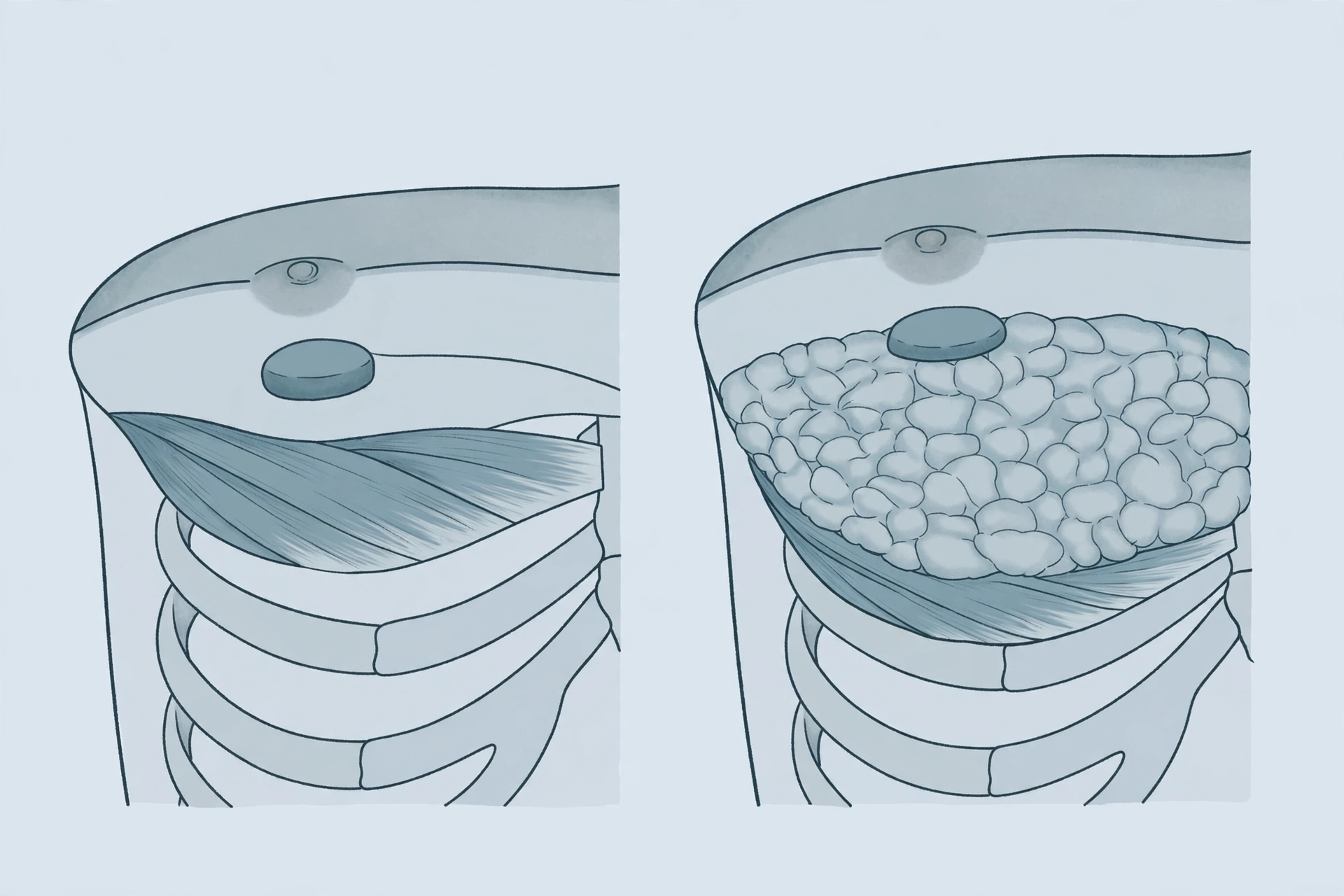
It is important to distinguish true gynecomastia from pseudogynecomastia. True gynecomastia involves firm gland tissue under the nipple, which on examination usually feels like a tender, firm, mobile disc-like mound, as described in a review published in PMC. Pseudogynecomastia, by contrast, is enlargement caused by excess fatty tissue rather than gland tissue. A doctor can usually tell the difference during a physical examination, and this matters because the two are managed differently.
Symptoms
The Mayo Clinic lists these symptoms of gynecomastia:
- Swollen breast tissue
- Breast tenderness
- Pain, particularly in teenagers
- Nipple sensitivity when the nipple rubs against clothes
Some men notice the change mainly because of how it looks, while others feel discomfort or embarrassment. Both are valid reasons to talk to a doctor.
Who gets it and how common is it?
Gynecomastia is very common, and it appears most often at three stages of life. More than half of male babies are born with it, because of oestrogen passed from the mother, and it usually goes away within two to three weeks, according to the Mayo Clinic.
It is also common in puberty, when hormone levels change. In teenagers, gynecomastia usually resolves on its own within six months to two years. A review in PMC reports that asymptomatic gynecomastia affects 60–90% of newborn boys, 50–60% of adolescents, and up to 70% of men aged 50–69.
In later life, hormone changes and other health conditions make it common again: the Mayo Clinic states that about 24% to 65% of men aged 50 to 80 develop gynecomastia.
Causes
Gynecomastia develops when the balance between oestrogen and testosterone shifts. Several things can cause that shift.
Hormone changes
Natural hormone changes in newborns, puberty and older age are the most common causes. Conditions that lower testosterone or raise oestrogen can also be involved, including hypogonadism — for example, Klinefelter syndrome or pituitary insufficiency — and tumours of the testes, adrenal glands or pituitary gland, as listed by the Mayo Clinic.
Medicines
A number of medicines can cause gynecomastia, including anti-androgens such as flutamide, finasteride and spironolactone; anabolic steroids; some HIV medicines such as efavirenz; ADHD medicines containing amphetamines; anti-anxiety drugs such as diazepam; tricyclic antidepressants; some antibiotics; opioids; ulcer medicines such as cimetidine and omeprazole; chemotherapy; heart medicines such as digoxin and calcium channel blockers; and metoclopramide. Never stop a prescribed medicine without talking to a doctor or pharmacist first.
Substances and herbal products
Alcohol, marijuana, heroin, methadone and amphetamines can all contribute to gynecomastia. Some herbal products containing tea tree oil or lavender oil have also been linked to it.
Health conditions
Several health conditions can cause gynecomastia, including an overactive thyroid (hyperthyroidism), kidney failure — about half of people on dialysis develop gynecomastia — liver failure and cirrhosis, malnutrition, and being overweight. In many cases, though, no cause is found: the PMC review reports that in one series, 58% of cases were idiopathic, with no cause identified.
How do doctors check it?
A doctor will usually start by asking about symptoms, medicines, substance use and medical history, then examine the breast tissue. In one series described in the PMC review, taking a history and doing a physical examination identified a cause in 83% of cases.
Further tests depend on what the doctor finds. For example, mammography can help distinguish benign from malignant male breast conditions, with a sensitivity and specificity above 90%, according to the same review. Your doctor will explain which tests, if any, are needed in your case.
What helps: watchful waiting and treatment
Gynecomastia often goes away without treatment. Teenagers are often monitored with check-ups every three to six months to see whether it settles, according to the Mayo Clinic. If a medicine is the cause, a doctor may review it; if another condition is responsible, treating that condition can help. Losing weight can help if being overweight is a factor, the NHS advises.
Medicines that may help in some cases include tamoxifen, raloxifene and aromatase inhibitors such as anastrozole. These are not approved specifically for gynecomastia in the United States, and they are only used when a doctor considers them suitable. In one study cited in the PMC review, tamoxifen led to complete regression in 84% of 61 men treated. Talk to a doctor about whether any medicine is appropriate for you.
When gynecomastia persists and is bothersome, surgery is an option. Liposuction removes breast fat but not the breast gland tissue itself, while a mastectomy removes the gland tissue, often through small incisions, according to the Mayo Clinic. Surgery is the standard treatment when other approaches have not helped. In the UK, surgery for gynecomastia may not be available on the NHS, the NHS notes.
When to see a doctor
See a GP if you are worried about the size or appearance of your breasts, or if pain does not go away. The NHS advises seeing a GP promptly if you notice a lump, skin changes such as a rash or dimpling, or discharge or bleeding from the nipple.
These signs need prompt attention because, although breast cancer is rare in men — accounting for less than 1% of all breast cancer cases — a hard, fixed lump at the edge of the breast, especially with nipple discharge, skin changes or swollen lymph nodes, raises concern and needs urgent assessment, according to the PMC review. Do not wait to get a new lump checked.
In an emergency call 911 (US), 999 (UK) or 112 (EU).
Frequently asked questions
What is gynecomastia?
Gynecomastia is an increase in breast gland tissue in boys and men, caused by an imbalance between oestrogen and testosterone. It can affect one breast or both, sometimes unevenly, and may cause swelling, tenderness or pain. It differs from pseudogynecomastia, which is enlargement caused by fatty tissue rather than gland tissue.
Does gynecomastia go away on its own?
Often, yes. More than half of male babies are born with gynecomastia and it usually clears within two to three weeks. In teenagers it usually resolves within six months to two years. In older men it may persist, especially if a medicine or health condition is involved, so a doctor may monitor it with check-ups every three to six months.
What causes gynecomastia in men?
The main cause is a shift in the balance between oestrogen and testosterone, often during puberty or later life. Medicines such as anti-androgens, anabolic steroids and some antidepressants can cause it, as can alcohol and marijuana. Health conditions including thyroid problems, kidney failure, liver disease and low testosterone may also be involved.
How is gynecomastia treated?
Many cases need no treatment beyond monitoring, as they settle on their own. If a medicine is responsible, a doctor may review it, and treating an underlying condition can help. Medicines such as tamoxifen are sometimes used, and surgery — liposuction or mastectomy — is an option when gynecomastia persists and is bothersome. Ask a doctor what suits you.
Is gynecomastia a sign of breast cancer?
Breast cancer in men is rare, accounting for less than one percent of all breast cancer cases, but gynecomastia and cancer can both cause breast changes. See a doctor promptly if you notice a hard lump, nipple discharge, bleeding, skin dimpling or a rash. A doctor can examine you and arrange further tests if needed.
Sources
- Mayo Clinic: Gynecomastia symptoms & causes www.mayoclinic.org
- Mayo Clinic: Gynecomastia diagnosis & treatment www.mayoclinic.org
- NHS: Gynaecomastia www.nhs.uk
- PMC: Gynecomastia (Braunstein et al.) www.ncbi.nlm.nih.gov

Try the tool
Not sure if it can wait?
Common causes and warning signs for 16 everyday symptoms.
Open the symptom guide