Is Raw Milk Safe? Risks, Pasteurisation and the 2026 Outbreak
Raw milk can carry E. coli, Salmonella, Listeria and other germs, and a 2026 outbreak linked to raw milk cheese sickened 18 people. Here is what the evidence says and how to stay safe.
- Written by
- Health Daily Advice
- Published
- Reading time
- 5 minutes
- Sources
- 8 cited
In this guide
No, raw milk is not considered safe. It can carry germs such as E. coli, Salmonella, Listeria and Campylobacter, and pasteurisation is the only reliable way to kill them. The risk is highest for young children, pregnant women, older adults and people with weakened immune systems. A 2026 outbreak linked to raw milk cheese sickened 18 people.
What is raw milk?
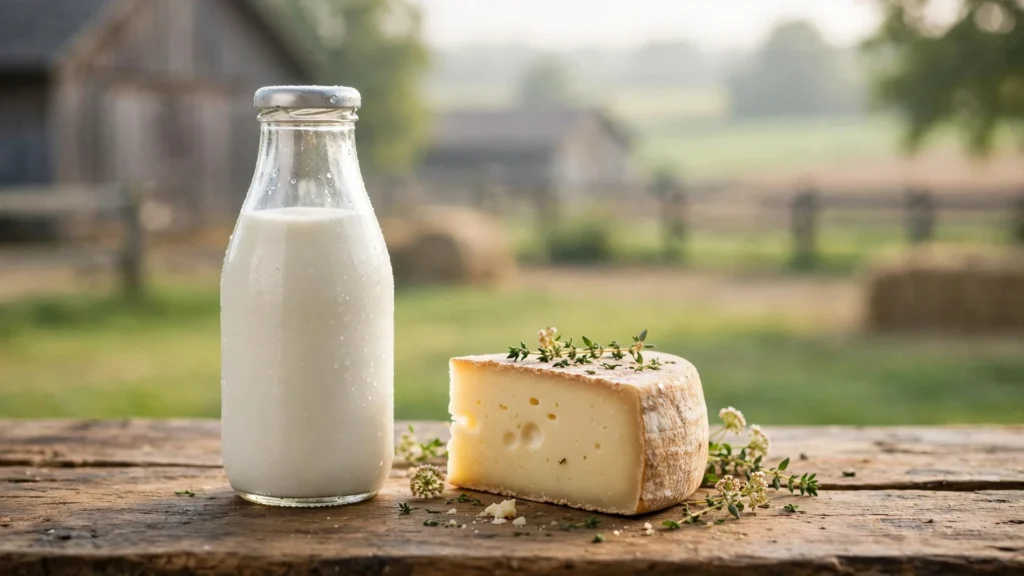
Raw milk is milk that has not been pasteurised — milk from cows, sheep, goats or any other animal that has not been heated to kill harmful germs. The CDC describes pasteurisation as heating milk to a high enough temperature for a set time to remove disease-causing germs. Raw milk can also be used to make cheese, ice cream and yoghurt, and the same risks apply to those products.
Supporters sometimes claim raw milk is more natural or nutritious, but the evidence does not back that up. The FDA says pasteurisation does not reduce milk’s nutritional value, does not cause lactose intolerance, and does save lives. Pasteurised milk offers the same nutritional benefits without the risks.
Which germs can raw milk carry?
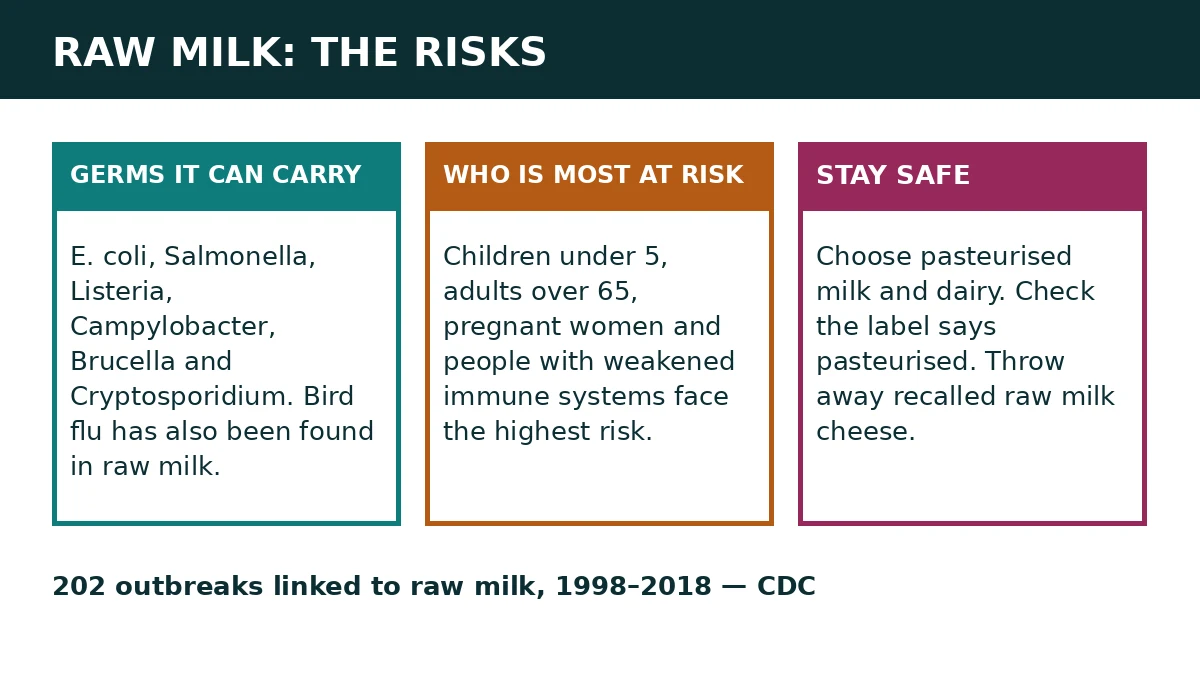
Raw milk can be contaminated with a long list of germs. The CDC lists Campylobacter, Cryptosporidium, E. coli, Listeria, Brucella and Salmonella, and the FDA adds that there are others. Contamination can happen during milking — from faecal matter, udder infections, or unclean equipment and storage — and good farm practice can reduce the risk but cannot guarantee safety.
Raw milk can also carry highly pathogenic avian influenza (bird flu): the virus has passed from wild birds to dairy cattle, and milk from infected cows can carry it. The CDC warns against drinking raw milk in the hope of building immunity to the virus.
How common is illness from raw milk?
More common than the small market share suggests. The FDA, citing CDC figures, reports that from 1998 through 2018 there were 202 outbreaks linked to drinking raw milk, causing 2,645 illnesses and 228 hospitalisations in the United States. A review of dairy-linked outbreaks from 2007 to 2020 found more cases involving raw milk than pasteurised milk, even though raw milk accounts for less than 5% of all milk sales.
Most foodborne illnesses are never part of a recognised outbreak, so the true number of people made ill by raw milk is likely higher than the reported figures.
Who is most at risk?
Anyone can become ill from raw milk, but some groups face a much higher risk of serious illness: children under 5, adults over 65, pregnant women and people with weakened immune systems, such as people with HIV, cancer or diabetes, or transplant patients.
Pregnancy deserves special attention. Listeria is often found in raw milk and can cause miscarriage, stillbirth or life-threatening illness in a newborn — even if the mother does not feel ill. The NHS lists unpasteurised milk, cream, yoghurt, butter and ice cream among the foods to avoid in pregnancy.
What are the symptoms?
Symptoms usually include diarrhoea, stomach cramping and vomiting, sometimes with fever, headache and body aches. Most healthy people recover within a short time, but some develop severe or long-lasting problems. The CDC notes that raw milk illness can in some cases lead to Guillain-Barré syndrome or haemolytic uraemic syndrome (HUS), which can cause paralysis, kidney failure, stroke or death.
With E. coli specifically, symptoms can begin a few days after eating contaminated food and up to nine days later. They include severe stomach cramps, diarrhoea, fever, nausea and vomiting, and some infections cause bloody diarrhoea and kidney failure.
The 2026 raw milk cheese outbreak
The latest reminder of the risk came in autumn 2026. An outbreak of E. coli O26:H11 infections was linked to Sierra Nevada Graziers grass-fed raw milk cheese. According to the FDA, 18 people fell ill across 10 states, 9 were hospitalised and 3 developed HUS. There were no deaths. Illnesses began between 7 July and 20 September 2026, and over half of those who fell ill were children aged 5 and under.
Of the 15 people interviewed, all 15 had eaten the raw milk cheese. Samples of the raw medium cheddar collected in California tested positive for E. coli and matched the outbreak strain by whole genome sequencing. The company recalled all Graziers raw milk cheeses on 24 September 2026 — medium cheddar, sharp cheddar, jalapeno jack and Monterey jack. The CDC declared the outbreak over and the investigation closed on 13 November 2026.
Because the cheese has a long shelf life, the FDA is still reminding people to check their homes for recalled Sierra Nevada Graziers cheeses and throw them away or return them for a refund. If cheese was stored without its original packaging and cannot be identified, throw it away. Surfaces and containers that touched the cheese should be cleaned and sanitised.
What about the law?
Rules vary by country. In England, Wales and Northern Ireland, raw cows’ drinking milk may only be sold directly to the consumer by registered farms, at farmers’ markets or by milk round — selling it anywhere else is illegal. In Scotland, sales of raw drinking milk and raw cream are completely banned. The Food Standards Agency says farms must be inspected twice a year and the milk must carry a health warning label.
How to stay safe
The safest choice is to drink pasteurised milk and eat dairy products made from it. Safe milk will have the word “pasteurised” on the label — if it does not appear, the product may contain raw milk. That applies to cheese, yoghurt, ice cream and butter as well as milk itself.
People in higher-risk groups should be especially careful, and anyone who has eaten raw milk or raw milk cheese and feels unwell should see a doctor promptly. Pregnant women who think they may have consumed contaminated raw milk or cheese should seek medical advice straight away, even if they feel fine.
When to see a doctor
See a doctor if you develop diarrhoea, vomiting or stomach cramps after drinking raw milk or eating raw milk products, especially if symptoms are severe, last more than a couple of days, or include blood in your stool, a high temperature or signs of dehydration. Pregnant women, young children, older adults and people with weakened immune systems should seek advice sooner rather than later. Tell the doctor what you ate and when.
In an emergency call 911 (US), 999 (UK) or 112 (EU)
Frequently asked questions
Is raw milk safe to drink?
No. Raw milk has not been pasteurised, so it can carry germs such as E. coli, Salmonella, Listeria, Campylobacter, Brucella and Cryptosporidium. Pasteurisation is the only reliable way to kill these germs, and good farm practice can reduce the risk but cannot guarantee safety. The CDC and FDA both advise against drinking raw milk, especially for children, pregnant women, older adults and people with weakened immune systems.
Does pasteurisation remove nutrients from milk?
No. The FDA says pasteurisation does not reduce milk's nutritional value, and the CDC says pasteurised milk offers the same nutritional benefits without the risks. Pasteurisation also does not cause lactose intolerance or allergic reactions. The process heats milk to a set temperature for a set time to kill harmful germs, and it has greatly reduced milk-borne illness since the early 1900s.
What are the symptoms of illness from raw milk?
Symptoms usually include diarrhoea, stomach cramping and vomiting, sometimes with fever, headache and body aches. Most healthy people recover quickly, but some develop severe or lasting problems. Raw milk illness can in some cases lead to Guillain-Barré syndrome or haemolytic uraemic syndrome, which can cause paralysis, kidney failure, stroke or death.
Why is raw milk dangerous in pregnancy?
Listeria is often found in raw milk and can cause miscarriage, stillbirth or life-threatening illness in a newborn, even if the mother does not feel ill. The NHS lists unpasteurised milk, cream, yoghurt, butter and ice cream among the foods to avoid in pregnancy. Pregnant women who think they may have consumed raw milk or raw milk cheese should seek medical advice straight away.
What happened in the 2026 raw milk cheese outbreak?
An outbreak of E. coli O26:H11 was linked to Sierra Nevada Graziers grass-fed raw milk cheese. Eighteen people fell ill across 10 US states, 9 were hospitalised and 3 developed haemolytic uraemic syndrome. Over half of those who fell ill were children aged 5 and under. The cheese was recalled on 24 September 2026, and the CDC declared the outbreak over on 13 November 2026.
How can I tell if milk is pasteurised?
Safe milk will have the word 'pasteurised' on the label. If the word does not appear, the product may contain raw milk. The same check applies to cheese, yoghurt, ice cream and butter. In the UK, raw cows' drinking milk may only be sold directly by registered farms, and sales are completely banned in Scotland. When in doubt, ask the seller or choose a pasteurised product.
Sources
- CDC: Raw Milk www.cdc.gov
- FDA: The Dangers of Raw Milk www.fda.gov
- FDA: Outbreak Investigation of E. coli O26:H11: Raw Milk Cheese (September 2026) www.fda.gov
- CDC: E. coli Outbreak Linked to Raw Milk Cheese www.cdc.gov
- Cleveland Clinic: Is Raw Milk Safe To Drink? health.clevelandclinic.org
- Food Standards Agency: Raw drinking milk www.gov.uk

Try the tool
Not sure if it can wait?
Common causes and warning signs for 16 everyday symptoms.
Open the symptom guide