Why Am I Always Hungry Even After Eating? Reasons & Fixes
Hungry an hour after a full meal? From blood-sugar crashes and sleep loss to stress and hidden medical causes, here are the reasons hunger comes back fast — and what to do about it.
- Written by
- Health Daily Advice
- Published
- Reading time
- 4 minutes
- Sources
- 8 cited

In this guide
Feeling hungry right after eating usually comes down to your meals and habits: foods high in refined carbs and low in protein, fiber, and healthy fat digest fast and spike hunger hormones. Poor sleep, stress, dehydration, and eating quickly make it worse. Persistent extreme hunger can signal conditions like diabetes — see a doctor if it does not improve.
Your hunger hormones may be out of balance
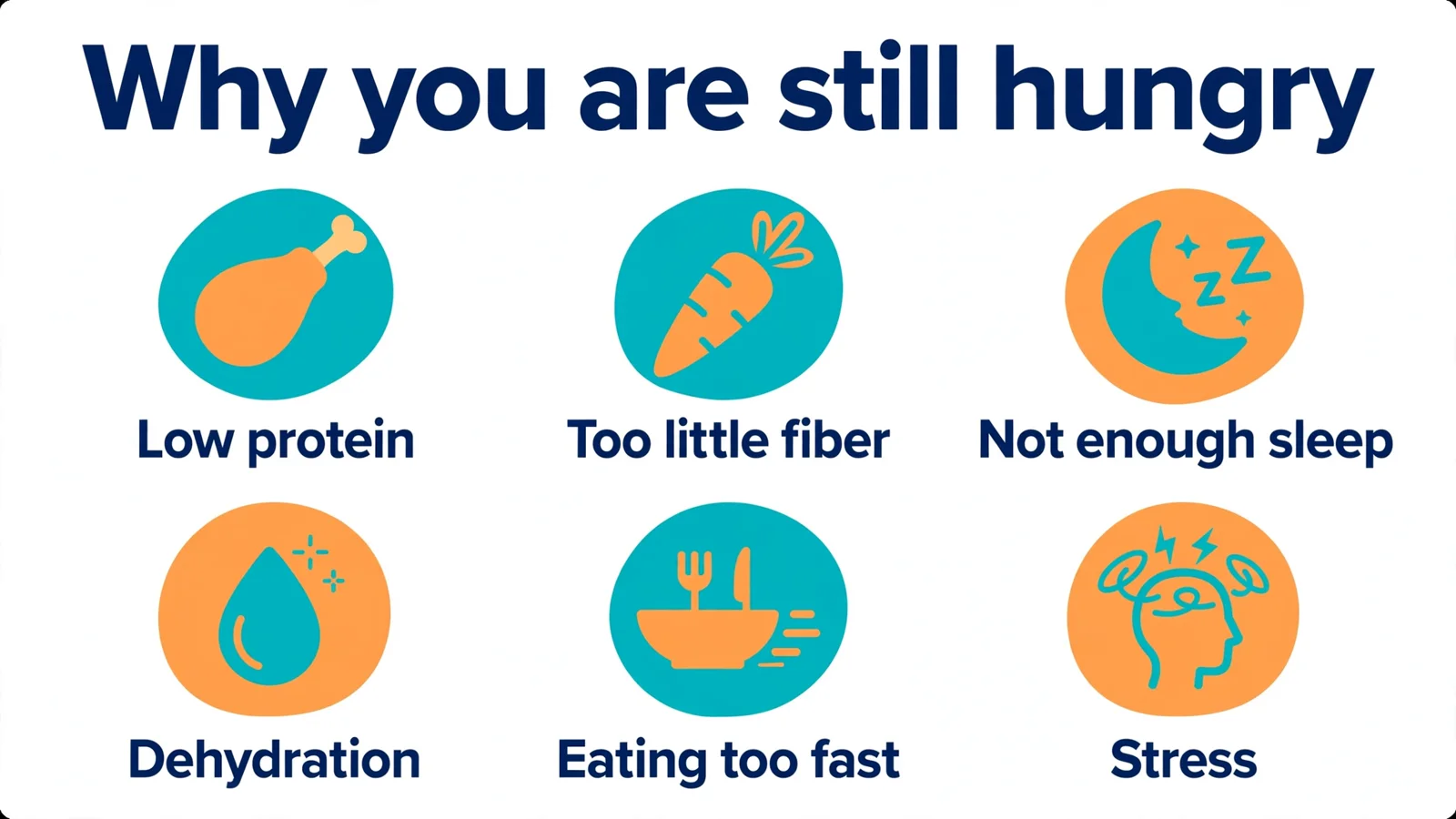
Hunger is controlled mainly by two hormones: ghrelin, released mostly in the upper stomach, which rises before meals and signals hunger; and leptin, released from fat cells, which signals fullness. BBC Science Focus explains that people with obesity can develop leptin insensitivity, so the brain stops hearing the “I’m full” signal and hunger lingers after eating. Prolonged dieting can weaken the satiety-hormone response in the other direction. Sleep plays into this too: a 2022 Swedish study found that a single night of sleep deprivation lowered leptin and raised ghrelin, with stronger effects in women and people with obesity. That lines up with Healthline’s summary that poor sleep over time tips the balance toward more hunger, and with the CDC’s guidance of at least 7 hours of sleep a night.
What you eat matters more than you think
The classic pattern is a meal high in refined carbs and sugar and low in protein, fiber, and healthy fat: it digests quickly, spikes blood sugar, and the insulin response that follows can send blood sugar crashing back down — which the brain reads as “eat again.” Cleveland Clinic dietitian Teresa Eury names the usual suspects: sugary cereals, donuts, granola bars, white pasta, and sweetened smoothies. (Sugar-heavy foods also deserve a skeptical look in general — see is honey better than sugar?.) Her plate-building advice: make half the plate non-starchy vegetables, add a solid protein portion, and include a smaller amount of healthy fat — for example, a salad with chicken, walnuts, and a baked or sweet potato.
The satiety chemistry backs her up. Healthline cites a 2020 review showing protein suppresses ghrelin while raising the fullness hormones PYY and GLP-1. Fat slows digestion and triggers fullness signals including CCK, GLP-1, and PYY. And fiber helps, especially soluble fiber, which forms a gel-like consistency in the gut and is more filling than insoluble fiber.
Habits that quietly drive hunger
Eating too fast. It takes time for fullness signals to reach the brain. Reviews from 2018 and 2023 found that eating slowly increases feelings of fullness, while a 2022 review found distracted eating raises appetite and intake by blunting recognition of fullness signals.
Dehydration. Thirst is often mistaken for hunger. A small 2016 study found that drinking two cups of water before a meal led people to eat about 600 fewer calories. A Cleveland Clinic dietitian notes that drinking enough water can help you feel fuller.
Stress. Cortisol raises blood sugar and hunger, according to the Cleveland Clinic, and Healthline notes chronic stress promotes hunger and cravings.
Alcohol. Even modest amounts increase the desire to eat and how much people consume, partly by lowering inhibition and stimulating appetite.
Medications. Some drugs list increased appetite as a side effect; the Cleveland Clinic specifically names corticosteroids and cannabinoids as capable of causing extreme hunger. If a new prescription seems to coincide with constant hunger, talk to the prescribing doctor or a pharmacist rather than stopping the medication on your own.
Medical conditions that can cause constant hunger
When hunger is extreme or new, a medical cause is worth ruling out. The Cleveland Clinic explains that excessive hunger (polyphagia) is most often tied to undiagnosed or undertreated diabetes: glucose cannot enter cells properly, so the body keeps demanding food. Watch for the “three Ps” — extreme hunger, extreme thirst, and frequent urination — especially alongside rapid weight loss, and seek care promptly.
Other possibilities include an overactive thyroid, which speeds up metabolism and can cause constant hunger alongside weight loss, and hypoglycemia (low blood sugar), which can occur with or without diabetes. Hormonal shifts — for example around menstruation or during pregnancy — can also ramp up appetite. Because these conditions need blood tests and medical evaluation to sort out, this is a “talk to your doctor” situation, not a self-diagnosis one.
When to see a doctor
See a doctor promptly if constant hunger is new, severe, or comes with other changes: feeling thirsty all the time, urinating more than usual, feeling very tired, or losing weight without trying — the NHS lists these as diabetes symptoms that warrant an urgent appointment. Also seek medical advice if hunger started after a new medication, disrupts your sleep, or comes with shaking, sweating, or a racing heartbeat.
In an emergency call 911 (US), 999 (UK) or 112 (EU)
Frequently asked questions
Why do I feel hungry immediately after eating?
It is usually your meal mix: foods high in refined carbs and sugar and low in protein, fiber, and healthy fat digest quickly, spike blood sugar, and the insulin crash that follows tells your brain to eat again. Eating fast, distracted eating, dehydration, and poor sleep can all make it worse. Try slower meals built around protein, fiber-rich vegetables, and healthy fats.
Does drinking water help with hunger?
It can. Thirst is often mistaken for hunger, and staying hydrated helps you feel fuller. A small 2016 study found that drinking two cups of water before a meal led people to eat about 600 fewer calories. A Cleveland Clinic dietitian also notes that drinking enough water can help you feel fuller overall, so try a glass before reaching for a snack.
Why am I hungry at night even after dinner?
Evening hunger often comes from a light or carb-heavy dinner that wore off fast, dehydration, or simply habit. Stress and tiredness also raise appetite at night. If dinners leave you hungry, add more protein and vegetables, drink water first, and check that poor sleep is not driving it — one study found a single night of poor sleep raised the hunger hormone ghrelin.
Can stress make you hungry all the time?
Yes. Stress raises cortisol, which increases blood sugar and hunger, according to the Cleveland Clinic, and chronic stress promotes hunger and cravings for high-calorie foods. If you notice yourself eating more during stressful periods, it is a real physiological response — regular sleep, exercise, and stress management can help settle it.
When is constant hunger a sign of diabetes?
Extreme hunger on its own is usually diet or lifestyle related, but watch for the 'three Ps': extreme hunger plus extreme thirst and frequent urination, especially with rapid weight loss or constant tiredness. The NHS lists these as diabetes symptoms that warrant an urgent appointment. Polyphagia is most often tied to undiagnosed or undertreated diabetes, so do not ignore that combination.
What should I eat to feel full longer?
Build meals around protein, fiber, and healthy fats. A Cleveland Clinic dietitian suggests making half your plate non-starchy vegetables, adding a solid protein portion, and including a smaller amount of healthy fat — for example, a salad with chicken, walnuts, and a baked or sweet potato. Soluble fiber, found in oats, beans, and fruit, forms a gel in the gut that keeps you fuller longer.
Sources
- Cleveland Clinic Newsroom: Why You're Still Hungry After Eating Certain Foods (RD Teresa Eury) newsroom.clevelandclinic.org
- Cleveland Clinic: Polyphagia (Hyperphagia) my.clevelandclinic.org
- Healthline: 14 Reasons Why You're Always Hungry www.healthline.com
- BBC Science Focus: Why Am I Still Hungry After I've Finished Lunch? www.sciencefocus.com
- NHS: Diabetes symptoms www.nhs.uk

Try the tool
Not sure if it can wait?
Common causes and warning signs for 16 everyday symptoms.
Open the symptom guide

