What Is Odontophobia? Fear of the Dentist Explained
An intense fear of the dentist that can keep you away from care for years. Here is what causes odontophobia, how to tell it from normal nerves, and the steps that help.
- Written by
- Health Daily Advice
- Published
- Reading time
- 8 minutes
- Sources
- 9 cited
In this guide
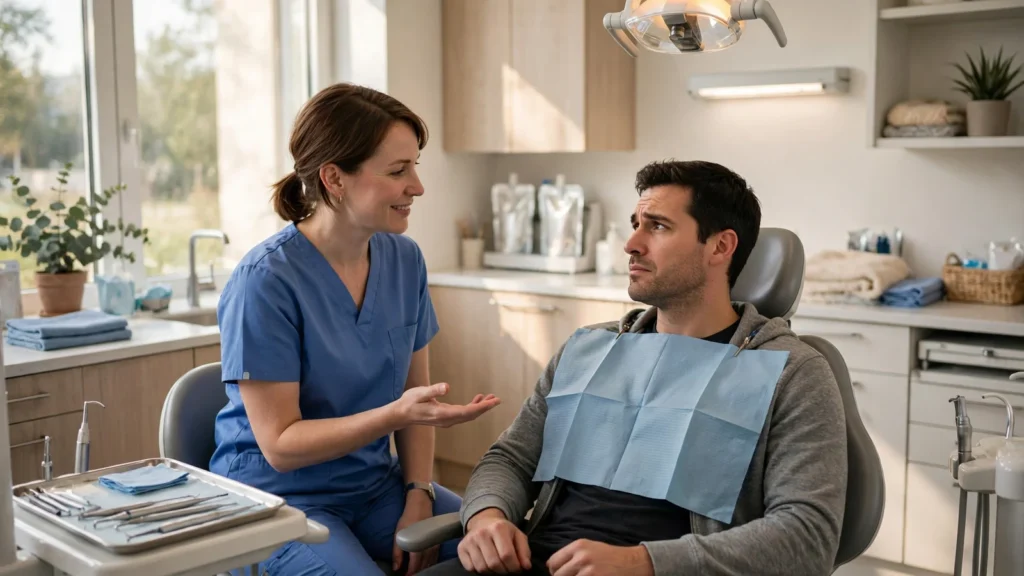
Odontophobia, also called dentophobia, is an intense and persistent fear of dentists and dental treatment. It goes beyond ordinary nervousness: the fear can trigger panic, sleepless nights before an appointment and years of avoiding dental care altogether, which often leaves teeth in a worse state and makes the next visit feel even harder.
What is odontophobia?
Odontophobia is the fear of dentists, dental treatment or anything connected with a dental visit. It is also known as dentophobia. Cleveland Clinic describes it as a type of specific phobia, a kind of anxiety disorder in which a specific situation — going to the dentist — triggers an excessive fear response.
A phobia is different from a dislike or a passing worry. As Mind explains, a phobia is an extreme fear, when the fear we feel does not match the risk of danger, and it can have a big impact on daily life. With odontophobia, the fear is strong enough to change behaviour: people cancel appointments, put off check-ups for years and only seek help when pain or infection can no longer be ignored.
Some degree of nervousness about the dentist is very common. A 2025 survey published in the Journal of the American Dental Association found that 72.6% of adults in the United States reported some amount of dental fear, with 45.8% describing it as moderate and 26.8% as severe. In England, the Adult Oral Health Survey 2021 found that 12% of adults had extreme dental anxiety and 42% had moderate dental anxiety. Full-blown dentophobia is rarer: Cleveland Clinic reports that about 3% of adults in industrialised countries may have dentophobia and avoid going to the dentist at all.
What causes odontophobia?
There is rarely a single cause. Odontophobia usually builds up from a mix of experiences, learned fears and personal sensitivity:
- A bad experience at the dentist. Most dental fears and phobias are caused by previous bad experiences with dentists or dental treatment, according to Dental Fear Central. Painful treatment, feeling unheard or feeling that the dentist would not stop can leave a lasting impression, especially when it happened in childhood.
- Feeling powerless or out of control. Lying flat in a chair, mouth open, unable to see what is happening, is a common trigger. Cleveland Clinic lists loss of control as one of the main causes of dental anxiety, alongside fear of pain and embarrassment.
- Fear of pain or of the anaesthetic not working. Some people fear the injection itself; others fear that the numbing will not work, or worry about the numb feeling afterwards. The drill, the sounds and the smells of a dental surgery can also trigger anxiety.
- Embarrassment or shame. If you have avoided the dentist for years, you may dread being judged about the state of your teeth. The Oxford Health NHS Foundation Trust lists being told off about oral health and embarrassment about dental fears among the most common reasons people fear the dentist.
- Learning it from others. Children can pick up a fear from an anxious parent, and hearing other people’s horror stories — or seeing dentists portrayed badly in films and cartoons — can fuel it too.
- Family history and other anxiety. Cleveland Clinic notes that the risk of a phobia is higher if a close family member has a phobic or anxiety disorder, and dental phobia often occurs alongside generalised anxiety, panic or depression.
One large study underlines how much control matters: people who reported painful dental treatments and a perceived lack of control were 13.7 times more likely to report higher dental fear — and 15.9 times less willing to return for treatment.
Signs and symptoms of odontophobia
Symptoms can range from mild unease to a full panic attack, and they often start well before the appointment itself. Common signs include:
- Sleeplessness or dread in the nights before a dental appointment
- Racing heart, sweating, shaking, nausea or an upset stomach
- Shortness of breath, dizziness or feeling light-headed
- Feeling panicky, tearful or desperate to escape at the thought of the dentist
- Cancelling, delaying or completely avoiding dental appointments — even when in pain
- Low self-confidence or embarrassment about the state of your teeth
Cleveland Clinic lists chills, heart palpitations, excessive sweating, nausea, shortness of breath and trembling among the symptoms, and notes that the condition can become so severe that it leads to very poor dental health — which can also affect relationships and job prospects.
Avoidance is the key warning sign. Skipping check-ups means small problems go unnoticed until they become painful, which then means more treatment — and more fear. It is a cycle, but it can be broken.
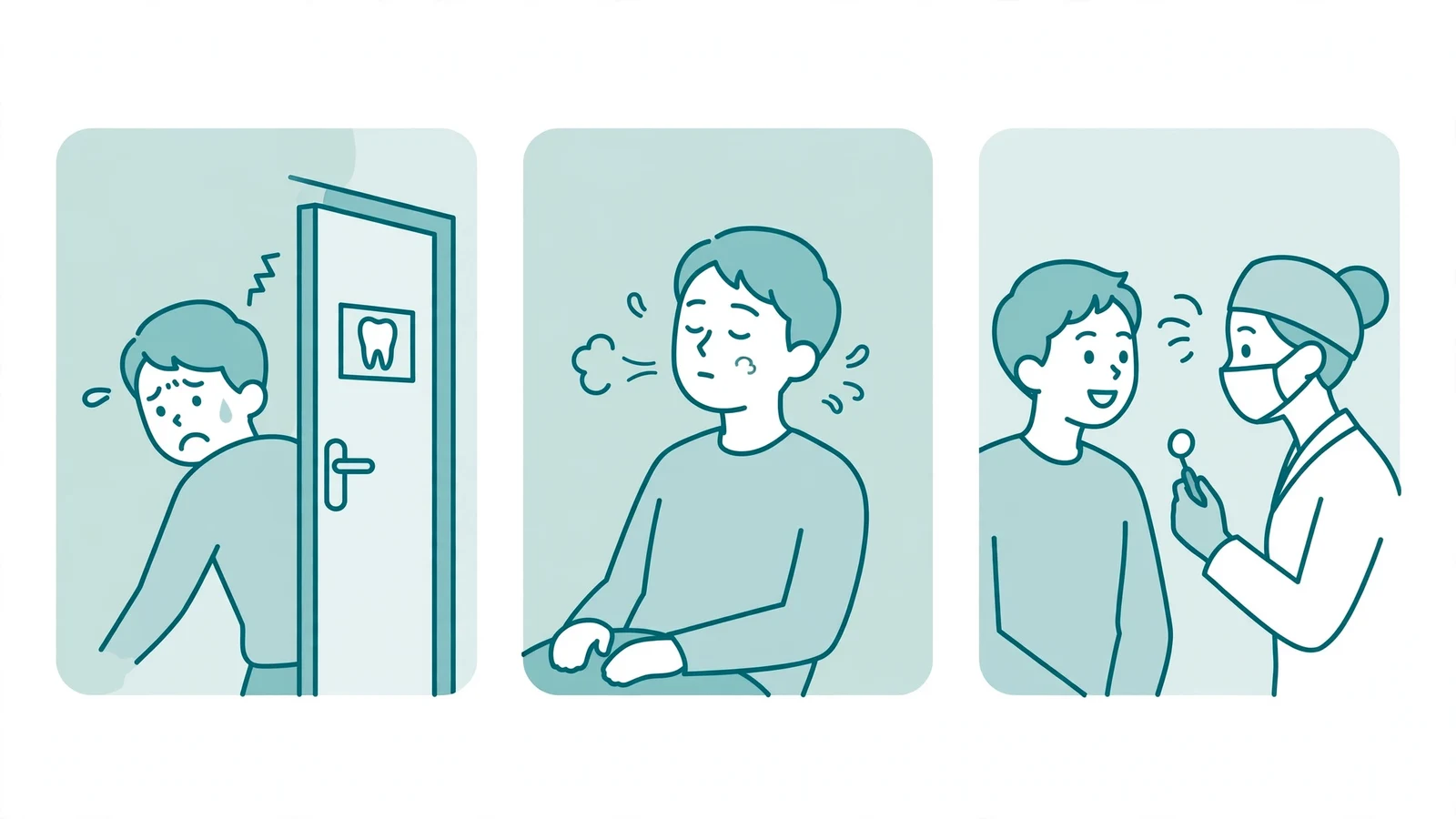
Odontophobia vs normal nervousness: how to tell the difference
Feeling a bit uneasy before a dental visit is normal — most people do. The difference is in how strong the fear is and what it makes you do.
| Normal nervousness | Odontophobia |
|---|---|
| You feel uneasy or keyed up before the visit, but you still go. | The fear is intense and out of proportion, and you avoid the dentist — even when you are in pain. |
| Mild symptoms, such as a flutter of nerves or sweaty palms, that fade once the appointment is over. | Strong physical symptoms, such as a racing heart, shaking, nausea or panic, that can start days before the appointment. |
| You can cope with reassurance, a friendly dentist or a short distraction. | Reassurance alone does not settle it, and the fear keeps coming back at every visit. |
| Your dental care and oral health stay on track. | Avoidance leads to worsening oral health, which then makes the next visit feel even harder. |
Cleveland Clinic puts it simply: with dental anxiety you feel uneasy but still go through with your appointments; with dentophobia, the fear is extreme enough to stop you getting care at all.
What helps: coping strategies for fear of the dentist
You do not have to simply put up with odontophobia. The good news is that phobias are among the most treatable anxiety problems, and many people find that a combination of practical steps and professional support makes dental visits manageable again.
Talk to your dentist — before the appointment
Tell the dental team that you are anxious, ideally when you book. A dentist who knows can explain each step in plain language, go at your pace and agree a stop signal with you — for example, raising your hand — so you can pause whenever you need a break. Cleveland Clinic advises being honest about your anxiety and judging the dentist by how they respond: if they dismiss it, consider care elsewhere. Asking a loved one for a recommendation can help you find a dentist who is known for being gentle with nervous patients.
Start small and build up gradually
Book a simple check-up first, with no treatment planned, just to meet the team and get used to the room. Graded exposure — facing the feared situation in small, manageable steps — is one of the main strategies in cognitive behavioural therapy (CBT) for dental anxiety, according to the Oxford Health NHS Foundation Trust. Each small step that goes well makes the next one easier.
Use relaxation and distraction in the chair
Slow, steady breathing before and during the appointment can calm a racing heart, and the NHS booklet recommends relaxation techniques to slow breathing and ease muscle tension. Listening to music or a podcast through headphones, or picturing a calm place, can help you shift your attention away from the procedure. Booking a morning appointment can also help, because it gives you less time to dwell on it beforehand.
Ask about sedation options
If anxiety is severe, your dentist may be able to offer conscious sedation, which helps you feel relaxed while you stay awake and able to respond. The British Dental Association notes that patients have a right to adequate anxiety control as part of their dental care, and that conscious sedation is provided under national safety standards by appropriately trained teams. Options vary by practice, so ask what your dentist can offer and discuss together whether it would be helpful for your treatment. Talk to your dentist or doctor about what is suitable for you — never take sedative medication without professional advice.
Consider talking therapy (CBT)
CBT is a talking therapy that helps you identify and change unhelpful thoughts and behaviours that keep the fear going. The Oxford Health NHS Foundation Trust describes three key strategies in CBT for dental anxiety: graded exposure, thought challenging and relaxation and distraction techniques. Exposure therapy — gradually facing the feared situation with a trained therapist — is one of the main treatments for dentophobia, according to Cleveland Clinic. If your fear is severe, ask your GP about a referral for talking therapy. In the 2025 US survey, 71.2% of people with moderate or severe dental fear said they would be interested in a free, brief treatment for dental fear that could be completed at home — so if you want help, you are far from alone.
Bring support and plan a reward
Bringing a trusted person to sit with you, or wait nearby, can make the visit feel safer. Afterwards, plan something pleasant — a walk, a favourite snack or a quiet ten minutes in the park — so the appointment ends on a good note and becomes something you associate with a small reward rather than dread.
When to see a doctor
See your GP or dentist if fear of the dentist is stopping you from getting the care you need, if you have not seen a dentist for a long time because of fear, or if anxiety about dental visits is affecting your sleep, your mood or your daily life. A GP can talk through talking therapy options, and a dentist can discuss ways to make treatment more comfortable — including whether sedation might be suitable for you.
Get urgent dental help the same day if you have severe toothache, swelling of the face, a broken tooth, bleeding that will not stop, or signs of infection such as a fever with tooth pain. Do not wait for the fear to pass if a tooth problem is getting worse.
If you feel very distressed, panicky or unable to cope, support is available. Visit our get help now page for crisis and support contacts.
In an emergency call 911 (US), 999 (UK) or 112 (EU).
Frequently asked questions
What is odontophobia?
Odontophobia, also called dentophobia, is an intense and persistent fear of dentists and dental treatment. It is a type of specific phobia, so the fear is out of proportion to the actual danger. People with odontophobia may feel panic at the thought of a dental visit and avoid the dentist altogether, even when they are in pain, which can lead to worsening oral health over time.
How common is odontophobia?
Some nervousness about the dentist is very common. A 2025 survey in the Journal of the American Dental Association found 72.6% of US adults reported some dental fear, with 26.8% describing it as severe. In England, the Adult Oral Health Survey 2021 found 12% of adults had extreme dental anxiety. Full dentophobia is rarer — about 3% of adults in industrialised countries avoid the dentist because of it, according to Cleveland Clinic.
What causes fear of the dentist?
It usually comes from a mix of causes. A painful or distressing visit in the past — often in childhood — is the most common trigger, especially if you felt unheard or out of control. Fear of pain, needles, the drill or the anaesthetic not working also play a part, as do embarrassment about the state of your teeth and learning the fear from an anxious parent. A family history of anxiety can make a phobia more likely.
How can I overcome odontophobia?
Start by telling your dentist you are anxious — they can explain each step, go at your pace and agree a stop signal so you can pause when needed. Book a simple check-up first, with no treatment planned. Slow breathing, music through headphones and a morning appointment can help. For severe fear, cognitive behavioural therapy with graded exposure is the main treatment, and your dentist can discuss sedation options with you.
Can sedation help with dental phobia?
Yes, for some people. Conscious sedation helps you feel relaxed during treatment while you stay awake and able to respond to your dentist. In the UK, patients have a right to adequate anxiety control as part of their dental care, and sedation is provided under national safety standards by trained teams. Ask your dentist what options your practice offers and whether sedation would be suitable for your treatment.
When should I see a doctor about fear of the dentist?
See your GP or dentist if fear is stopping you from getting dental care, if you have avoided the dentist for a long time, or if anxiety about visits is affecting your sleep or mood. Get urgent dental help the same day for severe toothache, facial swelling, a broken tooth or signs of infection. If you feel very distressed or unable to cope, support contacts are listed on our get help now page.
Sources
- Cleveland Clinic: Dentophobia (Fear of Dentists) my.clevelandclinic.org
- Cleveland Clinic: How To Cope With Dental Anxiety health.clevelandclinic.org
- Dental Fear Central: What is dental phobia, fear and anxiety, and what causes it? www.dentalfearcentral.org
- Mind: Phobias www.mind.org.uk
- Oxford Health NHS Foundation Trust: Dental anxiety thelink.slough.gov.uk
- British Dental Association: Sedation compliance www.bda.org
- EurekAlert: Dental fear is widespread — But most people want treatment (JADA, 2025) www.eurekalert.org

Try the tool
Is it a fear, or a phobia?
Look up the name of 45 fears and take a 5-question check.
Open the phobia finder