What Is Thanatophobia? Fear of Death Explained
Thanatophobia is an intense fear of death or dying that goes beyond ordinary worry. Here is what it feels like, what causes it, and the talking therapies and coping steps that can help.
- Written by
- Health Daily Advice
- Published
- Reading time
- 8 minutes
- Sources
- 8 cited

In this guide
Thanatophobia is an intense, persistent fear of death or the dying process, also called death anxiety. It goes beyond ordinary worry: thoughts of dying — your own or a loved one’s — can trigger panic, avoidance and sleepless nights, and start to interfere with work, relationships and everyday life.
What is thanatophobia?
Thanatophobia is an intense fear of death or the dying process, also known as death anxiety. You might be anxious about your own death, or about the death of someone you care about, according to the Cleveland Clinic. The word comes from the Greek words “thanatos”, meaning death, and “phobos”, meaning fear, as Psych Central explains.
It is usually understood as a type of specific phobia, which is a type of anxiety disorder. A phobia is an extreme fear that does not match the risk of danger, and phobias can have a big impact on daily life, according to Mind.
Thanatophobia is not officially recognised as a separate disorder by the American Psychiatric Association, and there is no test that can diagnose it. A doctor will usually look at your symptoms and may describe the problem as anxiety linked to a fear of death, as Healthline explains. That does not make the fear any less real, and it does not mean it cannot be helped.
It is also different from necrophobia, which is a fear of dead bodies or of places that contain them, such as graveyards. Thanatophobia is about death and dying itself, not about corpses.
How common is thanatophobia?
Death anxiety is common, although people tend not to talk about their feelings. One study cited by the Cleveland Clinic shows that between 3% and 10% of people feel they are more nervous than others about the thought of dying.
Death anxiety tends to peak in a person’s 20s and fade as they get older, according to Healthline. Both men and women experience it in their 20s, but women experience a secondary spike in their 50s. Older people may fear the dying process or failing health more than death itself, while their adult children are more likely to fear death.
Because so few people mention it, thanatophobia can feel lonely. In reality, many people have the same thoughts and worries, and many find that talking about them is the first step towards feeling better.
Symptoms of thanatophobia
Symptoms may only appear when you start thinking about your own death or the death of a loved one. When they do, they can affect your thoughts, your body and your behaviour.
Thoughts and feelings
- Intense fear, dread or distress when death comes to mind
- Intrusive, repeated thoughts about dying or about losing someone you love
- Persistent worry, sadness, anger, guilt or agitation
- Avoiding friends and family, funerals, hospitals, or films and news about death
- Constantly checking your body for signs of illness
- Difficulty enjoying leisure time or looking after yourself
Physical symptoms
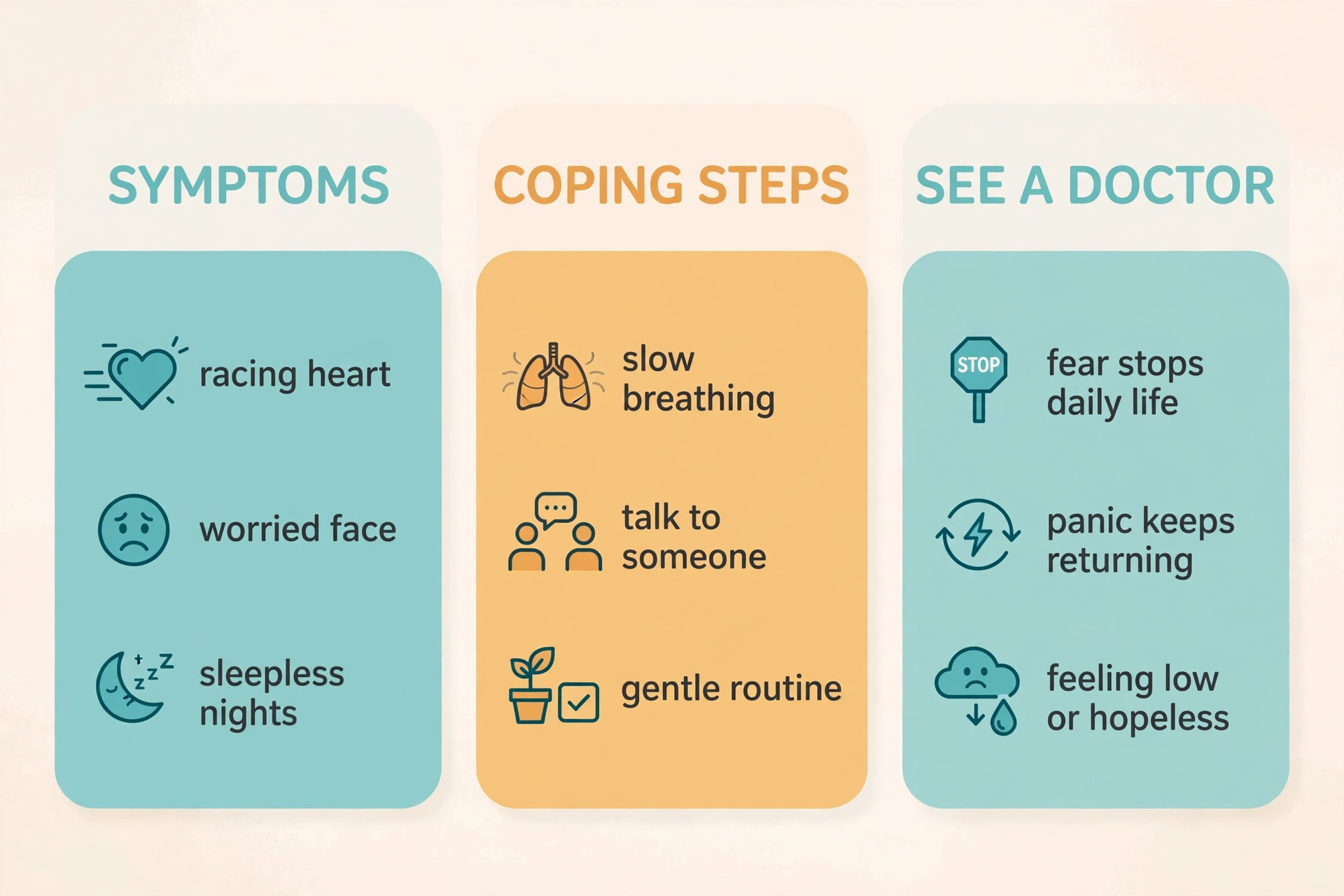
Thoughts of death can trigger symptoms much like a panic attack. The Cleveland Clinic lists chills, dizziness, sweating, heart palpitations, nausea, shortness of breath, trembling and an upset stomach. Healthline also lists more frequent panic attacks, increased anxiety, stomach pain and sensitivity to hot or cold temperatures.
The NHS notes that a panic attack usually lasts 5 to 20 minutes. Panic attacks can be frightening, but the NHS says they are not dangerous and should not harm you.
The NHS lists the symptoms of a phobia as severe anxiety and worry, dizziness, palpitations, tightness in the chest, feeling sick, trembling, and a strong fear that you may faint, lose control or die.
What causes thanatophobia?
There is no single cause, and often several factors come together. The Cleveland Clinic notes that a specific event or experience can trigger it, such as a traumatic experience related to death, losing a parent or loved one, or witnessing a difficult or painful death.
Other factors linked to death anxiety include:
- Bereavement: the death of someone close, especially at a young age, can leave a lasting fear.
- A serious illness or health scare: your own illness, or a loved one’s, can bring thoughts of death to the surface.
- A near-death experience: a serious accident or a close call can trigger lasting anxiety.
- Other mental health conditions: thanatophobia often overlaps with generalised anxiety, panic disorder, health anxiety, obsessive-compulsive disorder (OCD) and depression.
- Religious or existential worries: questions about what happens after death can bring comfort to some people and anxiety to others.
- Life changes: becoming a parent, losing a parent, or caring for someone near the end of life can all sharpen the fear.
Researchers have described death anxiety as a “transdiagnostic” idea, meaning it can sit underneath many other mental health conditions, particularly panic disorders, according to Psych Central, reporting on a 2014 study. The same research found that social support matters in both the development of death anxiety and recovery from it, and that rates are lower in people in reasonably good health with high self-esteem.
Phobias often develop in childhood, as a teenager or as a young adult, and many can be linked to a frightening event or stressful situation, according to the NHS. You may also be more likely to have a phobia if family or friends have one, or if you have a family history of anxiety disorders.
Thanatophobia vs a normal fear of death
Feeling uneasy about death is normal. Most people worry about dying, or about losing the people they love, from time to time. The difference is how often the fear appears, how strong it is, and how much it changes your life.
| Normal fear of death | Thanatophobia |
|---|---|
| Comes and goes, often after a loss or a health scare | Frequent, persistent thoughts that are hard to put aside |
| You can still enjoy daily life | Fear interferes with work, school, relationships or sleep |
| You can talk about death when you need to | You avoid funerals, hospitals, conversations or news about death |
| Worry fades as time passes | Anxiety lasts longer than 6 months and keeps returning |
As a guide, Psych Central notes that the criteria for a specific phobia may be used to judge whether a fear of death is a phobia. Those criteria include the fear lasting longer than 6 months, interfering with day-to-day life and relationships, appearing whenever the subject of death comes up, and leading to avoidance of situations involving death or dying. Only a doctor or mental health professional can make that judgement — this article cannot diagnose you.
What helps: treatment for thanatophobia
Thanatophobia can be treated, and talking therapy is usually the main approach. The Cleveland Clinic says psychotherapy can help you talk through your fear and anxiety, and lists two types in particular:
- Cognitive behavioural therapy (CBT): CBT can help you change the way you think about death so it is less frightening. It can help you challenge unrealistic beliefs, such as feeling that death is “unfair” or that dying is always painful, and it gives you techniques to manage your reactions, such as deep breathing.
- Exposure therapy: this type of therapy gradually exposes you to places, thoughts or situations related to death. You might start by writing about how you picture your own death or the death of a loved one, and build up slowly from there.
The NHS lists talking therapies such as CBT, hypnotherapy, and medicines such as antidepressants, beta blockers and sedatives as treatments for phobias. In England, you can refer yourself directly to an NHS talking therapies service without a referral from a GP. Talk to a doctor about which option suits you — never start, stop or change any medicine on the basis of an article.
The Cleveland Clinic notes that medicine for thanatophobia or other specific phobias has not proved very effective, but a doctor may recommend anti-anxiety medicine if you have to be in a stressful or fearful situation, such as a funeral. Healthline adds that medicine is rarely a long-term solution and may be used for a short period while you work on facing your fear in therapy.
Coping day to day
Alongside professional help, small daily habits can make the fear easier to carry. The NHS suggests talking about your feelings with a friend, family member, health professional or counsellor, regular exercise such as walking, swimming or yoga, eating a healthy diet with regular meals, and using calming breathing exercises or meditation.
- Give the worry a set time: allow yourself a short, fixed window each day to think about the fear, then gently move your attention back to what you are doing.
- Slow your breathing: when thoughts come at night, try slow, steady breathing or a relaxation recording.
- Talk openly: keeping the fear bottled up often makes it feel bigger. Sharing it with someone you trust can take some of its power away.
- Keep a gentle routine: regular sleep, meals, movement and time with other people all support your mood.
- Be careful with online searching: the NHS warns that looking up information online can show you triggering images before you are ready for them.
- Do not rely on alcohol or other drugs to cope: the NHS warns that these can contribute to poor mental health.
Psych Central also lists deep breathing, exercise, a healthy balanced diet, and mindfulness or relaxation techniques as things you can try at home to ease death-related anxiety.
It can also help to talk about practical worries — for example, writing a will or talking with family about your wishes — because making plans can reduce the feeling of having no control. If that feels too hard alone, a counsellor or trusted person can help you take it one small step at a time.
When to see a doctor
See a GP if the fear of death is affecting your life, if the things you are trying yourself are not helping, or if you would like a referral to an NHS talking therapies service. The NHS advises seeing a GP if you think you have a phobia and the symptoms are affecting your life.
Get help sooner if the fear is stopping you from working, sleeping or leaving the house, if panic attacks keep returning, or if you feel low or hopeless alongside the fear. You can also find support and crisis resources on our get help now page.
If you feel you may act on thoughts of harming yourself, or you feel unsafe, seek help right away. In the UK you can call Samaritans free on 116 123 at any time, day or night, or call NHS 111 for urgent advice.
In an emergency call 911 (US), 999 (UK) or 112 (EU)
If thoughts about death are taking over your days, you do not have to carry them alone. Talking to a GP, a counsellor or someone you trust is a strong first step — and effective help is available.
Frequently asked questions
Is thanatophobia a real condition?
Yes, it is a real and recognised fear, even though it is not listed as a separate disorder by the American Psychiatric Association. Doctors usually understand it as a type of specific phobia or as anxiety linked to a fear of death. There is no test for it, so a doctor will talk through your symptoms with you. The fear is genuine, it can disrupt daily life, and it can be treated.
What causes thanatophobia?
There is no single cause. It can follow the death of someone close, a serious illness or health scare, a near-death experience, or witnessing a difficult death. It often overlaps with generalised anxiety, panic disorder, health anxiety, OCD or depression. Religious or existential questions about what happens after death can also play a part, as can big life changes such as becoming a parent.
Can thanatophobia be cured?
Many people find their fear eases a great deal with the right help, although it may not vanish overnight. Cognitive behavioural therapy and gradual exposure therapy are the main evidence-based treatments, and they help you change unhelpful thoughts and face feared situations step by step. Relaxation, regular exercise and talking openly also help. Ask a GP about NHS talking therapies, which you can often self-refer to.
How do I stop thinking about death at night?
Night-time is a common trigger because the house is quiet and there is nothing to distract you. Try slow, steady breathing or a relaxation recording, and get up for a short while if the thoughts keep looping rather than lying awake fighting them. Give the worry a short fixed time during the day instead. If sleepless nights keep happening, talk to a GP about support.
Is it normal to be afraid of death?
Yes, feeling uneasy about death is normal and most people worry about dying or losing loved ones from time to time. It becomes a problem when the fear is frequent and intense, lasts longer than 6 months, makes you avoid funerals, hospitals or conversations about death, or stops you enjoying work, relationships and everyday life. If that sounds familiar, it is worth talking to a GP.
When should I see a doctor about a fear of death?
See a GP if the fear is affecting your life, if self-help steps are not working, or if you would like a referral to talking therapies. Get help sooner if panic attacks keep returning, you cannot sleep, work or leave the house, or you feel low or hopeless. If you feel unsafe or may act on thoughts of harming yourself, call Samaritans free on 116 123, or call 999 in an emergency.
Sources
- Cleveland Clinic: Thanatophobia (Fear of Death) my.clevelandclinic.org
- NHS: Phobias www.nhs.uk
- Healthline: Thanatophobia: Understanding Death Anxiety www.healthline.com
- Psych Central: Death Anxiety: Causes, Symptoms, and More psychcentral.com
- Mind: Phobias www.mind.org.uk
- NHS: Anxiety, fear and panic www.nhs.uk

Try the tool
Is it a fear, or a phobia?
Look up the name of 45 fears and take a 5-question check.
Open the phobia finder