Flu Symptoms 2026: Early H1N1 Season and What to Watch For
Flu season has started weeks early, led by a mutated H1N1 strain. The symptoms, how flu differs from a cold, and the red flags that need urgent care.
- Written by
- Health Daily Advice
- Published
- Reading time
- 5 minutes
- Sources
- 4 cited

In this guide
Flu season has started early this year. The CDC says US flu activity is higher than usual for late October, driven almost entirely by a mutated H1N1 strain. It estimates at least 1.7 million illnesses, 25,000 hospitalisations and 1,400 deaths so far this season. Here is what is happening, the symptoms, and when to get help.
What is happening with flu right now?
The CDC’s FluView report for week 43, the week ending 31 October 2026, shows flu spreading faster than usual for late October. Of 51,351 specimens tested by clinical laboratories that week, 9.1% were positive for flu, up from 5.7% two weeks earlier. Outpatient visits for flu-like illness reached 2.8% of all visits, and hospitals reported 8,396 laboratory-confirmed flu admissions in a single week. The CDC’s FluSight forecasts predict a likely further rise in flu hospital admissions and emergency department visits for the week ending 21 November.
The rise is not confined to the United States. On 17 November, PAHO and the WHO issued an epidemiological alert noting that flu activity is increasing across the Americas as the Northern Hemisphere enters the 2026-27 respiratory virus season, and urging countries to strengthen surveillance and speed up flu and RSV vaccination among priority groups before the peak. Canada is also seeing flu circulation rise earlier than in recent post-pandemic seasons, with test positivity reaching 10.8% in the week ending 25 October.
For now, the CDC’s preliminary severity assessment still rates the season as low severity across all age groups. An early rise does not necessarily mean a higher peak or a more severe season, the CDC cautions, but it does mean the season has begun weeks ahead of the usual pattern.
The mutated H1N1 behind the early season
Almost all flu detected so far this season is influenza A, and almost all of that is H1N1. Of the 388 influenza A viruses subtyped in week 43, 379, or 97.7%, were A(H1N1)pdm09, the strain that caused the 2009 pandemic and has circulated every season since. The strain carries a mutation known as G155E, first picked up in Japan in May 2026 and identified in Seattle in September, which changes the shape of a protein on the virus surface that antibodies recognise.
The question everyone is asking is whether the mutation weakens this year’s flu vaccine. The early laboratory signs are reassuring: in CDC testing, 94.2% of H1N1 viruses tested so far were well recognised by antibodies raised against this season’s vaccine strain. The CDC says it is too early to know the vaccine’s real-world effectiveness, which is measured later in the season, and too early to say whether the mutation will affect it. All three virus components in this year’s shots were updated, including the H1N1 part, and the CDC recommends a yearly flu vaccine for everyone aged six months and older. Protection takes about two weeks to build, and November is not too late to get vaccinated while flu is still spreading.
What are the symptoms of flu?
Flu usually comes on suddenly, within a few hours. The CDC lists fever or feeling feverish, chills, cough, sore throat, a runny or stuffy nose, muscle or body aches, headache and tiredness. Some people, especially children, also have vomiting or diarrhoea. Not everyone with flu has a fever, particularly older adults and people with weakened immune systems. The NHS adds a sudden high temperature, an aching body, a dry cough, difficulty sleeping and loss of appetite.
For most people, uncomplicated flu symptoms resolve after three to seven days, although a cough and a general feeling of being unwell can persist for more than two weeks, especially in older adults and people with chronic lung disease, the CDC says. Flu can also lead to complications: in young children, ear infections and breathing problems such as croup; in people of all ages, dehydration and flare-ups of underlying conditions such as asthma, heart failure or diabetes; and, in the most serious cases, pneumonia, which can lead to respiratory failure.
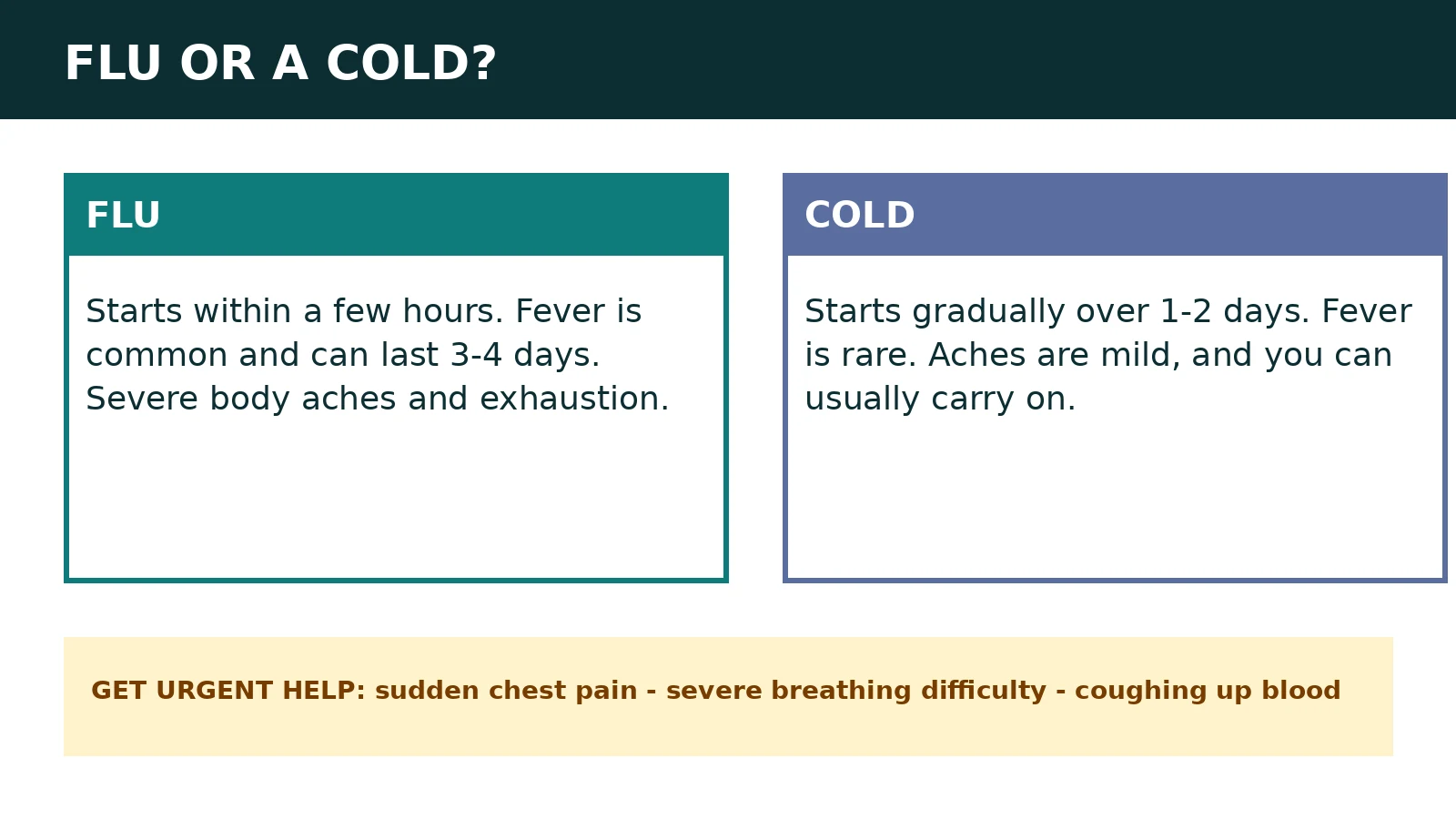
Flu or a cold: how to tell the difference
Flu and colds share symptoms, but flu tends to be more severe and to hit much faster. The NHS comparison is a useful guide:
| Flu | Cold | |
|---|---|---|
| Onset | Appears quickly, within a few hours | Appears gradually over 1 to 2 days |
| Fever | Common, can last 3 to 4 days | Rare |
| Body aches | Common and often severe | Mild, if present |
| Tiredness | Exhaustion; too unwell to carry on as normal | Mild; you can usually carry on |
| What it affects | More than just your nose and throat | Mainly your nose and throat |
Remember that only a laboratory test can confirm flu, and other respiratory viruses, including COVID-19 and RSV, are also circulating. If you are unsure, a pharmacist or your GP can advise on testing and care.
What helps when you have flu, and what does not
Rest and fluids are the foundation of looking after yourself with flu. The NHS advises resting and sleeping, drinking plenty of water to avoid dehydration, and taking paracetamol or ibuprofen to lower a temperature and ease aches and pains. A pharmacist can advise on flu remedies, but do not take paracetamol and a flu remedy that contains paracetamol at the same time. Do not give aspirin to children under 16.
Antibiotics do not work for flu, because flu is caused by a virus. GPs do not recommend antibiotics for flu, the NHS says, because they will not relieve symptoms or speed up recovery. Antiviral medicine can help, but it works best when started within two days of symptoms beginning, so contact your GP or pharmacist promptly if you are in a higher-risk group and think you have flu. Stay at home and avoid contact with other people while you have a high temperature or do not feel well enough to do normal activities, and wash your hands often with warm water and soap.
The best protection against flu is the annual flu vaccine, which is offered on the NHS every autumn or early winter to people at higher risk of becoming seriously ill, including those aged 65 and over, pregnant women, people with long-term health conditions and young children. The CDC recommends a flu vaccine every season for everyone aged six months and older.
When to see a doctor
Ask for an urgent GP appointment or call NHS 111 if you or your child have flu symptoms and you are 65 or over, pregnant or recently gave birth, have a long-term medical condition such as diabetes or a condition affecting the heart, lungs, liver, kidneys, brain or nerves, have a weakened immune system, feel very unwell, feel short of breath, or your symptoms have not improved after seven days.
In an emergency call 911 (US), 999 (UK) or 112 (EU). Call 999 or go to A&E if you get sudden chest pain, have severe difficulty breathing, or start coughing up blood. The CDC lists the same warning signs: difficulty breathing or shortness of breath, persistent pain or pressure in the chest, dizziness or confusion, seizures, not urinating, severe muscle pain, severe weakness, fever or cough that improve and then return or worsen, and worsening of chronic medical conditions.
Frequently asked questions
What are the symptoms of flu in 2026?
The usual ones: sudden fever or chills, cough, sore throat, runny or stuffy nose, body aches, headache and tiredness. Some people, especially children, also have vomiting or diarrhoea. This season's H1N1 strain has not changed the symptoms.
How is this flu season different?
It started weeks early. Flu activity is higher than usual for late October, and H1N1 makes up 97.7% of subtyped flu A viruses. The CDC still rates overall severity as low, and an early rise does not necessarily mean a worse season.
Does the flu vaccine still work against the mutated H1N1?
Early lab tests are reassuring: 94.2% of tested H1N1 viruses were well recognised by antibodies against this season's vaccine. Real-world effectiveness is not known yet, and the CDC still recommends vaccination for everyone aged six months and older.
How long does flu last?
Most people feel better within three to seven days, the CDC says, though a cough and tiredness can linger for more than two weeks, especially in older adults. Seek help if symptoms do not improve after seven days.
When should I get urgent help for flu?
Call 999 or go to A&E for sudden chest pain, severe difficulty breathing or coughing up blood. The CDC also lists confusion, seizures, severe muscle pain, and fever or cough that improve then return worse as warning signs.
Sources
- CDC FluView: Weekly US Influenza Surveillance Report, Week 43 ending 31 October 2026 www.cdc.gov
- CDC: Clinical Signs and Symptoms of Influenza www.cdc.gov
- NHS: Flu www.nhs.uk
- Health and Me: Flu activity rises across Americas; WHO issues alert www.healthandme.com

Try the tool
Not sure if it can wait?
Common causes and warning signs for 16 everyday symptoms.
Open the symptom guide