What Is Hantavirus? Symptoms, Spread and the Cruise Ship Cases
Rodent-borne and rare, but deadly when it reaches the lungs. What hantavirus is, how it spreads, the symptoms to watch for, and what the cruise ship cluster means.
- Written by
- Health Daily Advice
- Published
- Reading time
- 6 minutes
- Sources
- 4 cited

In this guide
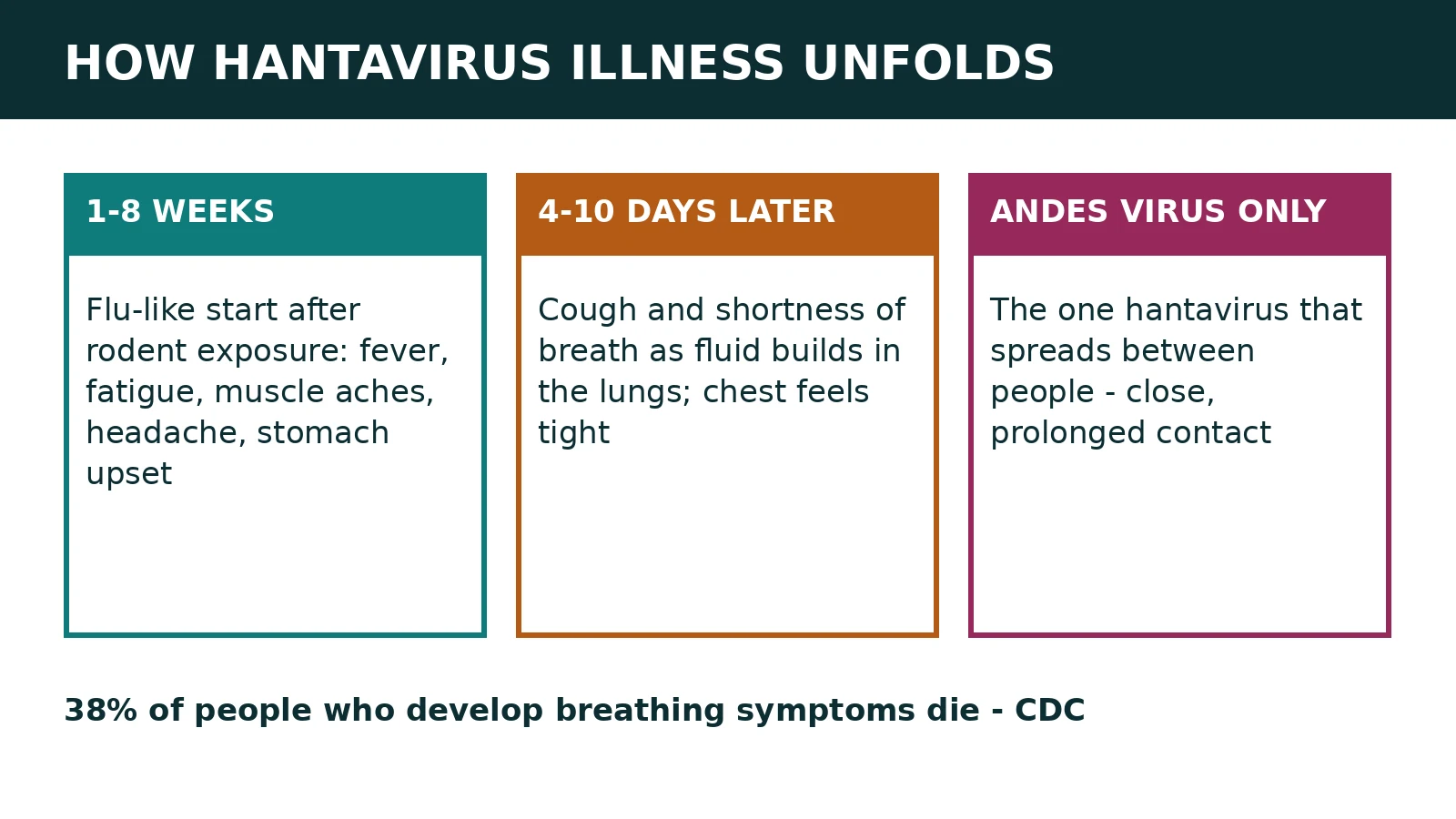
Hantavirus is a family of viruses carried by rodents that can cause severe, sometimes fatal illness. In the Americas it causes a lung disease that kills about 38% of people who develop breathing symptoms, the CDC says. It is in the news after the WHO confirmed a cluster aboard the cruise ship MV Hondius.
Why hantavirus is in the news
The World Health Organization confirmed this week that eight cases of hantavirus, including three deaths, have been linked to the Dutch-flagged expedition cruise ship MV Hondius, which was sailing from Ushuaia in Argentina towards Cape Verde and the Canary Islands. Five of the eight cases have been confirmed by laboratory testing and three are suspected. The virus involved is the Andes strain, the only hantavirus known to spread between people.
The first passenger developed symptoms on 6 April, and the ship was held off the coast of Cape Verde while passengers were evacuated and contacts traced. Twenty-nine people who disembarked on the island of St Helena travelled on to 12 countries, including the UK and the US, and health authorities in several countries have been monitoring contacts. Argentina is investigating whether rodents in the Ushuaia area, where the voyage began, were the source.
At a WHO briefing this week, infectious disease epidemiologist Dr Maria Van Kerkhove was unequivocal: “This is not SARS-CoV-2. This is not the start of a COVID pandemic. This is an outbreak that we see on a ship.” The WHO has said the risk to the wider public remains low and that there is no need for panic or travel restrictions.
What is hantavirus?
Hantaviruses are a group of viruses that naturally infect rodents and are only occasionally passed to people, according to the World Health Organization. Each hantavirus is usually carried by one particular rodent species, which stays infected for life without becoming ill itself.
The viruses cause two main illnesses. In North, Central and South America they cause hantavirus pulmonary syndrome (HPS), also called hantavirus cardiopulmonary syndrome, a severe illness affecting the lungs and heart. In Europe and Asia they cause haemorrhagic fever with renal syndrome (HFRS), which mainly affects the kidneys and blood vessels. The most common hantavirus that causes HPS in the United States is spread by the deer mouse.
Infection is uncommon worldwide: the WHO estimates between 10,000 and over 100,000 infections a year, with most cases in Asia and Europe. The United States has reported fewer than 1,000 cases in total. But the illness is serious when it does occur: the WHO puts the case fatality rate of the American lung illness at up to 50%, and the CDC says 38% of people who develop respiratory symptoms may die.
How does hantavirus spread?
People usually catch hantavirus through contact with infected rodents or their urine, droppings or saliva. The most common route is breathing in the virus in dust or tiny droplets stirred up from dried droppings or urine, for example when cleaning a closed-up shed, garage, cabin or basement. You can also be infected by touching your mouth or nose after handling contaminated material, eating food contaminated by rodent waste, or, rarely, through a rodent bite or scratch.
Activities that raise the risk include cleaning enclosed or poorly ventilated spaces, farming, forestry work and sleeping in a rodent-infested building. Rodent infestation in and around the home is the main risk factor, the CDC says.
Person-to-person spread is not a feature of most hantaviruses. The Andes virus, found in South America, is the only type known to spread between people, and then only among close, prolonged contacts such as household members. The hantaviruses found in the United States are not known to spread between people.
What are the symptoms of hantavirus?
Symptoms usually begin one to eight weeks after exposure, depending on the type of virus. The early stage looks like flu, which is one reason the illness is hard to spot at first. Early symptoms can include fatigue, fever, muscle aches, especially in the large muscles of the thighs, hips, back and shoulders, headache, dizziness, chills and stomach problems such as nausea, vomiting, diarrhoea and abdominal pain.
Four to 10 days after the first symptoms, the illness can turn suddenly serious. Coughing and shortness of breath appear as the lungs fill with fluid, and patients may feel tightness in the chest. Most patients who reach this stage need hospital care, and many need breathing support such as a ventilator. Early diagnosis is difficult because the first symptoms overlap with flu, COVID-19 and other respiratory infections, and a test done within the first 72 hours may need repeating.
The kidney form of the disease, HFRS, usually develops within one to two weeks of exposure. It starts suddenly with intense headache, back and abdominal pain, fever and chills, nausea and blurred vision, and later stages can include low blood pressure, bleeding problems and acute kidney failure. How deadly it is depends on the virus: Hantaan and Dobrava infections are fatal in 5 to 15% of cases, while Seoul, Saaremaa and Puumala infections are usually milder, with fewer than 1% dying.
How is hantavirus diagnosed and treated?
There is no specific drug that cures hantavirus infection and no licensed vaccine, the WHO says. Care is supportive: rest, fluids and close monitoring, with treatment of breathing, heart and kidney complications as they arise. Early access to intensive care, when needed, improves the chances of survival, particularly for the lung form of the disease.
If you have flu-like symptoms and have had contact with rodents or their droppings, see a doctor straight away and mention the possible rodent exposure. Diagnosis is confirmed by blood tests or molecular testing at a specialist laboratory. The CDC notes that testing in the first 72 hours of illness is difficult, so repeat testing is often done 72 hours after symptoms start.
How to protect yourself from hantavirus
Prevention comes down to reducing contact with rodents and their waste. Seal holes and gaps in your home or garage so rodents cannot get in, set traps to reduce infestations, and clean up food that might attract them. Store food securely, including pet food and bird seed.
When cleaning an area that may be contaminated by rodents, do not dry sweep or vacuum droppings, urine or nesting material, because that can throw the virus into the air. Instead, ventilate the space first, dampen the contaminated area with disinfectant, and wear gloves and a mask while you clean. Keep homes and workplaces clean, and avoid sleeping in buildings with obvious signs of rodents.
Hantavirus or flu: how to tell them apart
Early hantavirus looks a lot like flu, and the CDC says its early symptoms are easily confused with influenza. A few clues can help a doctor decide what to check:
| Hantavirus | Flu | |
|---|---|---|
| Start | 1 to 8 weeks after rodent exposure | 1 to 4 days after contact with an infected person |
| Early symptoms | Fever, fatigue, muscle aches, headache, stomach upset | Fever, cough, sore throat, body aches, tiredness |
| Breathing problems | Often severe, 4 to 10 days in, as lungs fill with fluid | Usually mild; severe breathing difficulty is a warning sign |
| Runny nose or sore throat | Usually absent | Common |
| Key clue | Recent rodent contact or cleaning a closed-up space | Winter season, close contact with someone ill |
Only a laboratory test can confirm hantavirus, so the history of rodent exposure is what should prompt a doctor to test.
When to see a doctor
See a doctor urgently if you develop fever, muscle aches and shortness of breath within eight weeks of contact with rodents or their droppings, especially after cleaning a shed, cabin or other closed space. Tell the doctor about the rodent exposure, because it changes which tests are done. Do not wait to see if it passes: breathing difficulty can worsen quickly, and early hospital care matters.
In an emergency call 911 (US), 999 (UK) or 112 (EU). Call for emergency help if you or someone near you has severe difficulty breathing, cannot get words out, has blue lips or face, or becomes confused or unresponsive.
Frequently asked questions
Can hantavirus spread from person to person?
Almost never. The Andes virus is the only hantavirus known to spread between people, and only among close, prolonged contacts such as household members. The hantaviruses found in the United States are not known to spread from person to person.
How long after exposure do hantavirus symptoms appear?
Usually one to eight weeks. Early symptoms are flu-like: fever, fatigue and muscle aches. Coughing and shortness of breath typically appear four to 10 days after the first symptoms, as the lungs fill with fluid.
Is there a treatment or vaccine for hantavirus?
No. There is no specific drug that cures hantavirus and no licensed vaccine. Care is supportive, with rest, fluids and monitoring, and early intensive care improves survival for severe lung illness.
How can I protect myself from hantavirus?
Keep rodents out of your home, seal gaps, store food securely, and never dry sweep or vacuum rodent droppings. Dampen contaminated areas with disinfectant and wear gloves and a mask while cleaning.
Should I worry about the cruise ship hantavirus cases?
The WHO says the risk to the wider public remains low. Eight cases, including three deaths, were linked to the MV Hondius cruise ship, and contacts are being traced. The WHO stressed this is not the start of another COVID-like pandemic.
Sources
- CDC: About Hantavirus www.cdc.gov
- WHO: Hantavirus fact sheet www.who.int
- ABC News: 'This is not the start of a COVID pandemic,' WHO says of suspected hantavirus cluster abc7news.pages.dev
- Al Jazeera: What is hantavirus, suspected in deaths of three people on cruise ship? aljazeeranews-3fuh52rgrl.edgeone.app

Try the tool
Not sure if it can wait?
Common causes and warning signs for 16 everyday symptoms.
Open the symptom guide