Caregiver Burnout Symptoms: Signs and What Helps
Caring for someone you love can quietly wear you down. These are the signs of caregiver burnout — and the support that actually helps.
- Written by
- Health Daily Advice
- Published
- Reading time
- 7 minutes
- Sources
- 10 cited

In this guide
Caregiver burnout is physical, emotional and mental exhaustion that builds up when you spend most of your time and energy caring for someone else. In the US, 63 million people provided ongoing care in 2025, and nearly two-thirds reported moderate or high emotional stress. Signs include constant tiredness, poor sleep and irritability — and help is available.
What is caregiver burnout?
Caregiver burnout is what happens when the demands of caring outrun your own reserves. Cleveland Clinic describes it as “a state of physical, emotional and mental exhaustion” that comes from devoting most of your time, energy and resources to caring for someone else, and notes that it “may be accompanied by a change in attitude, from positive and caring to negative and unconcerned”. It can affect anyone who provides care — most often family carers looking after an ageing parent, a spouse or partner, or someone with dementia or a chronic illness.
Burnout is not the same as ordinary stress. Stress is feeling angry, frustrated, worn out or sad under the demands of caring. Burnout is the deeper, longer-term state: exhaustion that does not lift with a good night’s sleep, attitudes towards the person you care for turning negative or detached, and your own health sliding down the list of priorities. Cleveland Clinic notes that burnout is extremely common, and that it can affect both your mental and physical health and your ability to provide the best care.
How common is caregiver burnout?
Far more common than most people realise. According to AARP and the National Alliance for Caregiving’s Caregiving in the US 2025 report, 63 million Americans provided ongoing care to an adult or child with a medical condition or disability in 2025 — nearly 1 in 4 adults, and a 45% increase since 2015. Family caregivers average 24 hours of care a week, 3 in 5 are women, and 7 in 10 are also employed. Nearly two-thirds said they were under moderate or high emotional stress, 1 in 5 reported poor health, and half said caregiving had harmed them financially.
In the UK, there are 5.8 million unpaid carers, and about 1.7 million of them provide at least 50 hours of care a week. Carers UK’s State of Caring 2025 survey of more than 10,500 carers found that 74% feel stressed or anxious, 35% rate their mental health as bad or very bad, 65% struggle to get a good night’s sleep because of caring, and 42% say their physical health has worsened. Around 600 people a day in the UK give up work to provide unpaid care.
Dementia care carries the heaviest load of all. Nearly 12 million Americans provide unpaid care for someone with Alzheimer’s or another dementia, contributing more than 19 billion hours a year. 59% of dementia family caregivers rate their emotional stress as high or very high, and 38% report high physical stress. Dementia carers average nearly 30 hours of unpaid care a week, and the average duration of dementia caregiving is four to eight years.
Why the SNL “Sister” sketch struck a nerve
If you saw the conversation this week, you may have seen the Saturday Night Live sketch that set it off. “Sister”, aired on 14 November 2026 in an episode hosted by John Mulaney, is a fake pharmaceutical-style ad for an elder-care system that is free — because it is, in fact, your sister. One text message (“dad fell”) activates her: she quits her job, breaks her lease, moves across the country and takes on all the care, while her brother gets his life back. Within a day it had 2 million YouTube views; by 18 November it had passed 5 million, and caregiver forums filled with people saying the sketch was their life.
The joke lands because the imbalance behind it is real. Sociological research has found daughters spend an average of 14 hours a month caring for ailing parents, against 6 hours for sons. Melinda French Gates, fact-checking the sketch, pointed out that women aged 55 to 64 are nearly 40% more likely than men to care for an older relative, and that the average home health aide costs more than $6,600 a month. The US, unlike many wealthy countries, offers no federal paid family leave and no long-term care insurance for family caregivers — which is why a comedy sketch turned into a national conversation about who actually does the caring, and at what cost.
Caregiver burnout symptoms
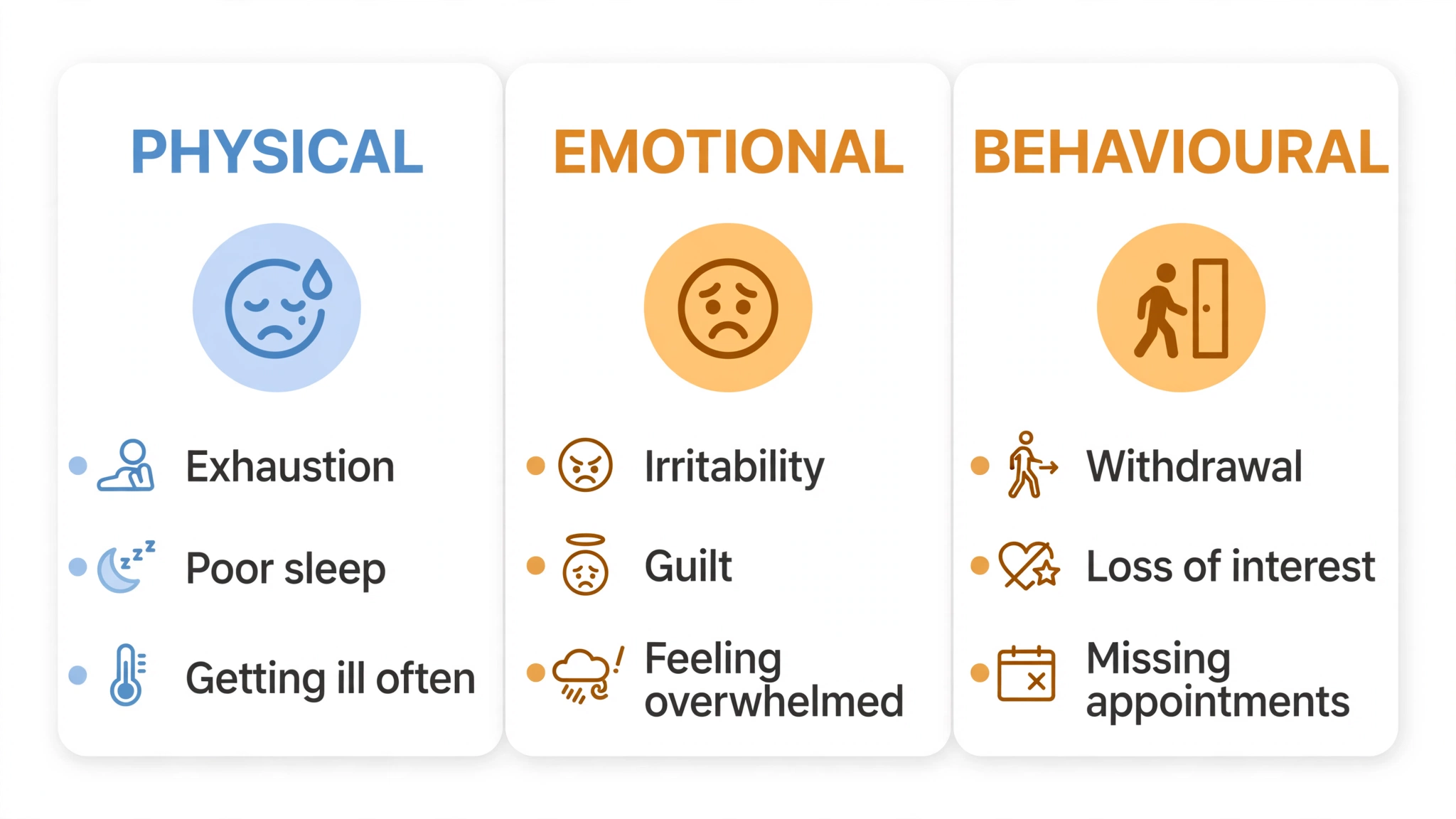
Burnout builds gradually, which is why it is easy to miss in yourself. The signs fall into three groups.
Physical symptoms
- Emotional and physical exhaustion; feeling tired often, even after sleep.
- Changes in sleep — sleeping too much or not enough.
- Changes in appetite or weight, gaining or losing weight.
- Getting ill more often; frequent headaches, bodily pain or other physical problems.
- Missing your own medical appointments, or putting off check-ups and treatment for your own conditions.
Emotional symptoms
- Feeling hopeless, helpless, sad, depressed or anxious.
- Irritability, frustration or anger — including towards the person you care for.
- Guilt about spending time on yourself, or anxiety about doing something wrong and harming the person in your care.
- Feeling overwhelmed, constantly worried or burdened; a role that started positively now feeling like a dark cloud.
Behavioural symptoms
- Withdrawing from friends, family and other loved ones.
- Losing interest in activities you used to enjoy.
- Unable to concentrate; racing thoughts.
- Misusing alcohol or drugs, including prescription medicines.
In severe cases, burnout can bring thoughts of harming yourself or the person you care for. If that happens, reach out for help immediately — in the US you can call or text 988, and in the UK you can call Samaritans on 116 123.
Who is most at risk?
Risk is highest when caring takes up most of your life: caring for a spouse, living with the person who needs care, or caring for someone who needs constant attention. Having no support system, feeling like you are the only one who can do the job, and feeling that you had no choice about becoming a carer all add to the risk, as do money worries and too little guidance from health professionals. Dementia carers are at particular risk, reporting higher rates of depression and chronic conditions than other carers.
The “sandwich generation” faces a double load: 17 million Americans — 29% of all adult caregivers — care for a child under 18 and an adult with complex needs at the same time, averaging 27 hours of care a week, with almost 40% reporting high emotional stress.
What helps with caregiver burnout?
Burnout is not a personal failure, and it is not fixed by trying harder. These are the steps recommended by the Mayo Clinic, the NHS and carer organisations:
- Share the load. Make a list of ways others can help and let them choose — taking the person you care for on a walk, cooking a meal, helping with medical appointments. Specific asks work best, and family therapist Barry Jacobs suggests asking relatives what they are available, able and willing to do.
- Take a break. Respite care means someone else looks after the person you care for while you rest. The NHS describes it as a way to “take time out to look after yourself” that helps stop you becoming exhausted and run down. Options range from a volunteer sitting for a few hours to adult day care centres, homecare from a paid carer, or a short stay in a care home.
- Get a carer’s assessment (UK). Carers have a legal right to a free assessment by their local council of their own needs — health, work, sleep, relationships — separate from the assessment of the person they care for. It can lead to respite funding, equipment, exercise classes or support groups. Ask your local council’s adult social care department.
- Join a support group. “People in support groups know what you’re dealing with. They can cheer you on and help you solve problems,” says Mayo Clinic. The Alzheimer’s Association runs a 24/7 helpline staffed by master’s-level clinicians, plus local support groups.
- Tell your GP you are a carer. Get the vaccines and screenings you need, and talk about your worries or symptoms. In the UK, having caring on your record can mean a health check, a free flu jab and more flexible appointments.
- Set boundaries and realistic goals. Break large tasks into smaller steps, follow a daily routine, and say no to draining requests. No one is a perfect caregiver.
- Look after the basics. Sleep, moving more on most days, eating well and drinking enough water all matter — and if sleep is a problem, talk to a health professional.
When to see a doctor
See a GP or doctor if exhaustion, low mood or anxiety are not lifting, if you are sleeping badly or getting ill often, if you have stopped enjoying things you used to like, or if you are using alcohol or medicines to cope. Tell them you are a caregiver — it changes what support they can offer. If you feel you might hurt yourself or the person you care for, get help right away: call or text 988 in the US, or call Samaritans on 116 123 in the UK.
If you are struggling with your mental health, support is available at Health Daily Advice: Get Help Now.
In an emergency call 911 (US), 999 (UK) or 112 (EU).
Frequently asked questions
What are the first signs of caregiver burnout?
Constant tiredness that does not lift with rest, poor sleep, irritability, and withdrawing from friends and activities you used to enjoy. Physical signs include headaches, getting ill more often and missing your own medical appointments. Emotional signs include guilt, feeling overwhelmed, and a negative or detached attitude towards the person you care for.
How is caregiver burnout different from stress?
Stress is feeling angry, frustrated or worn out under the demands of caring. Burnout is the deeper, longer-term state: exhaustion that persists, attitudes towards the person you care for turning negative or detached, and your own health being neglected. Cleveland Clinic notes that burnout is extremely common and can affect your ability to provide the best care.
How many people are caregivers?
In the US, 63 million people provided ongoing care to an adult or child in 2025 — nearly 1 in 4 adults, and a 45% increase since 2015. In the UK there are 5.8 million unpaid carers, and about 1.7 million provide at least 50 hours of care a week. Nearly 12 million Americans care for someone with Alzheimer's or another dementia.
What is respite care?
Respite care means someone else looks after the person you care for while you take a break. Options range from a volunteer sitting for a few hours to adult day care centres, homecare from a paid carer, or a short stay in a care home. In the UK, carers can ask their local council for a carer's assessment, which can lead to funded respite.
Can caregiver burnout make you ill?
Yes. Carers UK's 2025 survey found 42% of carers say their physical health has worsened, and 65% struggle to get a good night's sleep. Burnout is linked to exhaustion, headaches, frequent illness and neglected medical appointments, as well as depression and anxiety. If exhaustion or low mood will not lift, see a GP and tell them you are a carer.
Sources
- Cleveland Clinic: Caregiver Burnout my.clevelandclinic.org
- Mayo Clinic: Caregiver Stress www.mayoclinic.org
- AARP: Caregiving in the US 2025 www.aarp.org
- AARP: SNL Sister Sketch www.aarp.org
- Alzheimer's Association: National Family Caregivers Month www.alz.org
- NHS: Carer Breaks and Respite Care www.nhs.uk
- Carers UK: State of Caring 2025 www.carersuk.org
- GeekWire: Melinda French Gates Fact-Checks SNL Sketch www.geekwire.com

Try the tool
How have you felt over the last 2 weeks?
The PHQ-9 and GAD-7 that GPs use. Private, about 3 minutes.
Start the self-check