Salmonella in Oysters: Symptoms, the 2026 Outbreak and Staying Safe
Raw oysters from Virginia's Little Wicomico River made 28 people ill with Salmonella in 2026, and five rounds of river tests have all come back positive. Here are the symptoms, how long they last, and how to eat oysters safely.
- Written by
- Health Daily Advice
- Published
- Reading time
- 6 minutes
- Sources
- 8 cited
In this guide
Raw oysters from Virginia’s Little Wicomico River made 28 people ill with Salmonella in 2026, and the river still tests positive. Salmonella from oysters usually causes diarrhea, fever and stomach cramps within 8 to 72 hours, and most people recover within a few days — but it can be serious for older adults, children and people with weakened immune systems.
The outbreak is still making news in late November, not because new cases are appearing, but because the river at the center of it will not come back clean. Virginia health officials have now tested oysters from the Little Wicomico River five times since mid-October, and every round has come back positive for Salmonella. Here is what happened, what the symptoms look like, and how to eat oysters safely.
What happened in the 2026 oyster outbreak?
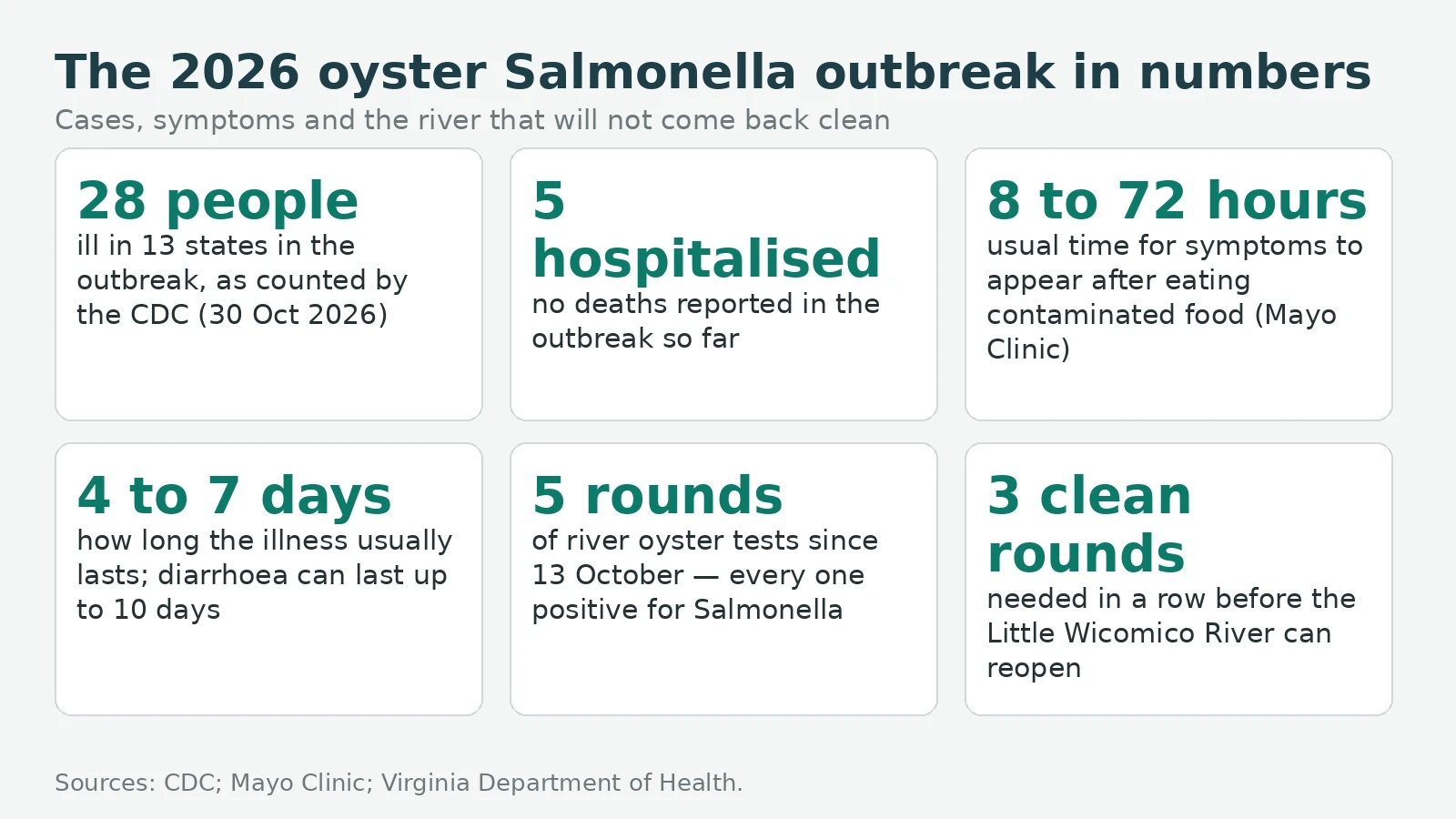
The CDC is investigating a multistate outbreak of Salmonella infections linked to raw oysters harvested by the Little Wicomico Oyster Company from the Little Wicomico River in Virginia. As of the CDC’s October 30 update, 28 people in 13 states had fallen ill, five of them were hospitalized, and no one had died. The strain behind the outbreak is Salmonella Telelkebir, and the investigation remains open.
The oysters at issue were harvested between September 18 and October 8, 2026, and shipped to 16 states and the District of Columbia. Eleven of the 28 people who fell ill reported eating raw oysters, and tag and traceback records for seven of them led back to the Little Wicomico River — two of those seven had eaten oysters from that river only. The company recalled the oysters voluntarily on October 9, the same day Virginia closed the river to shellfish harvesting.
That closure is still in force. The Virginia Department of Health has sampled oysters from the company’s cages five times: October 13, October 21, November 2, November 9 and November 16. Every round found Salmonella. The first round was positive in all eight samples, and the most recent round, collected November 16, was positive on all five leases tested. The river cannot reopen until three rounds in a row come back clean, so it will stay closed into at least the second week of December.
The recalled oysters should now be past their shelf life, and the CDC says nothing is being harvested from the Little Wicomico River at this time. But the investigation has also moved into the courts: the oyster company has sued the state over seed oysters dying in the closed river, and a Maryland man who was hospitalized with Salmonella sepsis after eating raw oysters has sued the grower. Whole-genome sequencing matched the bacteria in his blood to the outbreak strain.
What are the symptoms of Salmonella from oysters?
Salmonella infection, also called salmonellosis, is a bacterial infection of the gut. Most people develop diarrhea, fever and stomach cramps, and many also feel sick, vomit, or get chills and a headache. Some people have blood in their stool. A few people have no symptoms at all.
Symptoms usually start within 8 to 72 hours of eating contaminated food, according to the Mayo Clinic, although the incubation period can range from 6 hours to 6 days. That delay is one reason food poisoning is easy to misread: by the time you feel ill, the meal that caused it may be a day or two behind you. The NHS notes the same pattern — symptoms usually start within a few hours or a few days of eating the food that caused the infection.
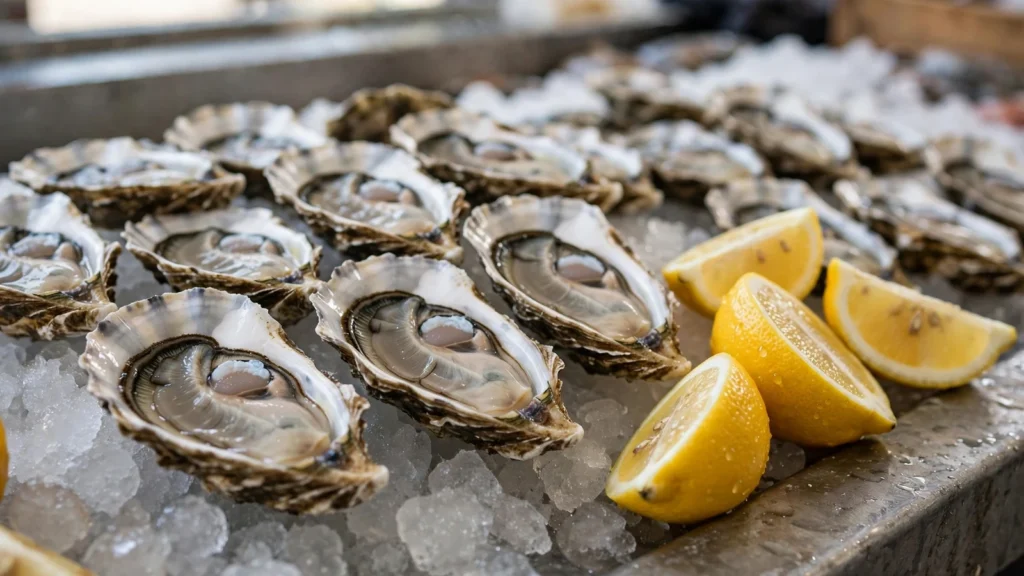
Raw oysters are a particular risk because they are eaten whole and uncooked, and oysters filter large volumes of water as they feed, so bacteria in the water can build up inside them. Cooking kills Salmonella, which is why the risk comes almost entirely from eating oysters raw or undercooked. In the UK the same illness is usually spelled diarrhoea, and the symptoms and advice are identical.
How long does it last, and who is most at risk?
Most healthy people recover within a few days to a week without specific treatment, the Mayo Clinic says. Diarrhea can last up to 10 days, and it may take several months before bowel habits feel fully normal again. The NHS advises that food poisoning symptoms usually get better within a week, and that the most important thing while you are ill is to drink plenty of fluids to avoid dehydration — small sips of water or squash if you feel sick.
Some people face a higher risk of a severe illness. The Mayo Clinic lists infants and young children, older adults, pregnant women, transplant recipients and people with weakened immune systems. If you are in one of these groups, raw oysters are worth skipping altogether, and any stomach illness that lasts more than a few days, comes with a high fever or bloody stools, or shows signs of dehydration — such as peeing less than usual, dark-colored urine, or a dry mouth and tongue — should be checked by a doctor.
Can Salmonella from oysters turn serious?
Usually it does not, but it can. The main danger is dehydration: if diarrhea is severe and you cannot drink enough to replace the fluid you are losing, you may need prompt medical attention. In some cases the infection spreads beyond the intestines into the bloodstream, a condition called bacteremia. From there it can infect the urinary system, the tissues around the brain and spinal cord, the lining of the heart or its valves, and the bones.
A small number of people develop reactive arthritis weeks or even months after the infection — joint pain, eye irritation and painful urination, sometimes called Reiter’s syndrome. These complications are uncommon, but they are the reason food poisoning should not always be waited out at home. The Maryland patient in this outbreak developed Salmonella sepsis, the most severe form of the infection spreading through the blood, and needed hospital treatment.
How to eat oysters safely
The safest choice is to eat oysters cooked. Heat kills Salmonella, so oysters that have been cooked through — until the shells open and the flesh is firm — do not carry the same risk as raw ones. If you eat oysters raw, you are accepting a risk that no amount of freshness, lemon juice, hot sauce or alcohol removes: none of those kills the bacteria.
A few practical steps lower the risk further. Buy oysters from a reputable supplier and check for recall notices before eating them — the FDA posts shellfish safety alerts, and the CDC’s outbreak pages list the harvest areas and dates involved. Keep raw seafood separate from other foods in the fridge, wash your hands with soap and water for 20 seconds after handling raw shellfish, and throw out any oysters you shucked and froze in late September or early October if you are unsure where they came from. Anyone who is pregnant, over 65, or living with a weakened immune system should avoid raw oysters entirely and talk to a doctor or pharmacist if they have any doubts.
What to do if you ate the recalled oysters
If you ate raw oysters harvested from the Little Wicomico River between September 18 and October 8, 2026, watch for symptoms over the next few days — diarrhea, fever, stomach cramps, nausea or vomiting. Most people who fall ill will recover at home with rest and fluids. Stay home from work or school until you have been free of diarrhea and vomiting for at least 48 hours, and avoid preparing food for other people while you are ill.
Keep a note of where and when you ate the oysters, and tell your doctor if you become unwell — public health teams use that information to trace outbreaks. Do not take antibiotics on your own: most Salmonella infections clear without them, and a doctor is the right person to decide whether they are needed.
When to see a doctor
See a doctor promptly if you have bloody diarrhea, a high fever, signs of dehydration such as peeing much less than usual or very dark urine, or diarrhea that lasts more than 7 days or vomiting for more than 2 days. The NHS advises calling 111 in the UK if you cannot keep fluids down, or if you are worried about a baby under 12 months. Babies, young children, older adults and people with weakened immune systems should get medical advice sooner rather than later.
Get urgent help if you vomit blood, have a sudden severe stomach ache, become confused, or have severe difficulty breathing. In an emergency call 911 (US), 999 (UK) or 112 (EU).
Frequently asked questions
Can you get salmonella from oysters?
Yes. Oysters filter large volumes of water as they feed, so bacteria in the water can build up inside them, and raw oysters are eaten whole and uncooked. In 2026, raw oysters from Virginia's Little Wicomico River made 28 people ill in 13 states, five of whom were hospitalised. Cooking oysters thoroughly kills Salmonella, so the risk comes almost entirely from eating them raw.
How long after eating oysters do salmonella symptoms start?
Most people develop symptoms within 8 to 72 hours of eating contaminated food, according to the Mayo Clinic, though it can take anywhere from 6 hours to 6 days. The first signs are usually diarrhoea, fever and stomach cramps, sometimes with nausea, vomiting, chills or a headache. Because of the delay, the meal that caused the illness may be a day or two behind you by the time you feel unwell.
How long does salmonella from oysters last?
Most healthy people recover within a few days to a week without specific treatment. Diarrhoea can last up to 10 days, and it may take several months before bowel habits return fully to normal. Rest and plenty of fluids matter most while you are ill. Stay home until you have been free of diarrhoea and vomiting for at least 48 hours, and see a doctor if symptoms last more than a few days.
Who should not eat raw oysters?
Raw oysters are riskiest for infants and young children, older adults, pregnant women, transplant recipients and people with weakened immune systems, because Salmonella is more likely to cause severe illness or spread into the bloodstream in these groups. If you are in one of these groups, avoid raw oysters entirely and choose cooked ones instead. Anyone unsure should ask a doctor or pharmacist.
What should I do if I ate the recalled oysters?
Watch for diarrhoea, fever, stomach cramps, nausea or vomiting over the next few days. Most people who fall ill recover at home with rest and fluids. Keep a note of where and when you ate the oysters and tell your doctor if you become unwell. Seek medical advice promptly for bloody diarrhoea, a high fever, signs of dehydration, or illness lasting more than a few days.
Sources
- CDC: Where People Got Sick: Salmonella Outbreak, October 2026 www.cdc.gov
- Food Safety News: Oysters from Virginia river continue to test positive for Salmonella www.foodsafetynews.com
- LexBlog: Virginia's Fifth Round of Little Wicomico Oyster Tests Is Positive for Salmonella www.lexblog.com
- Mayo Clinic: Salmonella infection www.mayoclinic.org
- NHS: Food poisoning www.nhs.uk

Try the tool
Not sure if it can wait?
Common causes and warning signs for 16 everyday symptoms.
Open the symptom guide