Tandem Mobi Insulin Pump Recall: What Users Need to Know
The FDA has announced a Class I recall of Tandem Mobi insulin pumps over false occlusion alarms that can stop insulin delivery. Here's who is affected and what to do.
- Written by
- Health Daily Advice
- Published
- Reading time
- 5 minutes
- Sources
- 8 cited
In this guide
The FDA has announced a Class I recall of all Tandem Mobi insulin pumps after false occlusion alarms stopped insulin delivery in some users. As of October 28, 2026, Tandem reported 1,248 serious injuries and no deaths. Some pumps must be replaced, while others can keep being used if owners follow updated instructions and always respond to alarms.
What is the Tandem Mobi insulin pump?
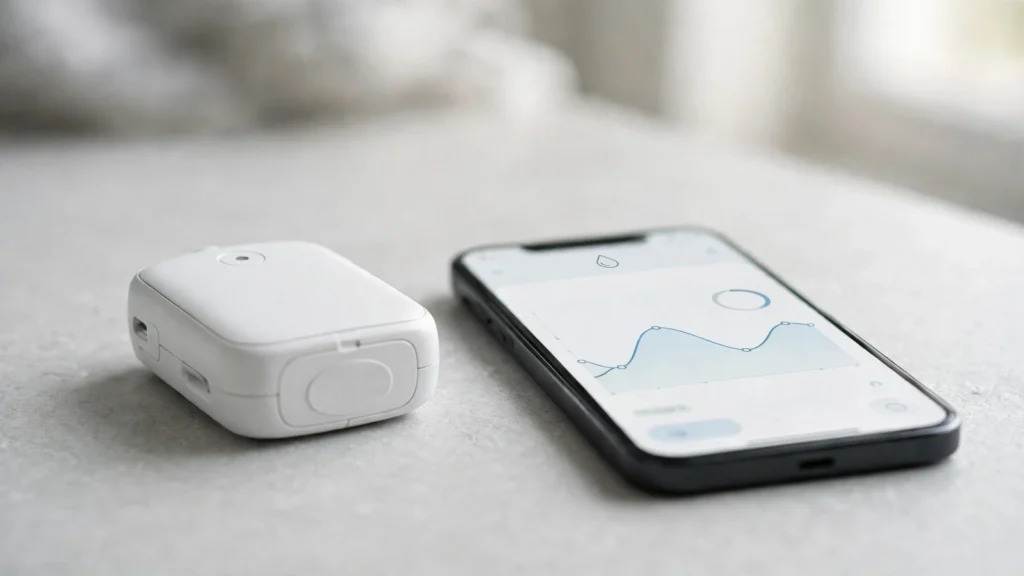
The Tandem Mobi is a small, wearable insulin pump that delivers insulin under the skin for diabetes management. It is controlled from a smartphone app and can work with compatible continuous glucose monitors and automated insulin dosing systems that adjust insulin delivery on their own, according to the FDA. For many people with type 1 diabetes, a pump like this replaces multiple daily injections and helps keep blood sugar steadier through the day and night.
That is also why a fault in the pump matters so much. When insulin delivery stops without warning, blood sugar can climb fast, and for someone with type 1 diabetes that can turn into a dangerous emergency within hours.
What went wrong with the pump?
Tandem found that some Mobi pumps can trigger a false occlusion alarm even when nothing is blocking the flow of insulin. The company’s investigation traced the problem to extra friction inside the pump’s drive module, which can cut the motor’s available power. When the motor slows past a set threshold, the pump wrongly concludes that insulin is blocked and shuts off delivery, the FDA says.
The catch is that delivery stays switched off until the user notices the alarm, acknowledges it, and restarts therapy. A single missed alarm overnight, or a run of alarms during a busy day, can leave someone without insulin for hours. The FDA warns that repeated false alarms, if not dealt with promptly, can interrupt insulin delivery and push blood sugar dangerously high. In severe cases, that high blood sugar has needed medical treatment or a hospital stay.
How many pumps are affected?
The recall covers 80,938 pumps in total, including 77,559 distributed in the United States, across 21 model numbers. The FDA has given the recall its most serious rating, Class I, which it uses when a faulty device could cause serious harm or death if its warnings are ignored.
As of October 28, 2026, Tandem had reported 1,248 serious injuries and no deaths linked to the false alarms. Tandem first wrote to customers about the problem on September 23, 2026. The recall was entered in the FDA’s database on October 30, and the FDA published its public warning on November 25, 2026, as reported by Medtech Insight.
A second Mobi recall in two years
This is not the first time the Mobi has been recalled. In 2025, Tandem recalled nearly 18,000 Mobi pumps over a possible software fault that could also interfere with insulin delivery, according to Cardiovascular Business. No pumps had to be returned in that case, and a software update was the fix. The current recall is larger and, for some owners, means sending the pump back.
Is your pump affected? What to do now
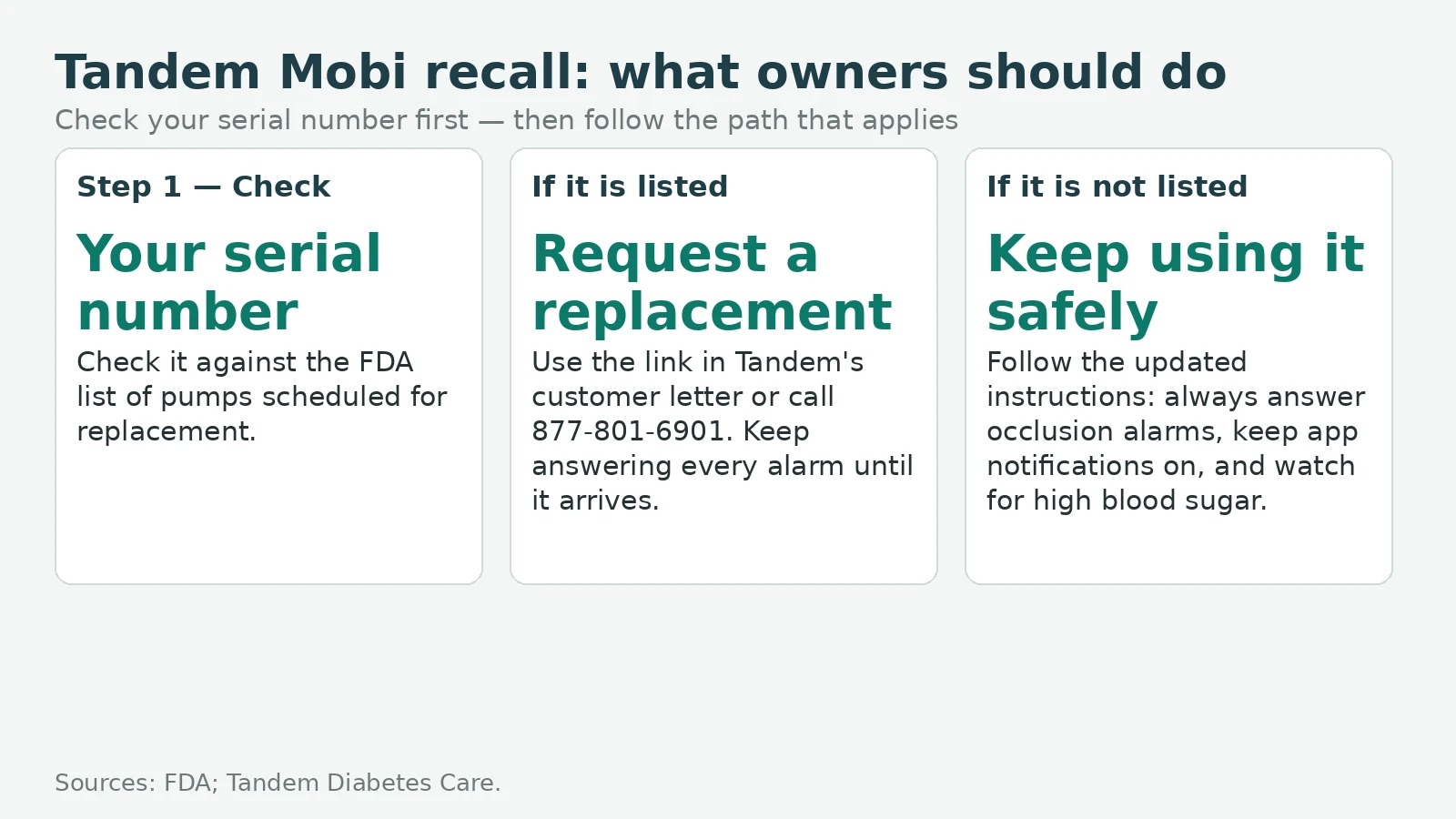
What you need to do depends on your pump’s serial number, so the first step is to check it against the FDA’s list of pumps scheduled for replacement. Tandem also sent letters to customers, healthcare providers, distributors, and pharmacies, so check any letter or email from Tandem as well.
- If your serial number is on the replacement list: request a return and replacement right away, using the link in Tandem’s customer letter or by calling Tandem Customer Technical Support at 877-801-6901. Keep responding to every occlusion alarm and following the steps below until your replacement arrives.
- If your serial number is not on the list: you can keep using your pump, but only while following Tandem’s updated instructions. That means always answering occlusion alarms, keeping push notifications switched on in the Tandem Mobi app so alarms reach your phone, checking your blood sugar regularly, and having a backup way to take insulin ready, as your healthcare provider directed.
Whatever group you fall into, do not ignore repeated alarms. If occlusion alarms keep coming even after you have followed the troubleshooting steps, contact Tandem Customer Support, the FDA advises.
Responding to an occlusion alarm
When an occlusion alarm sounds, the pump alerts you with audible tones or vibrations, depending on your settings, growing louder until you acknowledge it. The FDA’s guidance is to acknowledge the alarm, then check the cartridge, tubing, and infusion site for damage or a blockage, fix anything you find, and resume insulin delivery.
It helps to treat every alarm as real until you have checked. A false alarm and a genuine blockage look the same on the pump’s screen, and the only way to tell them apart is to inspect the set. If you use the Mobi app, make sure its push notifications are enabled, so an alarm can still reach you if the pump itself is in a bag or another room. And if alarms keep interrupting your insulin even after troubleshooting, call Tandem rather than carrying on and hoping they stop.
Warning signs that insulin delivery has stopped
When insulin stops reaching the body, blood sugar rises and the body starts breaking down fat for energy, producing acids called ketones. That can lead to diabetic ketoacidosis (DKA), a serious complication that is most common in people with type 1 diabetes and can be life-threatening, according to the CDC.
Early warning signs include being very thirsty and urinating a lot more than usual. If DKA develops, more severe symptoms can follow quickly, sometimes within 24 hours, the Mayo Clinic says. Watch for fast, deep breathing, dry skin and mouth, a flushed face, fruity-smelling breath, headache, muscle stiffness or aches, extreme tiredness, nausea and vomiting, stomach pain, and confusion.
The CDC advises checking for ketones if you are sick or your blood sugar is 250 mg/dL or above, testing blood sugar every 4 to 6 hours and checking urine for ketones. A blood sugar that stays at 300 mg/dL or above, fruity-smelling breath, vomiting that stops you keeping food or drinks down, or trouble breathing all mean getting emergency care right away.
When to see a doctor
Contact your doctor or diabetes team right away if you are vomiting and cannot keep food or liquids down, your blood sugar is above your target range and is not coming down, or a ketone test shows a moderate or high result. Get emergency care if your blood sugar is higher than 300 mg/dL on more than one test, you have ketones in your urine and cannot reach your doctor for advice, or you have several DKA symptoms at once, the Mayo Clinic advises.
If you are unsure whether your pump is affected, or you need help with a replacement or a backup insulin plan, talk to your doctor or diabetes team rather than changing anything on your own. Do not wait for symptoms to pass on their own if your blood sugar stays high after a run of alarms.
In an emergency call 911 (US), 999 (UK) or 112 (EU)
Frequently asked questions
Is my Tandem Mobi insulin pump recalled?
All Tandem Mobi pumps with interoperable technology are included in the recall, so assume yours is covered and check your serial number against the FDA's replacement list. If your serial number is listed, request a replacement from Tandem right away. If it is not listed, you can keep using the pump while following Tandem's updated instructions and answering every alarm.
Can I keep using my Tandem Mobi pump during the recall?
Yes, if your serial number is not on the FDA's replacement list. You must follow Tandem's updated instructions: always respond to occlusion alarms, keep push notifications enabled in the Mobi app, check your blood sugar regularly, and have a backup insulin method ready as your healthcare provider directed. If alarms keep repeating after troubleshooting, contact Tandem Customer Support.
What is a false occlusion alarm?
An occlusion alarm is meant to warn you that insulin flow is blocked, for example by a kinked tube or a blocked infusion site. A false alarm fires when there is no blockage at all. In the recalled Mobi pumps, extra friction in the drive module can slow the motor, making the pump wrongly conclude that insulin is blocked and suspend delivery until you acknowledge the alarm.
What should I do if my pump gives an occlusion alarm?
Acknowledge the alarm first, then inspect the cartridge, tubing, and infusion site for damage or a blockage, fix anything you find, and resume insulin delivery. Do not ignore the alarm, even if you suspect it is false, because delivery stays suspended until you act. If alarms keep coming after troubleshooting, contact Tandem Customer Support and talk to your diabetes team.
What are the warning signs that insulin delivery has stopped?
The earliest signs are very high blood sugar, being very thirsty, and urinating much more than usual. As diabetic ketoacidosis develops, watch for nausea and vomiting, stomach pain, fast deep breathing, fruity-smelling breath, extreme tiredness, and confusion. The CDC says to seek emergency care if blood sugar stays at 300 mg/dL or above, or if you have several of these symptoms together.
How do I get a replacement Tandem Mobi pump?
First check your pump's serial number against the FDA's list of pumps scheduled for replacement, linked from the FDA recall notice. If yours is listed, submit a return and replacement request using the link in Tandem's customer letter, or call Tandem Customer Technical Support at 877-801-6901. Keep answering every alarm and following the updated instructions until your replacement arrives.
Sources
- FDA: Insulin Pump Recall: Tandem Diabetes Removes Tandem Mobi Insulin Pumps www.fda.gov
- CDC: Diabetic Ketoacidosis www.cdc.gov
- Mayo Clinic: Diabetic ketoacidosis — Symptoms and causes www.mayoclinic.org
- Cardiovascular Business: More than 80,000 insulin pumps recalled due to safety risk cardiovascularbusiness.com
- Medtech Insight: Tandem Mobi Insulin Pumps Recalled Over False Alarms Linked To 1,248 Serious Injuries insights.citeline.com
- MedTech Dive: Tandem recalls Mobi insulin pump, reports 230 adverse events www.medtechdive.com

Try the tool
Not sure if it can wait?
Common causes and warning signs for 16 everyday symptoms.
Open the symptom guide