Eczema Treatment: What Works, What to Avoid and When to Get Help
Eczema cannot be cured, but it can be controlled. This guide explains the treatments that work — from daily moisturisers to newer prescription options — and the everyday habits that keep flares at bay.
- Written by
- Health Daily Advice
- Published
- Reading time
- 9 minutes
- Sources
- 9 cited
In this guide
Eczema is treated by repairing the skin barrier and calming inflammation. Daily moisturisers (emollients) are the foundation, flare-ups are usually treated with steroid creams applied to the skin, and more severe eczema may need non-steroid creams, light therapy or medicines that work on the immune system, prescribed by a doctor.
What is eczema?
Eczema is a group of conditions that make the skin dry, itchy and inflamed. The most common form is atopic eczema, also called atopic dermatitis. It happens when the skin barrier — the outer layer that keeps moisture in and irritants out — does not work as it should, and the immune system overreacts. The result is itchy patches that can crack, weep or thicken.
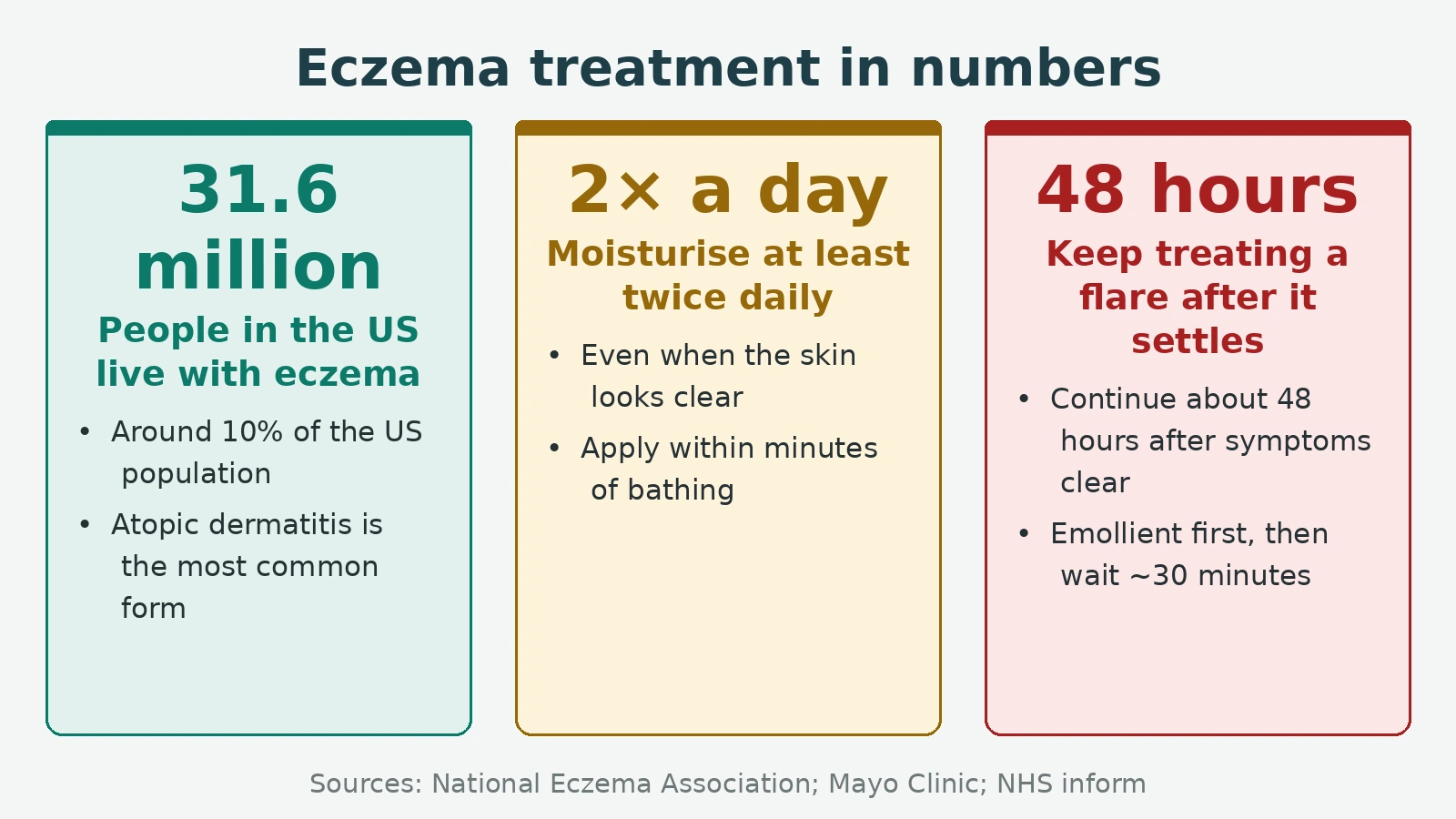
It is very common. Eczema affects roughly 10% to 20% of children and 2% to 10% of adults worldwide, according to the National Eczema Association. In the United States, around 31.6 million people — roughly one in ten — live with some form of eczema. Most cases begin early — four in five before the age of six — though about one in four adults say their symptoms started in adulthood. Eczema is not contagious.
The itch is usually the worst part. The National Eczema Association calls it the most burdensome symptom, ahead of redness and sleep loss. Among adults with moderate to severe disease, 86% report itching every day, and 63% say they itch for at least 12 hours a day. Sleep disturbance affects 67% of children with atopic dermatitis.
How is eczema treated? The step-by-step approach
There is currently no cure for eczema, the NHS explains. The aim is control: keep the skin barrier healthy and calm flare-ups quickly. For most people, moisturisers and prescription creams are enough, according to the American Academy of Dermatology.
| Step | What it involves | Who it is for |
|---|---|---|
| 1. Daily skin care | Daily moisturisers, gentle washing, trigger avoidance | Everyone with eczema |
| 2. Flare treatment | Steroid or non-steroid creams on inflamed skin | Mild to moderate flare-ups |
| 3. Intensive skin treatment | Wet wraps, dressings, stronger creams | Stubborn patches, severe flares |
| 4. Specialist treatment | Light therapy or immune-calming medicines | Eczema not controlled by creams |
Moisturisers: the foundation of eczema treatment
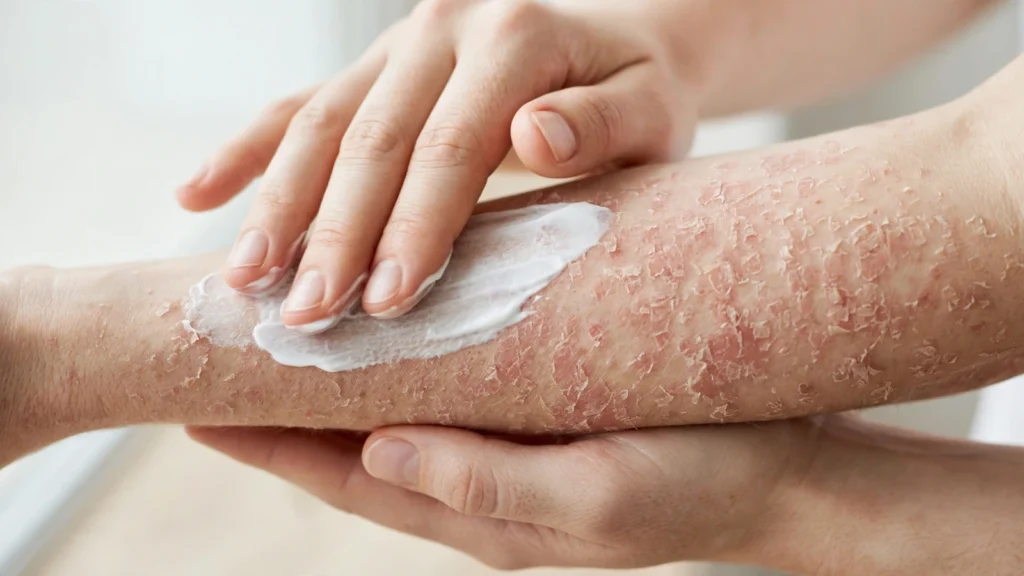
Moisturisers, known medically as emollients, are the single most important part of eczema treatment — the one treatment every person with eczema uses, for life. NHS inform describes them as treatments applied directly to the skin to reduce water loss and cover it with a protective film. They may also have a mild anti-inflammatory effect and can help reduce the number of flare-ups.
There are three main types, and the difference is how much oil they contain. Ointments hold the most oil: they feel greasy, but they are the most effective at keeping moisture in. Lotions hold the least oil, so they feel light but do not protect the barrier for as long. Creams sit in between.
How you use a moisturiser matters as much as which one you choose. The NHS advises applying emollients at least twice a day, and continuing even when the eczema looks better. Mayo Clinic recommends applying moisturiser while the skin is still damp, within three minutes of bathing. Use a large amount, smooth it on in the direction the hair grows rather than rubbing it in, and pat the skin dry gently after washing.
Finding the right moisturiser can take trial and error. NHS inform puts it plainly: the best emollient is the one you feel happy using every day. Choose products without fragrance, dyes or alcohol, which can irritate sensitive skin. Do not share emollients, or dip your fingers into a shared pot; use a pump dispenser or a clean spoon instead, because that reduces the risk of infection.
Steroid creams: what they do and how to use them
When skin is sore and inflamed, a moisturiser on its own is not enough. That is where topical corticosteroids — steroid creams, ointments, lotions or gels applied to the skin — come in. The NHS lists them alongside emollients as the main treatments for atopic eczema. They damp down inflammation, often within a few days.
Steroid creams come in different strengths, from very mild to strong. Your doctor or pharmacist will match the strength to the flare and the area affected — use the weakest strength that controls the symptoms. Apply your emollient first, then wait around 30 minutes until it has soaked in, or use the steroid cream at a different time of day. Most people only need to apply it once a day, and should keep using it until about 48 hours after the flare-up has cleared, because inflammation lingers under the surface even when the skin looks better.
Many people worry about steroid creams, and that worry leads some to use too little, too rarely — which means the flare drags on. NHS inform’s advice is reassuring: “Don’t be afraid to apply the treatment to affected areas to control your eczema.” Used as directed, in short courses for flares, these creams are well established. Side effects are possible, though: mild stinging for less than a minute, and, rarely, thinning of the skin — most likely when strong steroids are used for too long in the wrong places, such as the face — along with changes in skin colour, spots or extra hair growth. Most improve once treatment stops.
What other eczema treatments are there?
When moisturisers and steroid creams are not enough, doctors have several other options, depending on severity and how the eczema has responded so far.
Non-steroid creams
Some creams calm inflammation without being steroids. Topical calcineurin inhibitors — tacrolimus and pimecrolimus — are often used for eczema on sensitive areas that have not responded to simpler treatment, because they do not carry the same risk of skin thinning. Newer non-steroid creams have also been added to guidelines in recent years.
Light therapy (phototherapy)
Phototherapy means treating the skin with controlled amounts of ultraviolet light in a clinic, under specialist supervision. NHS inform lists it among the treatments a dermatologist may offer, and the American Academy of Dermatology gives it a conditional recommendation for adults whose eczema is not controlled by creams — usually when topical treatments have not worked or flares return quickly.
Wet wraps and dressings
For severe flares or stubborn patches, a GP may prescribe special medicated bandages, clothing or wet wraps to wear over the affected skin. These are used over emollients, or with steroid creams, to stop scratching, let the skin underneath heal and keep it from drying out. Mayo Clinic describes wet dressings as an effective intensive treatment for severe eczema, usually done with medical guidance.
Medicines that work on the whole body
For moderate to severe eczema that creams cannot control, dermatologists can offer medicines that calm the overactive immune response from the inside. The American Academy of Dermatology’s 2024 guidelines give strong recommendations for several of these: biologic medicines given by injection, and oral Janus kinase (JAK) inhibitors. Older immune-suppressing tablets, such as azathioprine, ciclosporin and methotrexate, are also used in some cases. These need specialist follow-up, and the choice is made together with the patient.
One thing the guidelines advise against is steroid tablets for ongoing eczema care. NHS inform notes that corticosteroid tablets are rarely used nowadays, and only occasionally for short courses of five to seven days to bring a severe flare under control, because longer courses risk serious side effects and the eczema often rebounds when they stop.
Treating infection and itch
Eczema skin is more prone to infection, because scratching breaks the barrier and lets germs in. If the skin becomes infected, a doctor may prescribe antibiotics. Antihistamines — allergy medicines — can help with itching. For some people with severe or frequent flares, the American Academy of Dermatology recommends diluted bleach baths to reduce bacteria on the skin; Mayo Clinic advises talking to a doctor first, since the dilution has to be right.
What helps day to day?
Medicines do the heavy lifting during flares, but everyday habits decide how often flares happen. Start with bathing: take a short daily bath or shower in warm — not hot — water, and soak for less than ten minutes. Use a gentle, non-soap cleanser without dyes, alcohols or fragrances, because harsh soaps strip away the skin’s natural oils. Afterwards, pat the skin dry and moisturise straight away, while it is still damp.
Clothing matters more than most people expect. Wear cool, smooth-textured clothes and stick to soft, fine-weave fabrics or natural materials such as cotton if other fabrics irritate your skin. Avoid anything rough, tight or scratchy. When you wash clothes, skip harsh detergents and fabric softeners, which can leave irritating residues behind.
Learning your triggers is one of the most useful things you can do. Common culprits include soap, washing detergent, pets, some fabrics, pollen, house-dust mites and certain foods, as well as heat, changes in temperature, skin infections, stress and hormonal changes. Some foods, such as eggs and cows’ milk, can trigger eczema — but do not cut foods from your diet without medical advice first, especially for children.
Scratching deserves its own strategy, because it sets up a vicious cycle: itching leads to scratching, scratching damages the barrier, and damaged skin itches more. Instead of scratching, try pressing or gently rubbing the itchy area. Keep nails short and clean, and cover the skin with light clothing if you scratch in your sleep. For babies, anti-scratch mittens can help.
Finally, look after sleep and stress, because both feed into eczema. Itching often worsens at night, and poor sleep makes the next day’s itch harder to bear. A cool bedroom and a humidifier in dry indoor air can help, and anything that eases stress may help the skin too. If eczema is affecting your mood, tell your GP: the NHS notes that people whose eczema affects their mental health may be referred for extra support.
What should you avoid with eczema?
- Hot baths and long soaks. Hot water strips oils from the skin — keep water warm and showers short.
- Harsh soaps, bubble baths and fragranced products — use a gentle cleanser or a soap substitute instead.
- Scratching. It feels like relief but damages the skin, thickens it over time and raises the risk of infection.
- Stopping moisturiser when the skin looks clear. Emollients are a daily habit, not a flare treatment.
- Sharing creams or dipping fingers into a shared pot — this spreads germs, so use a pump dispenser or a clean spoon.
- Cutting foods out of your diet without advice — removing foods, especially in children, can do more harm than good.
- Unproven “miracle” creams, diets and supplements — if something promises a cure, ask a doctor or pharmacist first.
- Using strong steroid creams for weeks on end without supervision — they are flare treatments, not daily moisturisers.
When to see a doctor
See a GP if you or your child have symptoms of eczema, or if the treatments you are using are not helping. A pharmacist can also help with mild eczema, advising on moisturisers and over-the-counter options for small, dry, slightly itchy patches. If the eczema is more severe, or keeps coming back, a GP is the right next step — and you may be referred to a dermatologist if the type of eczema is unclear or normal treatment is not working.
Get urgent help — an urgent GP appointment, or NHS 111 in the UK — if eczema is blistered, crusty, leaking fluid or has spots filled with pus; if it is painful, swollen or feels warm; if it suddenly gets worse or spreads; or if you have a high temperature or feel generally unwell. These can be signs of infection, or of a more serious condition called eczema herpeticum, which needs prompt treatment.
In an emergency call 911 (US), 999 (UK) or 112 (EU)
Eczema is a long-term condition, but it is a manageable one. A steady routine — daily moisturising, early flare treatment and knowing when to ask for help — keeps most people’s skin on an even keel. More than half of adults with moderate to severe eczema still report that their disease is not adequately controlled, according to the National Eczema Association — so if your current plan is not working, do not simply put up with it. Go back to your doctor or pharmacist and ask what else can be tried.
Frequently asked questions
Can eczema be cured?
No. The NHS says there is currently no cure for atopic eczema, although symptoms often improve as children grow older. Treatment aims to control the condition instead: daily moisturisers protect the skin barrier, steroid creams calm flare-ups, and more severe eczema may need light therapy or medicines that work on the immune system. Most people can keep their symptoms well controlled with the right routine.
How often should I moisturise if I have eczema?
At least twice a day, every day — even when your skin looks clear. The NHS advises applying emollients as often as possible, and Mayo Clinic recommends moisturising within three minutes of bathing, while the skin is still damp, to seal moisture in. During a flare-up, apply generous amounts more often. The best moisturiser is simply the one you are happy to use every day.
Are steroid creams safe to use on eczema?
Yes, when used as directed. Steroid creams are a well-established eczema treatment and a mainstay alongside moisturisers. The NHS advises using the weakest strength that controls the symptoms, usually once a day, and continuing for about 48 hours after a flare clears. Possible side effects include mild stinging and, rarely, skin thinning if strong creams are used for too long on delicate areas. If you need them often, ask your GP to review your treatment.
What is the best treatment for severe eczema?
There is no single best treatment — it depends on the person. Severe eczema that creams cannot control may need light therapy (phototherapy) in a clinic, or medicines that calm the immune system, such as biologic injections or oral JAK inhibitors. The American Academy of Dermatology strongly recommends several of these for moderate to severe disease. They need specialist follow-up, so ask your GP for a referral to a dermatologist.
Does diet affect eczema?
It can. Some foods, such as eggs and cows' milk, can trigger eczema symptoms in some people, and food allergy is more common in children with eczema. But triggers vary from person to person, and cutting foods out without medical advice can do more harm than good — especially for children, who need the nutrients those foods provide. If you suspect a food trigger, talk to your GP or a dietitian first.
Can adults develop eczema for the first time?
Yes. Although most cases begin in childhood — four in five people with atopic dermatitis first develop it before the age of six — about one in four adults with the condition say their symptoms started in adulthood, according to the National Eczema Association. Adult-onset eczema is treated the same way: daily moisturisers, flare treatment with creams, and a doctor's help if it does not settle.
Sources
- NHS: Atopic eczema www.nhs.uk
- Mayo Clinic: Atopic dermatitis (eczema) — diagnosis and treatment www.mayoclinic.org
- National Eczema Association: Eczema Facts nationaleczema.org
- NHS inform: Atopic eczema nhsinform-n1.azurewebsites.net
- American Academy of Dermatology: Guidelines of care for atopic dermatitis with phototherapy and systemic therapies www.jaad.org
- Cleveland Clinic: Living with Atopic Dermatitis (Eczema) health.clevelandclinic.org

Try the tool
Not sure if it can wait?
Common causes and warning signs for 16 everyday symptoms.
Open the symptom guide