What Is Azelaic Acid? Benefits, Side Effects and How to Use It
Azelaic acid is a naturally occurring acid that treats acne and rosacea and fades the dark marks spots leave behind. It works gently and slowly — here is how to use it, what to expect and who should be careful.
- Written by
- Health Daily Advice
- Published
- Reading time
- 7 minutes
- Sources
- 4 cited
In this guide
Azelaic acid is a naturally occurring acid found in grains such as barley, wheat and rye, and made by a yeast that lives on human skin. As a skin treatment it calms inflammation, clears bacteria from pores and speeds up skin renewal. It is used mainly for acne and rosacea, and can also fade the dark marks spots leave behind.
What is azelaic acid?
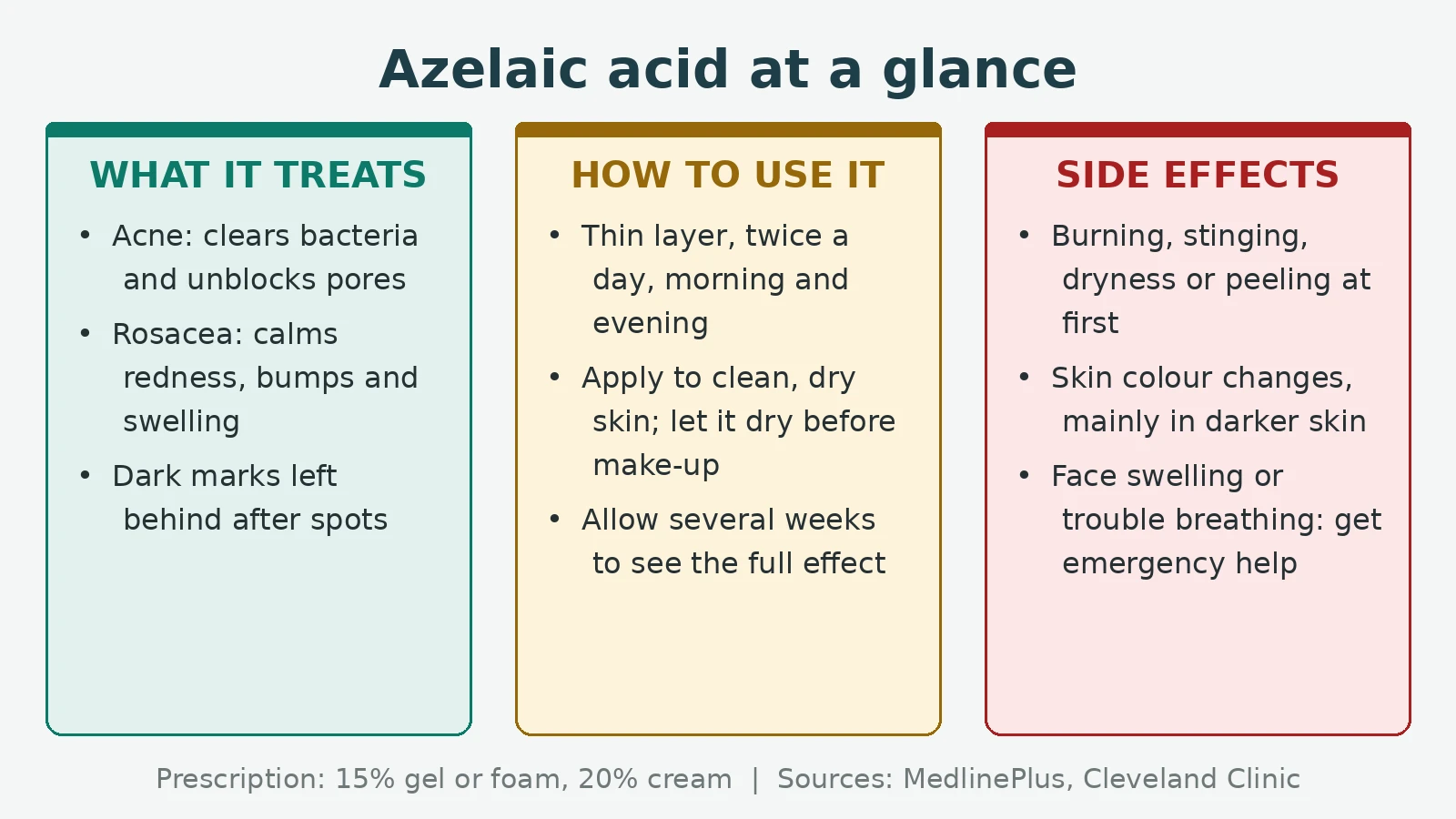
Azelaic acid belongs to a group of medicines called dicarboxylic acids. It is not a new ingredient: dermatologists have prescribed it for decades, under brand names such as Finacea and Azelex. Prescription products contain 15% azelaic acid in a gel or foam, or 20% in a cream. Lower-strength versions appear in over-the-counter serums and creams, where the amount on the label varies and is often not stated clearly.
It is a gentler acid than the ones people usually compare it with. Unlike alpha hydroxy acids, glycolic acid or salicylic acid, it is not strong enough to be used on its own in a chemical peel, so it is less likely to irritate the skin — but it also works more slowly, and it needs to be used consistently before the results show.
How does azelaic acid work?
It works in several ways at once, which is why it suits more than one skin problem.
- It kills acne bacteria. It slows the growth of the bacteria that infect pores, including Cutibacterium acnes (formerly called Propionibacterium acnes) and Staphylococcus epidermidis.
- It unblocks pores. It reduces the production of keratin, the tough protein that can clog pores and help spots form, and it reduces sebum, the skin’s natural oil.
- It calms inflammation. Its anti-inflammatory and antioxidant effects reduce the redness and swelling of acne and rosacea, and help mop up the unstable molecules known as free radicals that damage skin cells.
- It evens out skin tone. It slows melanin synthesis — the process by which skin makes pigment — so it can stop darkened skin cells from spreading after a breakout.
That last effect is the reason azelaic acid has become popular beyond the dermatologist’s office. It is one of the few ingredients that tackles spots and the marks they leave at the same time, and research has found it safe and useful for darker skin tones, where post-inflammatory dark marks are more common and more stubborn.
What is it used for?
Acne
Azelaic acid cream is used to treat the pimples and swelling caused by acne. It clears bacteria from pores, reduces inflammation so spots look less red and angry, and encourages cell turnover so skin heals more quickly and scarring is less obvious. Older research found the cream roughly as effective as benzoyl peroxide and tretinoin (Retin-A) for acne, although it tends to cost more. Because it works slowly, it is often prescribed alongside another acne treatment rather than on its own, and it is not usually a dermatologist’s first choice for acne alone.
Rosacea
Azelaic acid gel and foam are used to clear the bumps, lesions and swelling caused by rosacea, the condition that causes redness, flushing and pimples on the face. It works by reducing the swelling and redness of the skin. Clinical studies show the gel can keep improving the look of swelling and visible blood vessels over time. People with rosacea should also avoid the foods and drinks that make them flush — alcohol, spicy food and hot drinks such as coffee and tea can all set it off.
Dark marks and uneven tone
After a breakout, inflammation can leave dark patches on the skin, known as post-inflammatory hyperpigmentation. Azelaic acid stops discoloured skin cells from spreading, and a pilot study from 2011 found it could treat acne while evening out the dark marks acne had caused. It is also used for other patchy discoloration caused by melanin, although more research is needed on exactly who benefits most.
How to use azelaic acid
Azelaic acid is for external use only: never swallow it, and keep it out of the eyes, mouth and nose. It is usually applied twice a day, morning and evening, at roughly the same times each day. Follow the directions on your prescription label, and ask your doctor or pharmacist to explain anything you do not understand.
- Wash the affected skin with water and a mild soap or soap-free cleanser, and pat it dry with a soft towel. Avoid alcoholic cleansers, astringents, abrasives and peeling products, especially if you have rosacea.
- Wash your hands before and after applying it.
- Shake the foam well before use, if you are using the foam.
- Apply a thin layer to the affected skin and rub it in gently until it disappears. For foam, apply a thin layer to the whole face, including cheeks, chin, forehead and nose.
- Do not cover the area with bandages or dressings, and do not use more than directed — using it too often can make the skin problem worse.
- Once it has dried, you can apply make-up.
Use it for the full course your clinician advised, even if your skin looks better, and do not stop early unless your care team tells you to. It may take several weeks to see the full effect. If you miss a dose, apply it as soon as you remember, unless it is almost time for the next one — never apply a double dose. The foam is flammable, so stay away from open flames and do not smoke while applying it or shortly afterwards.
Do not use other skin products on the same areas unless your care team says to, and avoid products that dry the skin, such as abrasive cleaners or anything containing alcohol. Sunscreen matters more than usual while using azelaic acid: the treatment can make skin more sensitive to sun damage, so wear a broad-spectrum SPF every day.
What are the side effects?
Most people have no side effects or only mild ones, and irritation is most common in the first few weeks. The symptoms that usually do not need medical attention, but should be reported to your care team if they carry on or bother you, are:
- Burning, stinging, tingling or itching where it was applied
- Dryness, redness, tightness, scaling or peeling
- Tenderness or mild pain at the site
- Changes in skin colour, especially in people with a darker complexion
Stop using it and call your doctor immediately, or get emergency help, if you notice signs of a serious allergic reaction: swelling of the face, throat, tongue, lips or eyes, difficulty swallowing or breathing, hoarseness, a rash or hives. Other less common problems include blistering or flaking skin, joint tightness or pain, fever and difficulty breathing — all reasons to stop and seek advice.
People with asthma should use azelaic acid with care, because worsening of asthma has been reported in people using it. Tell your doctor if you are pregnant, planning to become pregnant or breastfeeding, so the benefits and risks can be talked through. Tell your doctor and pharmacist about all the medicines, vitamins and supplements you take, and about any allergy to azelaic acid or to other medicines, foods, dyes or preservatives.
Azelaic acid vs other acids: which is right for you?
Azelaic acid sits in the middle of the skincare shelf: stronger than a plain moisturiser, gentler than the acids used in peels. Compared with salicylic acid, it is less drying and better tolerated on sensitive or rosacea-prone skin, but it is slower at clearing blackheads. Compared with benzoyl peroxide, it is about as effective for acne in older studies, with less bleaching of towels and bedding and less of the dry, flaky start. Compared with tretinoin, it is less irritating and safer in sunlight, but it will not smooth fine lines the way a retinoid can.
That makes it a good fit for people who want one ingredient that covers acne, redness and dark marks together, for people whose skin cannot tolerate stronger acids, and for people with darker skin tones who are prone to marks after spots. It is a poor fit for anyone who wants fast results: if you need a spot gone this week, azelaic acid is the wrong tool, and a clinician may suggest something else alongside it.
When to see a doctor
See a doctor or pharmacist if your skin does not improve after several weeks of regular use, if it gets worse, or if irritation is severe or does not settle. Take the product with you, or a photo of its label, so the clinician can see the strength and form you are using.
Get medical help straight away if you develop swelling of the face, lips or tongue, trouble breathing or swallowing, a spreading rash, or any other sign of an allergic reaction after applying it.
In an emergency call 911 (US), 999 (UK) or 112 (EU)
Frequently asked questions
What is azelaic acid used for?
Azelaic acid is used to treat acne and rosacea. The cream treats the pimples and swelling of acne, while the gel and foam clear the bumps, lesions and swelling of rosacea. It also helps fade dark marks left behind after spots, known as post-inflammatory hyperpigmentation. Prescription products contain 15% in gel or foam form and 20% in cream form.
How long does azelaic acid take to work?
Several weeks. Azelaic acid works more slowly than stronger acids because it is gentler on the skin, so it needs consistent use before results show. Apply a thin layer twice a day, morning and evening, and keep using it for the full course your clinician advised, even if your skin looks better. If there is no improvement after several weeks, see a doctor or pharmacist.
What are the side effects of azelaic acid?
Most people have no side effects or only mild ones, mainly in the first few weeks: burning, stinging, tingling, itching, dryness, redness, tightness, scaling or peeling where it was applied, and sometimes a change in skin colour. Stop using it and get medical help straight away for swelling of the face, lips or tongue, difficulty breathing or swallowing, a rash or hives.
Can azelaic acid help dark spots?
Yes. Azelaic acid slows melanin synthesis, the process by which skin makes pigment, so it can stop darkened skin cells from spreading after a breakout. A pilot study from 2011 found it could treat acne while evening out the dark marks acne had caused, and further research has found it safe and beneficial for skin of colour, where these marks are more common.
Can I use azelaic acid with other skincare products?
Be careful. Do not use other skin products on the same areas unless your care team says to, and avoid abrasive cleansers, astringents and products with alcohol, which can add to irritation. Sunscreen is especially important, as azelaic acid can make skin more sensitive to sun damage. Tell your doctor about all medicines and products you use.
Is azelaic acid safe in pregnancy?
Talk to your doctor first. The patient information for azelaic acid says to tell your doctor if you are pregnant, plan to become pregnant or are breastfeeding, so the benefits and risks can be discussed. The same applies if you have asthma, as worsening of asthma has been reported in people using it, or if you have ever had an allergic reaction to it.
Sources
- MedlinePlus (US National Library of Medicine): Azelaic Acid Topical medlineplus.gov
- Cleveland Clinic: Azelaic Acid skin foam my.clevelandclinic.org
- Memorial Sloan Kettering Cancer Center: Azelaic Acid www.mskcc.org
- Healthline: Azelaic Acid for Acne: Uses, Benefits, and Precautions www.healthline.com

Try the tool
Not sure if it can wait?
Common causes and warning signs for 16 everyday symptoms.
Open the symptom guide