What Is Ozempic Butt? Causes, Prevention and What Helps
A flatter, saggier backside after major weight loss on a GLP-1 drug has a nickname — and a real explanation. Here is what changes, what helps and when to talk to a doctor.
- Written by
- Health Daily Advice
- Published
- Reading time
- 6 minutes
- Sources
- 6 cited
In this guide
“Ozempic butt” is a nickname for buttocks that look flatter or saggier after major weight loss on a GLP-1 medicine such as Ozempic, Wegovy or Mounjaro. It is not a diagnosis or a side effect of the drug itself: the change comes from losing fat and some muscle quickly, while the skin may not shrink back to fit.
What is Ozempic butt?
“Ozempic butt” is the nickname for buttocks that look flatter, smaller or saggier after major weight loss on a GLP-1 medicine such as semaglutide (Ozempic, Wegovy) or tirzepatide (Mounjaro, Zepbound). It is not a medical diagnosis, and the drug labels do not list it. A 2025 plastic surgery review notes that the public and surgeons coined the term for the lost tissue volume that follows rapid weight loss.
The phrase is everywhere because the medicines are. In the American Society of Plastic Surgeons’ 2025 member survey, 82% of surgeons said they had received GLP-1-related consultation requests, and 45% had fielded requests for a buttock lift. Surgeons report a clear rise in patients asking about restoring shape to the lower body after medical weight loss.
Is it the drug or the weight loss?
Mostly the weight loss. The American Society of Plastic Surgeons says that after any substantial weight loss — from surgery, medicines or lifestyle changes — skin and tissues often lack the elasticity to fit the smaller body. The drug does not target the buttocks: it reduces appetite and slows stomach emptying, and the body then loses fat and some muscle from everywhere at once.
Body scans from the big GLP-1 trials show the split. In a body-scan substudy of the STEP 1 semaglutide trial, 8.3 kg of an average 13.6 kg lost was fat (62%) and 5.3 kg was lean mass (38%), with muscle making up about half of the lean mass. In the SURMOUNT-1 tirzepatide substudy, about 75% of the weight lost was fat and 25% was lean tissue — the same split as in the placebo group. A 2026 survey of 1,226 weight-program patients found people on GLP-1 medicines reported sagging skin more often than people on other weight-loss medicines, at every level of weight lost — though the study could not separate a drug effect from how much or how fast people lost.
WebMD’s guide puts the pace in context: doctors generally recommend losing about 1 to 2 pounds a week with diet and lifestyle changes, while people on GLP-1 medicines lost 17% of their body weight in 68 weeks in one study, compared with about 2% for nutrition and exercise alone. Faster loss gives the skin less time to adapt.
Fat, muscle and skin: the three layers
It helps to sort the change into three layers, because each one behaves differently.
Fat: most of what you lose
Fat is the biggest share of the weight that comes off, and you cannot choose where it leaves. The American Society of Plastic Surgeons notes that people on a GLP-1 cannot direct fat loss away from the buttocks. What you can influence, with your prescriber, is the pace of loss and whether your weight stays steady: the society lists big weight swings among the things that worsen skin elasticity.
Muscle: the layer you can build
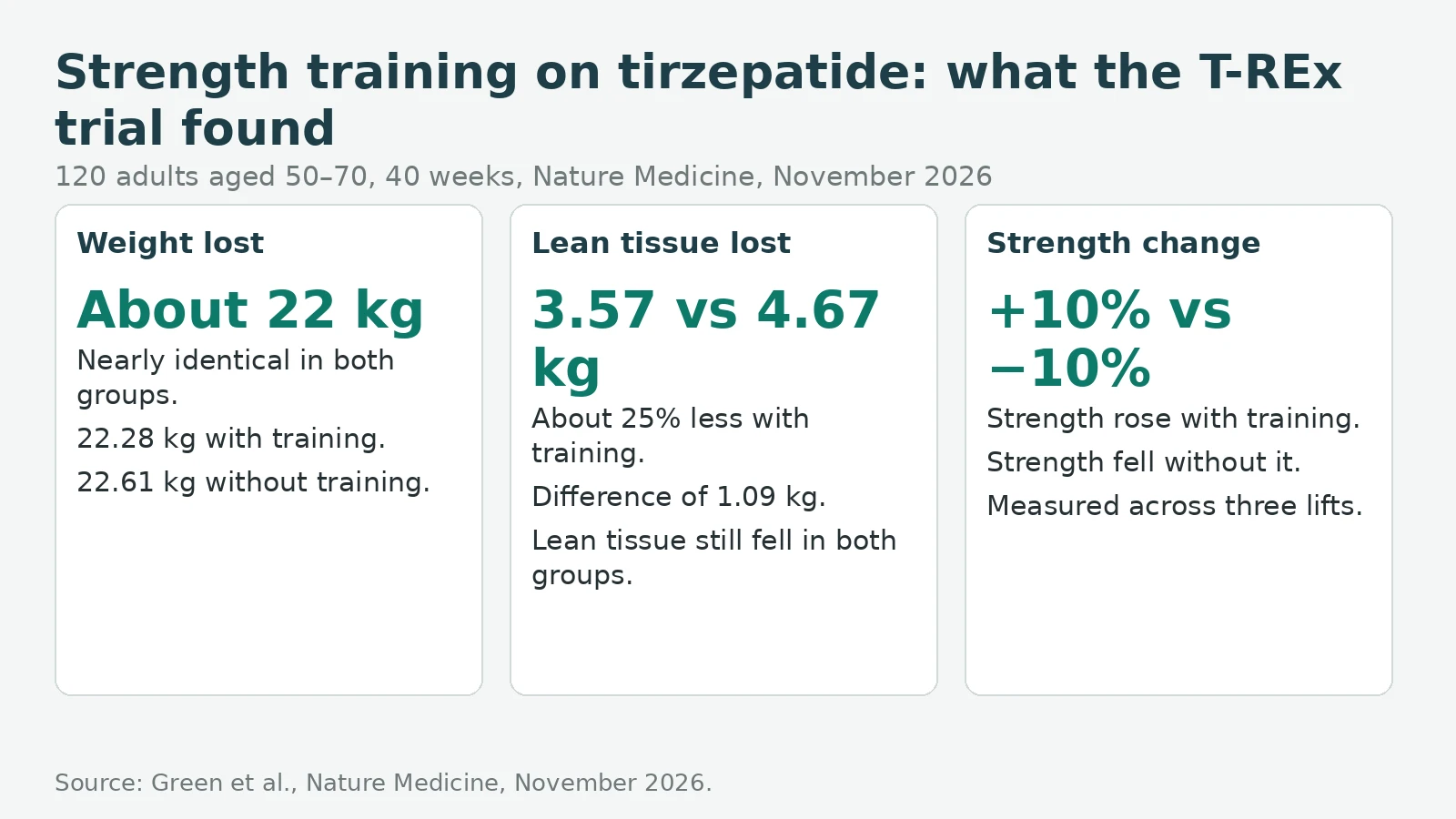
The gluteus maximus — the large muscle that gives the buttocks most of their shape — shrinks when muscle is lost, and muscle loss speeds up from around age 30. This is the layer you can influence most. In the T-REx trial, published in Nature Medicine in November 2026, 120 adults aged 50 to 70 taking tirzepatide were assigned either to supervised strength training three times a week or to their usual routine for 40 weeks. Both groups lost about 22 kg, but the training group lost 1.09 kg less lean tissue — about a quarter less — and got stronger, while strength fell in the group that did not train. A 2025 joint advisory from nutrition and obesity medicine groups recommends strength training at least three times a week, plus enough protein, while taking a GLP-1.
Skin: what training cannot do
Skin is the least forgiving layer. The American Society of Plastic Surgeons says aging, sun damage, pregnancy, big weight swings and genetics can all reduce elasticity and leave sagging in the abdomen, buttocks and thighs. Training builds the muscle underneath, but it does not remove loose skin. One member surgeon said in October 2026 that, in her experience, skin quality depends more on how much weight was lost than on how it was lost.
Can you prevent it?
No method is proven to prevent the change, and no program can promise to. But a few steps can protect the muscle layer and give the skin its best chance. Talk to your prescriber about the pace of your weight loss — slowing down may be possible with dosing or medicine choices. Strength train at least three times a week, including hip moves such as squats and step-ups, and eat enough protein and calories: GLP-1 medicines quiet appetite, so food intake can drop too far. Drink plenty of water, and wait until your weight has been steady before judging your skin. Do not stop and restart the medicine on your own: the joint advisory warns that stopping and restarting, with regain in between, may worsen muscle and bone loss.
What helps if you already have it?
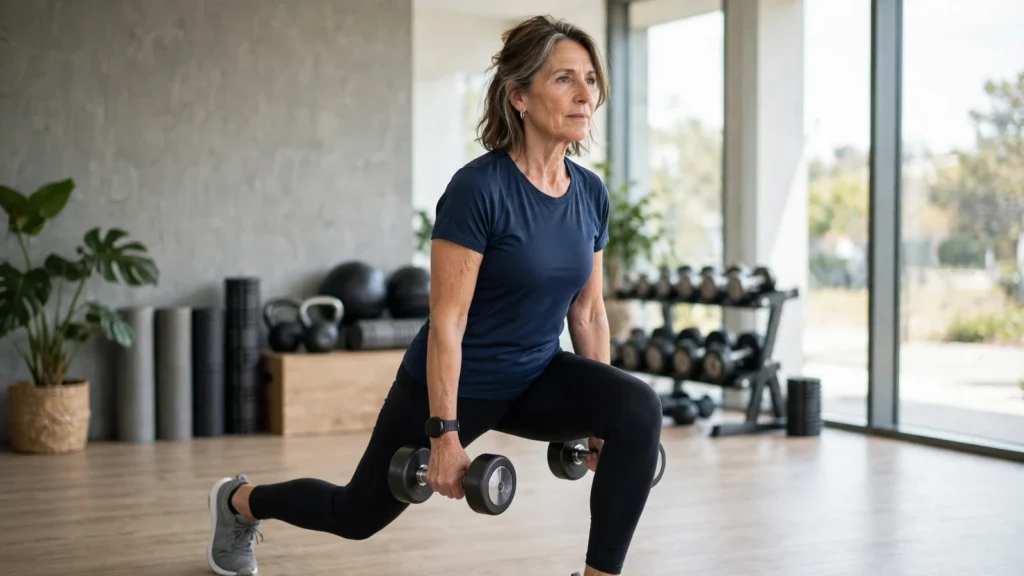
Start with the options that do not involve surgery. Resistance training — squats, step-ups and leg presses — builds the glute muscles and can improve shape. A diet with enough protein, vitamin C (which helps the body make collagen) and omega-3 fats supports muscle and skin. Firming creams may tighten and hydrate the skin a little, but a small study shows they cannot reach deep enough to lift it.
Non-surgical devices offer more. Electromagnetic treatment contracts the buttock muscles much like resistance exercise, and heat-based devices such as BodyTite and Renuvion can help the skin contract. For loose skin that does not respond, surgery is the remaining option. Plastic surgeons describe filling with your own fat as the gold standard for restoring volume; a buttock lift removes excess skin, and implants can add shape when there is little donor fat. A Brazilian butt lift moves fat from another part of the body into the buttocks — but survey data cited by WebMD puts the death rate at 1 in 3,000 procedures, making it the most dangerous type of cosmetic surgery. If you do consider surgery, tell your surgeon you take a GLP-1 first: the drug labels report rare cases of stomach contents reaching the lungs under general anesthesia or deep sedation.
GLP-1 safety news from November 2026
On 9 November 2026, the FDA said it is requiring every GLP-1 medicine to carry a warning about a possible increased risk of NAION, a rare condition that can cause sudden, painless vision loss in one eye. In the FDA’s analysis of 126 trials, NAION occurred at 6.4 cases per 100,000 person-years in people on GLP-1 medicines, compared with 3.8 per 100,000 on a comparator. The risk is small, but the FDA advises getting urgent help for sudden vision loss, blind spots or color distortion in one eye.
When to see a doctor
Talk to your prescriber or doctor if loose skin chafes or keeps getting irritated or infected; if climbing stairs or getting up from a chair feels harder as you lose weight; or if worry about your shape is changing how you eat, such as skipping meals or exercising to make up for food. If you are considering surgery, wait until your weight has been steady and see a board-certified plastic surgeon.
In an emergency call 911 (US), 999 (UK) or 112 (EU).
The bottom line
“Ozempic butt” is a real and common change, but it is a feature of rapid weight loss, not a side effect of the drug itself. Muscle is the part you can protect — with strength training and enough protein — while loose skin, once it is there, usually needs surgery to remove. The health gains of the weight loss itself are the point; the shape change is something to plan for, not panic about.
Frequently asked questions
What causes Ozempic butt?
Rapid weight loss, not the drug itself. GLP-1 medicines cut appetite, and the body then loses fat and some muscle from everywhere, including the buttocks, while the skin may not shrink back to fit. In the STEP 1 trial, 62% of the weight lost on semaglutide was fat and 38% was lean tissue. Age, genetics and big weight swings make loose skin more likely.
Can Ozempic butt be prevented?
No method is proven to prevent it, and no program can promise to. The best-supported steps are losing weight more slowly, strength training at least three times a week and eating enough protein, as a 2025 joint advisory recommends for everyone on a GLP-1. In the T-REx trial, training cut lean-tissue loss by about a quarter. Avoid stopping and restarting the medicine on your own.
Will exercise fix Ozempic butt?
Partly. Strength training builds the glute muscles underneath, which can improve shape and firmness — in the T-REx trial, people who trained three times a week got stronger while those who did not lost strength. But no workout can remove loose skin or replace lost fat volume. For sagging skin, surgery is the only option that removes the excess.
Does loose skin after Ozempic go away on its own?
Often not fully. The American Society of Plastic Surgeons says that after substantial weight loss, skin frequently lacks the elasticity to fit the smaller body, and aging, sun damage, pregnancy and weight swings make it worse. Waiting until your weight is steady helps you judge it fairly, but exercise cannot remove skin — only surgery removes the excess.
Is Ozempic butt dangerous?
No. A flatter or saggier backside after weight loss is a cosmetic change, not a medical problem, and it does not need treatment. The health gains from the weight loss itself are the point. The main risks come from treatments: a Brazilian butt lift carries a death rate of about 1 in 3,000, the highest of any cosmetic surgery.
What is the safest treatment for Ozempic butt?
Start with lifestyle: strength training and enough protein protect muscle, and waiting until your weight is steady gives skin time to settle. Non-surgical tightening devices can help a little. Surgery — fat transfer or a buttock lift — is the only way to remove loose skin, so discuss the risks with a board-certified plastic surgeon and tell them you take a GLP-1.
Sources
- WebMD: Ozempic Butt Guide: Causes, Skin Changes, and Treatment www.webmd.com
- American Society of Plastic Surgeons: What is Ozempic butt? www.plasticsurgery.org
- MeliOra: Ozempic Butt: Fat, Muscle, and Loose Skin (Dr Melanie Espinet, 16 Nov 2026) www.melioraelitewellness.com
- Green DJ et al. Resistance exercise to attenuate lean mass loss during tirzepatide therapy for obesity: a randomized controlled trial. Nature Medicine, 2026 doi.org
- MedicalXpress: Resistance training key to maintaining muscle function during GLP-1 weight loss (10 Nov 2026) medicalxpress.com
- FDA: Safety labeling changes for GLP-1 RAs due to potential increased risk of NAION (9 Nov 2026) www.fda.gov

Try the tool
Not sure if it can wait?
Common causes and warning signs for 16 everyday symptoms.
Open the symptom guide