Norovirus Surge 2026: The New GII.17 Variant Explained
A fast-spreading norovirus variant is driving a rough winter season. What GII.17 is, how to spot the bug and why soap beats sanitiser.
- Written by
- Health Daily Advice
- Published
- Reading time
- 4 minutes
- Sources
- 7 cited
In this guide
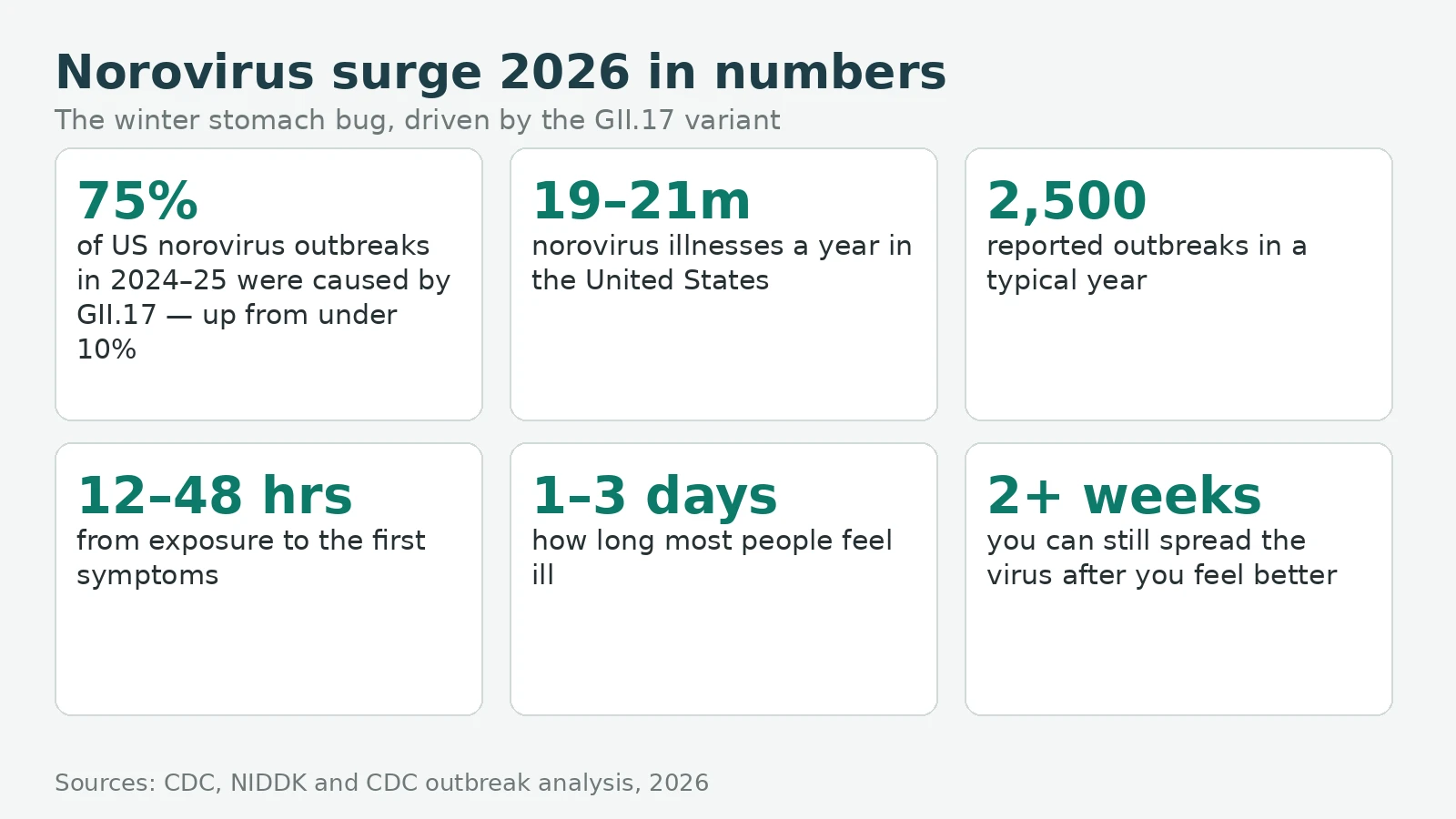
Norovirus is surging through the winter of 2026, and a newer strain called GII.17 is doing much of the damage. This fast-spreading variant caused roughly three-quarters of US norovirus outbreaks in the 2024–25 season, and cases are climbing again as people gather indoors. Here is what the surge means, how to spot it and how to protect your household.
Why is norovirus surging in 2026?
Norovirus is the leading cause of vomiting and diarrhoea, and of foodborne illness, in the United States, according to the CDC. It causes an estimated 19 to 21 million illnesses a year in the US, and around 2,500 reported outbreaks in a typical year. The current surge is not just a bad winter: a newer variant has taken over from the strain that dominated for two decades, and most people have little built-up immunity to it. Outbreaks are being reported in homes, schools, day-care centres, care homes and on cruise ships, and several local health departments have reported nearly twice their usual number of outbreaks, urging extra care around holiday gatherings.
What is the GII.17 variant?
Norovirus comes in many types, and infection with one type may not protect you against another. For most of the past twenty years, a lineage called GII.4 caused most norovirus illness. GII.17 emerged in Asia about a decade ago and has surged in recent years: according to a CDC analysis, it caused roughly 75% of US norovirus outbreaks during the 2024–25 season, up from less than 10% two years earlier. Because populations have less immunity to a newer strain, it can spread faster and make more people ill, even people who have had norovirus before.
What are the symptoms of norovirus?
Symptoms usually start suddenly, 12 to 48 hours after exposure. The most common are nausea, vomiting, watery diarrhoea and stomach pain or cramps, sometimes with a low-grade fever, headache and body aches. Most otherwise healthy people recover within one to three days. The main danger is dehydration, especially for young children, older adults, pregnant people and anyone with a weakened immune system. You can read more about the symptoms in detail in our guide to norovirus symptoms and how contagious it is.
How does norovirus spread?
Norovirus spreads very easily. You can catch it through close contact with someone who is ill, by eating food or drinking liquids contaminated with the virus, or by touching a contaminated surface and then touching your mouth. The virus is shed in stool and vomit, and a sick person can shed billions of viral particles while it takes only a tiny number — as few as 18, according to the CDC — to infect someone else. It can survive on surfaces for days or weeks, and through hot and cold temperatures and many disinfectants. Outbreaks cluster where people live or gather closely: care homes, hospitals, schools, childcare settings, restaurants and cruise ships.
Why hand sanitiser does not kill norovirus
This is the fact that surprises people every winter. Alcohol-based hand sanitiser does not reliably kill norovirus, because the virus has no outer fatty layer for alcohol to break apart. The NHS and the CDC both say the same thing: wash your hands with soap and water for at least 20 seconds, which physically removes the virus. That matters most after using the toilet or changing nappies, and before preparing, serving or eating food. For surfaces, use a chlorine bleach solution or another disinfectant that is labelled as effective against norovirus, and wear gloves when cleaning up vomit or diarrhoea.
What to do if you catch norovirus
There is no specific medicine for norovirus, and antibiotics do not help because they fight bacteria, not viruses. Most people can look after themselves at home. Rest, and drink plenty of fluids in small, frequent sips to replace what vomiting and diarrhoea take away — water, squash or oral rehydration fluids from a pharmacist are the best choices. The NHS advises against fruit juice and fizzy drinks, which can make diarrhoea worse, and against giving children under 12 medicine to stop diarrhoea. Eat when you feel able to, and avoid fatty or spicy food at first. Keep taking small sips even if you feel sick, and ask a pharmacist about oral rehydration powder if you have signs of dehydration, such as dark, strong-smelling urine or peeing less than usual.
How to stop norovirus spreading at home
Stay at home and avoid contact with others as much as possible. Do not go to school, nursery or work — and do not visit hospitals or care homes — until you have not been sick or had diarrhoea for two days. Wash laundry that has vomit or stool on it separately, on a hot wash. Clean toilet seats, flush handles, taps and bathroom door handles. Avoid preparing food for other people while you are ill and for two to three days afterwards. Remember that you can still spread the virus for two weeks or more after you feel better, so keep washing your hands well even during recovery.
When to see a doctor
Most norovirus illness settles on its own, but get medical help if you or your child keep being sick and cannot keep fluids down, have bloody diarrhoea, have diarrhoea for more than seven days or vomiting for more than two days, or still show signs of dehydration after using oral rehydration sachets. Call 111 in the UK if you are worried about a baby under 12 months, or if a child under five shows signs of dehydration such as fewer wet nappies. Call 999 or go to A&E if you or your child vomit blood or vomit that looks like ground coffee, have green vomit, a stiff neck with pain when looking at bright lights, a sudden severe headache or tummy ache, blue, grey, pale or blotchy skin, severe difficulty breathing, or confusion or unusual unresponsiveness. In an emergency call 911 (US), 999 (UK) or 112 (EU). If you are unsure, talk to a doctor or pharmacist rather than waiting it out.
Frequently asked questions
Is norovirus surging in 2026?
Yes. Norovirus activity climbed sharply as 2026 began, with outbreaks reported in homes, schools, care homes and on cruise ships, and several local health departments reported nearly twice their usual number of outbreaks. The main driver is the GII.17 variant, which caused about 75% of US outbreaks in the 2024–25 season. Cases typically peak between November and April, when people spend more time indoors.
What is the GII.17 norovirus variant?
GII.17 is a strain of norovirus that emerged in Asia about a decade ago and has now overtaken GII.4, the strain that dominated for twenty years. According to a CDC analysis, it caused roughly 75% of US norovirus outbreaks in the 2024–25 season, up from less than 10% two years earlier. Because most people have little immunity to it, it spreads quickly and can infect people who have had norovirus before.
Does hand sanitiser kill norovirus?
No, not reliably. Norovirus has no outer fatty layer for alcohol to break apart, so alcohol-based hand sanitiser is much less effective against it than against many other germs. The NHS and CDC both advise washing hands with soap and water for at least 20 seconds, which physically removes the virus. For surfaces, use a chlorine bleach solution or a disinfectant labelled as effective against norovirus.
How long are you contagious with norovirus?
You can spread norovirus from when symptoms start until at least two weeks after you feel better, according to the CDC. You are most contagious while you are ill and in the first few days afterwards. That is why health guidance says to stay home until you have not been sick or had diarrhoea for 48 hours, and to keep washing your hands thoroughly even after you recover.
Can you get norovirus twice?
Yes, many times. There are many different types of norovirus, and infection with one type may not protect you against others. It is also not known exactly how long protection against a specific type lasts. This is why people of all ages get infected during outbreaks, and why good handwashing and surface cleaning matter even if you have had the bug before.
Is norovirus the same as stomach flu?
No. Norovirus is often called stomach flu or the stomach bug, but it is not related to influenza, which is caused by flu viruses that infect the respiratory system. Norovirus causes acute gastroenteritis, an inflammation of the stomach and intestines, and the flu vaccine offers no protection against it. The two illnesses share some symptoms, such as fever and body aches, but they are different infections.
Sources
- CDC: About Norovirus www.cdc.gov
- NHS: Norovirus (vomiting bug) www.nhs.uk
- Mayo Clinic: Norovirus infection www.mayoclinic.org
- NIDDK: Viral Gastroenteritis ("Stomach Flu") www.niddk.nih.gov
- Reporter-Online: Norovirus Surge 2026: New Variant Drives US Outbreaks www.reporter-online.net

Try the tool
Not sure if it can wait?
Common causes and warning signs for 16 everyday symptoms.
Open the symptom guide