What Is Liposomal Glutathione? Benefits and the Evidence
Liposomal glutathione wraps the antioxidant in fat bubbles meant to survive digestion. Small trials show blood levels rise — but no trial proves a health benefit.
- Written by
- Health Daily Advice
- Published
- Reading time
- 5 minutes
- Sources
- 7 cited
In this guide
Liposomal glutathione is the antioxidant glutathione wrapped in tiny fat bubbles meant to protect it from stomach acid so more reaches the blood. Small trials show blood levels do rise, by up to 40% in four weeks. But no trial has shown it makes healthy people healthier, and pooled evidence is inconclusive.
What is glutathione?
Glutathione is a substance your cells make from three amino acids — cysteine, glutamate and glycine. It is the body’s most abundant antioxidant made inside our own cells: it neutralises unstable molecules called free radicals, helps clear drugs and pollutants, and supports immune function. Your supply tends to fall as you get older, and lower levels are associated with several age-related conditions — associated, not proven to cause them.
That decline is the sales pitch for glutathione supplements. The problem is that glutathione taken by mouth is thought to be broken down by enzymes in the stomach before much of it can be absorbed. Liposomal glutathione is the industry’s answer to that problem, and it is the form now surging in search — up 104% in a year, according to trend data for November 2026.
What does “liposomal” mean?
A liposome is a tiny bubble made of phospholipids, the same kind of fat molecules that form cell membranes. Liposomal glutathione wraps the glutathione inside these bubbles, with the aim of shielding it from stomach acid and digestive enzymes so that more of it survives the journey through the gut and into the blood. The idea is borrowed from drug delivery, where liposomes are an established way of carrying medicines. Whether the trick works well enough to matter for a supplement is a different question — and the trials give a mixed answer.
What the trials actually show
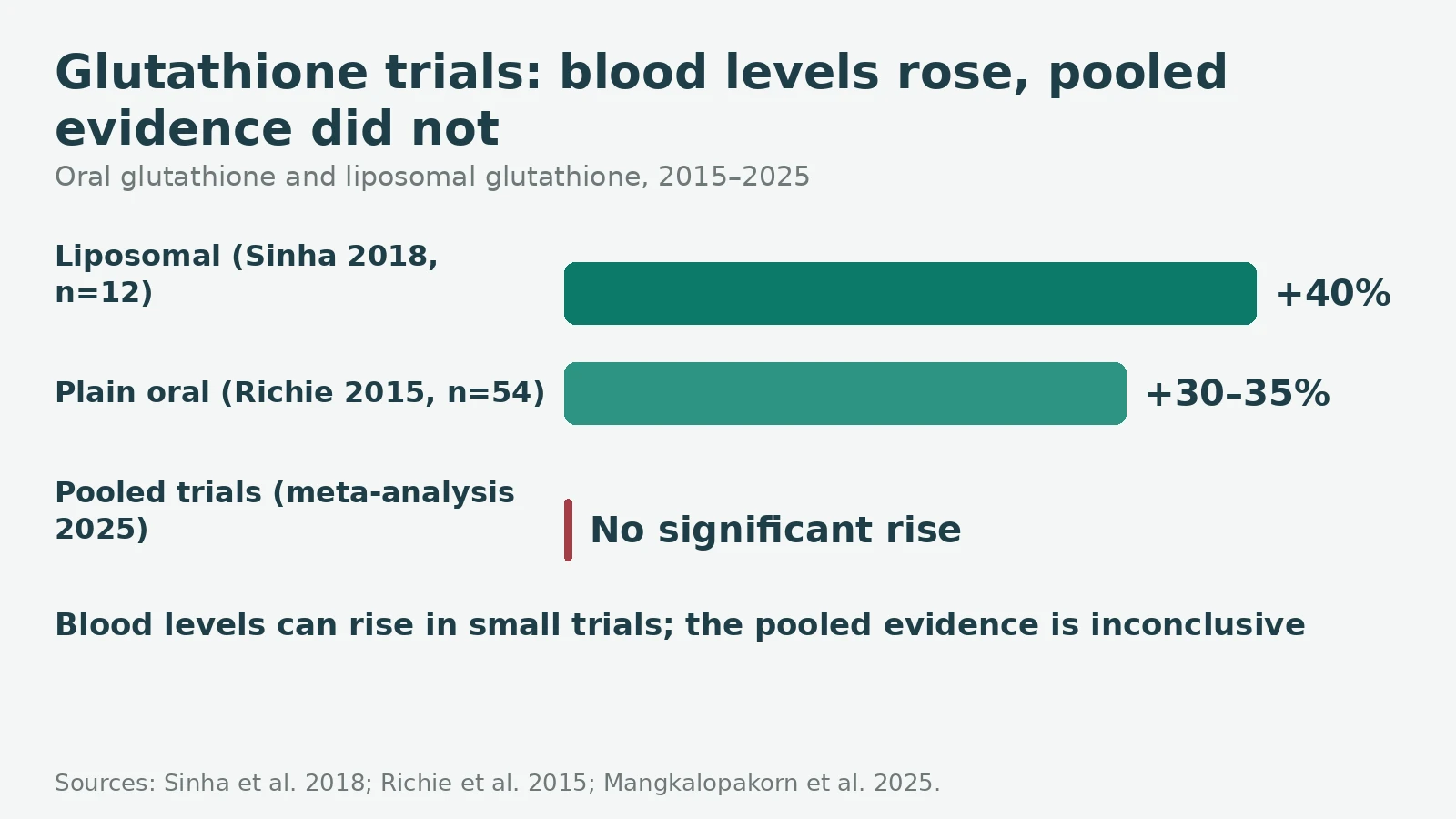
The best-known liposomal trial is a small one. In 2018, researchers at Penn State gave 12 healthy adults aged 51 to 72 either 500 or 1,000 milligrams a day of liposomal glutathione for four weeks. Blood glutathione rose by up to 40% after two weeks, immune-cell glutathione doubled, and markers of oxidative stress fell. Natural killer cell activity — a laboratory measure of immune function — rose by up to 400%. But the study had no placebo group and no plain-glutathione group to compare against, and the product was supplied by its manufacturer. The authors themselves called the findings preliminary.
The plain oral form has better evidence. In a six-month randomised, placebo-controlled trial of 54 healthy adults, published in 2015, daily oral glutathione at 1,000 milligrams raised glutathione in blood compartments by 30 to 35%, and the rise faded back to baseline within a month of stopping. That is a similar size of rise to the liposomal pilot — over a longer period, and with a placebo group.
Then came the counterweight. A systematic review and meta-analysis published in 2025 pooled the randomised trials of oral glutathione and found no statistically significant rise in blood glutathione levels versus placebo. The authors noted that higher doses and longer treatment might work better, but on the pooled evidence, supplementation did not significantly raise levels. Taken together, the honest summary is this: blood levels can rise in small trials, but the evidence is inconsistent, not settled.
Does it make you healthier?
Here the gap between marketing and evidence is widest. No trial has shown that liposomal — or plain oral — glutathione prevents disease, improves a clinical health outcome, or makes a healthy person healthier. The trials measured blood levels and laboratory immune markers, not real-world outcomes such as fewer infections or better health. A 400% rise in natural killer cell activity sounds dramatic, but it is a measurement in a test tube, not proof of a stronger immune system in daily life. And because the liposomal pilot had no plain-glutathione arm, it cannot show that the liposomal form works better than the standard form — the plain form produced a similar rise in the longer trial.
There is also a cheaper route to the same goal. Because cysteine is the rate-limiting building block for making glutathione, the body can be given the raw materials instead: N-acetylcysteine (NAC) supplies cysteine, and some research suggests NAC may raise glutathione more effectively than standard glutathione supplements. In one small randomised trial, a combination of glycine and NAC raised red-cell glutathione by 173% after two weeks and 225% after 16 weeks in older adults. That was a small trial in a specific group, at weight-based research doses — it is a research direction, not a recommendation.
What about skin lightening?
Glutathione is also sold for skin lightening, including by injection in cosmetic clinics. The evidence for oral glutathione is weak: a 2019 systematic review of four studies found a trend towards lighter skin in sun-exposed areas only, and concluded the evidence was still inconclusive because of the quality of the studies and inconsistent findings. Injectable glutathione for skin lightening is a different matter: no injectable product is approved for this use, there are no published clinical trials of it for skin lightening, and regulators have warned of serious risks. The Philippine Food and Drug Administration warns of toxic effects on the liver, kidneys and nervous system, and of severe skin reactions including Stevens–Johnson syndrome. The Cleveland Clinic, discussing IV nutrient drips generally, notes there is no definitive proof of benefit, little regulation of many clinics, and costs that can run to hundreds of dollars per session.
How safe is it?
Oral glutathione has generally been well tolerated in trials. In the liposomal pilot, no serious adverse effects were reported and all reported events were minor. Across the trials in the meta-analysis, only mild effects were generally reported. WebMD notes, though, that long-term use has been linked to lower zinc levels, that inhaled glutathione can trigger asthma attacks in people with asthma, and that safety in pregnancy and breastfeeding is unknown. There is no standard dose: in studies, people took 250 to 1,000 milligrams a day. That is what trials used, not a recommendation — and supplements are not regulated in the same way as medicines, so products vary in what they actually contain.
When to see a doctor
Talk to a GP or pharmacist before taking glutathione or any new supplement, especially if you are pregnant or breastfeeding, have asthma, kidney or liver disease, or take other medicines. A doctor can also check whether there is a real reason to suspect low glutathione — most healthy people make enough on their own, and a healthy diet, sleep and exercise support the body’s own production. Be wary of any clinic offering injectable glutathione for skin lightening, and of any product claiming to treat or prevent disease: no glutathione supplement is approved to do so. In an emergency call 911 (US), 999 (UK) or 112 (EU).
Frequently asked questions
What is liposomal glutathione?
Liposomal glutathione is glutathione — an antioxidant your body makes from cysteine, glutamate and glycine — wrapped in tiny fat bubbles called liposomes. The bubbles are meant to protect it from stomach acid and digestive enzymes so more of it reaches the blood. It is sold as a supplement, usually in liquid or capsule form, and is not approved to treat or prevent any disease.
Does liposomal glutathione work?
Partly. Small trials show it can raise glutathione levels in the blood: a 12-person trial found rises of up to 40% in two weeks, and a 54-person trial of plain oral glutathione found 30–35% rises over six months. But a 2025 meta-analysis pooling the trials found no statistically significant rise, and no trial has shown it improves a clinical health outcome in healthy people. The evidence is promising for blood levels, inconclusive for health.
Is liposomal glutathione better than regular glutathione?
Not proven. The main liposomal trial had no plain-glutathione group to compare against, so it cannot show the liposomal form is better. The plain oral form produced a similar rise in blood levels in a longer, placebo-controlled trial. The liposome may protect more glutathione through digestion, but no head-to-head trial in people has confirmed an advantage.
Does glutathione lighten skin?
The evidence is weak. A 2019 review of four studies found a trend towards lighter skin in sun-exposed areas only, and concluded the evidence was still inconclusive. Injectable glutathione for skin lightening has no trial support and carries regulator warnings: the Philippine FDA warns of liver, kidney and nervous-system harm and severe skin reactions. No injectable product is approved for skin lightening.
Is liposomal glutathione safe?
Oral glutathione has generally been well tolerated in trials, with only mild effects reported, but long-term safety data are limited. WebMD notes long-term use has been linked to lower zinc levels, inhaled glutathione can trigger asthma attacks, and safety in pregnancy and breastfeeding is unknown. There is no standard dose, and supplements are not regulated like medicines. Talk to a GP or pharmacist first.
Sources
- WebMD: Glutathione: Benefits and Supplements www.webmd.com
- Sinha et al. Oral supplementation with liposomal glutathione elevates body stores of glutathione. Eur J Clin Nutr, 2018 pmc.ncbi.nlm.nih.gov
- Richie et al. Randomized controlled trial of oral glutathione supplementation on body stores of glutathione. Eur J Nutr, 2015 pubmed.ncbi.nlm.nih.gov
- Mangkalopakorn et al. Glutathione levels after glutathione supplementation: a systematic review and meta-analysis. J Curr Sci Technol, 2025 doi.org
- Dilokthornsakul et al. The clinical effect of glutathione on skin color. J Cosmet Dermatol, 2019 pubmed.ncbi.nlm.nih.gov
- Kumar et al. Supplementing Glycine and N-Acetylcysteine (GlyNAC) in Older Adults. J Gerontol A, 2023 academic.oup.com
- Cleveland Clinic: Is IV Vitamin Therapy Worth Trying? my.clevelandclinic.org

Try the tool
Not sure if it can wait?
Common causes and warning signs for 16 everyday symptoms.
Open the symptom guide